Sodium Cocoate
Also known as: Coconut fatty acid sodium salts, Saponified coconut oil, Coconut soap
The sodium soap made from coconut-oil fatty acids, valued for cleansing and lather but capable of drying skin in high-pH formulas.
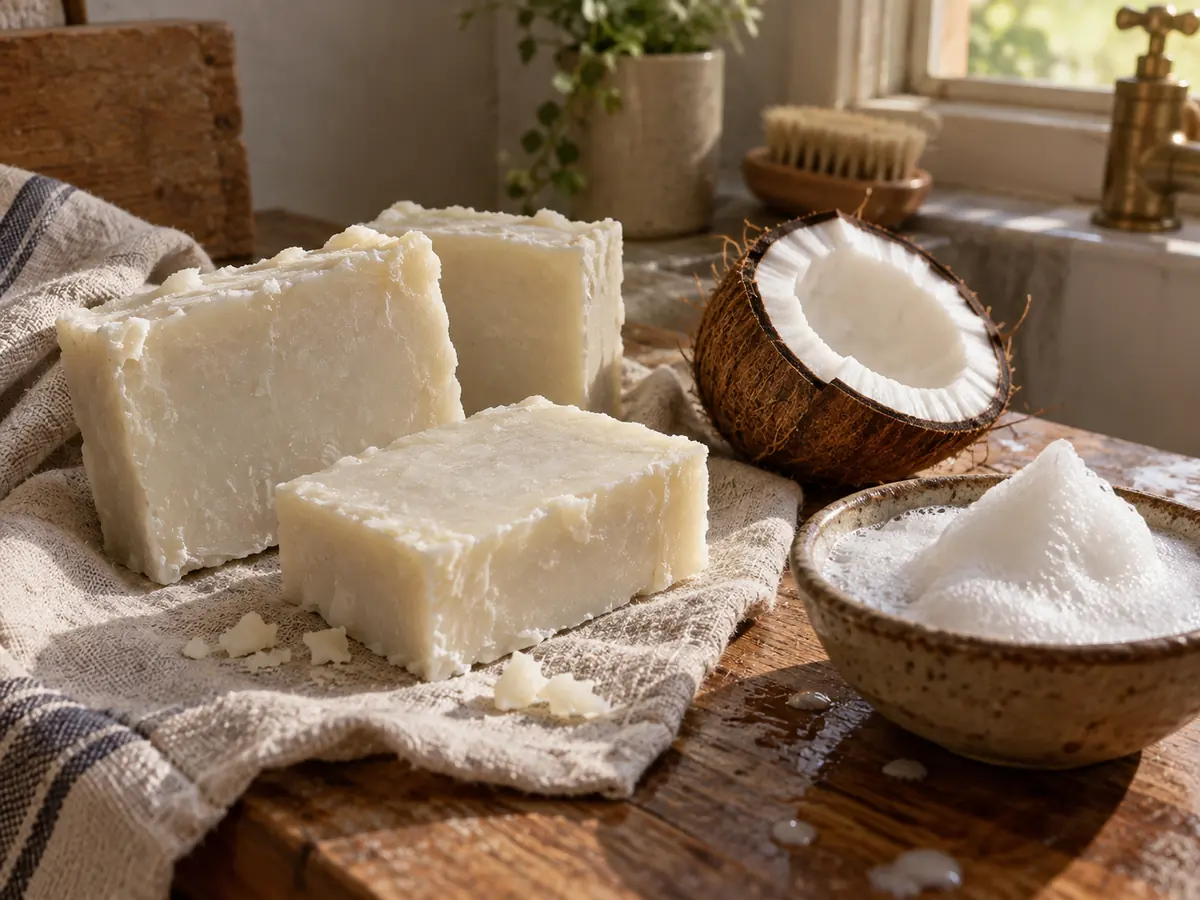
Sodium cocoate is the mixture of sodium salts formed when coconut oil fatty acids are saponified. It cleans and lathers well, particularly because coconut oil supplies shorter lauric and myristic chains. Traditional soap bars containing it are alkaline, which can remove skin lipids and feel drying; syndet bars and pH-balanced cleansers are chemically different systems.1, 2
- A mixture of fatty-acid salts1, 2
- Usually part of true alkaline soap1, 2
- Produces strong cleansing and lather1, 2
- Not the same as coconut oil or a synthetic detergent bar1, 2
What is Sodium Cocoate?
The INCI name summarizes a variable fatty-acid distribution rather than one molecule. Its performance reflects the laurate, myristate, palmitate, and other salts inherited from the oil feedstock.1, 2
Where it comes from
Natural sources
- Coconut oil fatty acids
How it's made
Coconut oil or its separated fatty acids are reacted with sodium hydroxide, producing soap salts plus glycerin depending on the process.
What it does in products
Benefits
Strong cleansing and lather
moderate evidenceThe fatty-acid salts form micelles that lift oily soil and produce abundant foam.1
Effective cleansing can also remove desirable skin lipids; foam volume is not a health benefit.
Suitability for sensitive or dry skin
limited evidenceHigh-pH true soap may be less comfortable than a well-formulated mild syndet for some users.1
Skin response depends on wash frequency, water, bar composition, and individual barrier condition.
Evidence scope and limitations
Rinse-off true soap use is covered; household concentrated cleaners and ingestion are outside scope.
- Sodium cocoate composition varies with feedstock and processing.
- No single ingredient predicts a finished bar's pH or irritation.
Evidence last checked: 2026-09-28
Side effects & safety
Safety considerations
- No special warning is established for ordinary rinse-off use.
- Not for: Using a strongly alkaline cleanser on actively inflamed or fissured skin if it worsens symptoms
Amounts studied & product use
These figures describe research or common product use, not a personal dose or treatment recommendation.
In skincare studies and products
Used as a major structural component of true soap bars; rinse thoroughly and adjust frequency to skin tolerance.
Regulatory status
- True soap meeting the statutory definition is regulated differently from cosmetics; products making cosmetic or drug claims may fall under those categories.
- INCI name on cosmetic labels: Sodium Cocoate.
- Covered in safety assessments of plant-derived fatty-acid salts and soap ingredients.
Soap and syndet are not marketing synonyms
True soap is made from alkali salts of fatty acids and is normally alkaline. A syndet bar uses synthetic detergents and can be formulated nearer skin pH. Both can be solid cleansing bars, but their chemistry and after-feel differ.
2, 1Frequently asked questions
The bottom line
Sodium cocoate makes effective true soap; whether that cleansing strength is useful or drying depends on the full bar and the user's skin.
References
- Amended Safety Assessment of Cocos Nucifera (Coconut) Oil and Its Derivatives. Cosmetic Ingredient Review (2026) · safety assessment
- Frequently Asked Questions on Soap. U.S. Food and Drug Administration (2022) · government guidance
- FDA Authority Over Cosmetics: How Cosmetics Are Not FDA-Approved, but Are FDA-Regulated. U.S. Food and Drug Administration (2013) · government guidance
Revision history
- Initial publication with claim-level citations, formulation limits, safety context, and editorial evidence review.