Coco-Glucoside
Also known as: Coco glucoside, Coconut alkyl glucoside, Alkyl polyglucoside
A nonionic sugar-based surfactant used to cleanse and foam, often in products positioned as mild.
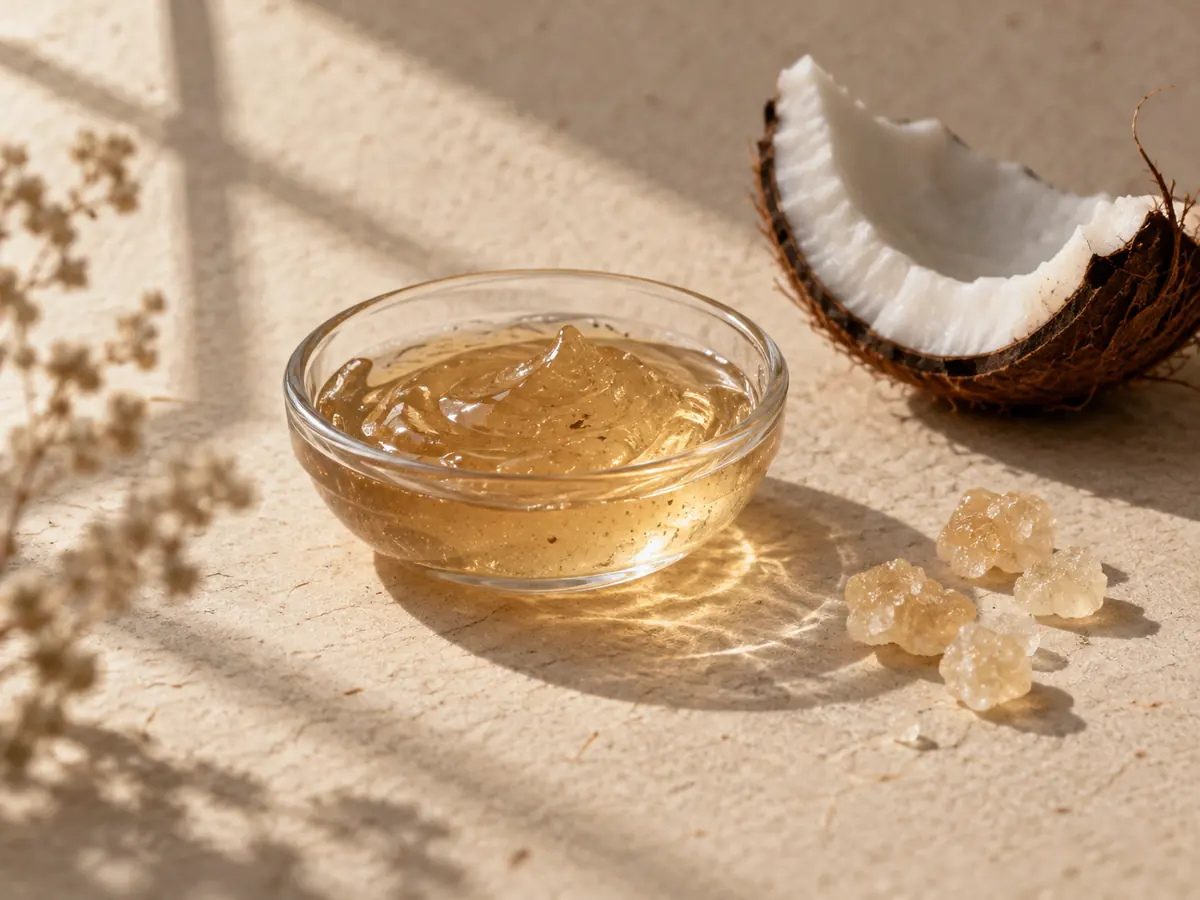
Coco-glucoside is a mixture of glucose-linked fatty alcohols used in cleansers, shampoos, and emulsions. It is nonionic and can be formulated into relatively mild products, but plant-derived does not mean non-irritating. Surfactant concentration, contact time, pH, and the rest of the blend determine how a cleanser feels on skin.2
- A mixture rather than one pure molecule1, 2
- Made from glucose and fatty alcohol feedstocks1, 2
- Cleanses by helping oil disperse in water1, 2
- Can still irritate sensitive or repeatedly exposed skin1, 2
What is Coco-Glucoside?
Coco-glucoside belongs to the alkyl glucoside family. The 'coco' portion describes a distribution of fatty chains commonly sourced from coconut-derived feedstocks, not a spoonful of coconut oil in the bottle.1, 2
Where it comes from
Natural sources
- Glucose from plant starches
- Fatty alcohol feedstocks commonly derived from coconut or palm oils
How it's made
The glucose and fatty alcohol components are chemically joined and the mixture is purified for cosmetic use.
What it does in products
Benefits
Effective rinse-off cleansing
moderate evidenceIts amphiphilic molecules help suspend sebum and soil so they can be rinsed away.2
This is an established surfactant function, not evidence that every coco-glucoside cleanser is equally mild.
Potentially mild surfactant systems
limited evidenceNonionic glucosides can support mild formulas when concentration, pH, and co-surfactants are well chosen.2
Mildness belongs to the finished formula; individual alkyl glucosides can cause irritation or allergy.
Evidence scope and limitations
Use in rinse-off and leave-on cosmetics is covered; occupational raw-material handling is not.
- Coco-glucoside is a variable mixture.
- Ingredient-level evidence cannot predict finished-cleanser irritation.
Evidence last checked: 2026-09-28
Side effects & safety
Safety considerations
- No special warning is established for normal rinse-off cosmetic use.
- Not for: Known allergy to alkyl glucosides
Amounts studied & product use
These figures describe research or common product use, not a personal dose or treatment recommendation.
In skincare studies and products
Supplier ranges vary by active matter and product type; rinse-off formulas use it as one part of a surfactant blend.
Regulatory status
- Regulated as a cosmetic ingredient when used for cleansing rather than a drug active.
- INCI name on cosmetic labels: Coco-Glucoside.
- Included in the CIR safety assessment of alkyl glucosides.
A mild ingredient can still make a harsh cleanser
A high total surfactant load, long contact time, or poor pH can outweigh the favorable reputation of one nonionic surfactant. Comparing finished-product tolerance is more useful than ranking a label by a single cleanser ingredient.
2Frequently asked questions
The bottom line
Coco-glucoside can help build a mild cleanser, but the complete surfactant system determines cleansing, dryness, and tolerance.
References
- Alkyl glucoside: compound summary. PubChem, National Library of Medicine (2026) · ingredient monograph · CID 369373
- Safety Assessment of Alkyl Glucosides as Used in Cosmetics. Cosmetic Ingredient Review (2026) · safety assessment
- FDA Authority Over Cosmetics: How Cosmetics Are Not FDA-Approved, but Are FDA-Regulated. U.S. Food and Drug Administration (2013) · government guidance
Revision history
- Initial publication with claim-level citations, formulation limits, safety context, and editorial evidence review.