Sodium Cocoyl Isethionate
Also known as: SCI, Sodium coconut isethionate, Baby-foam surfactant
A coconut-fatty-acid-derived anionic surfactant valued for dense foam and generally milder cleansing than soap.
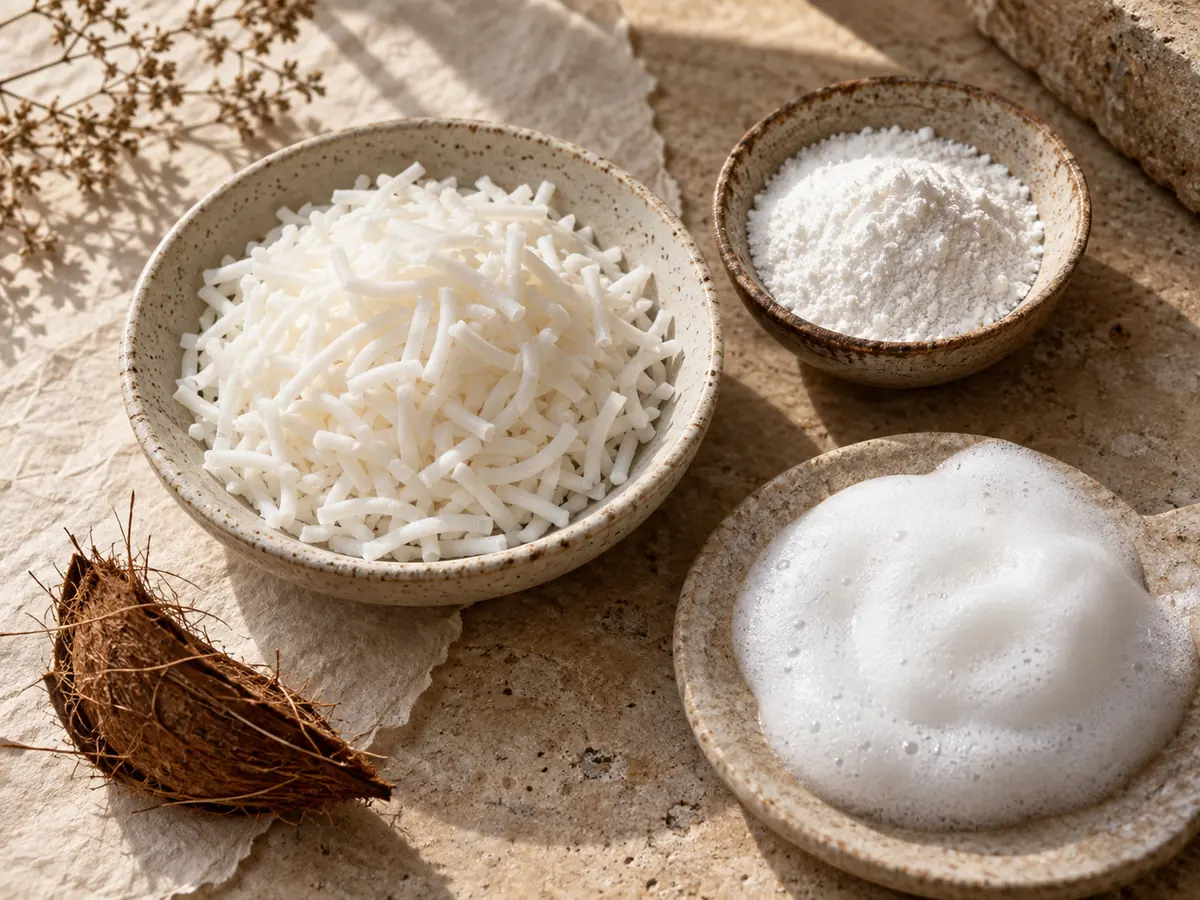
Sodium cocoyl isethionate (SCI) is an anionic surfactant made from coconut-derived fatty acids and isethionate. It creates creamy foam and is widely used in syndet bars and solid cleansers. 'Sulfate-free' describes its chemistry, not a guarantee that every SCI formula is non-irritating.1, 2, 3
- A surfactant, not a sulfate detergent1, 3
- Common in syndet bars and solid shampoo1, 3
- Often milder than alkaline soap1, 3
- Irritation depends on the full surfactant blend and pH1, 3
What is Sodium Cocoyl Isethionate?
SCI is a family material because the cocoyl portion contains several coconut fatty-acid chains. Its solid form and foam profile make it especially useful in low-water cleansing bars.1, 3
Where it comes from
Natural sources
- Fatty acids originally derived from coconut or similar vegetable oils
How it's made
Fatty acids are reacted with isethionate and converted to the sodium salt; the final surfactant is manufactured rather than simply pressed coconut oil.
What it does in products
Benefits
Creamy cleansing foam
moderate evidenceMilder syndet-bar option
moderate evidenceEvidence scope and limitations
SCI in rinse-off syndet formulations is covered; raw-material exposure and occupational inhalation are separate scenarios.
- Most tolerability evidence tests complete bars rather than isolated SCI.
- Surfactant mildness changes with pH, blend, dose, and washing behavior.
Evidence last checked: 2026-09-28
Side effects & safety
Safety considerations
- No pharmacologic interactions expected
- Not for: Known reaction to the finished cleanser
- Not for: Use of raw surfactant powder directly on skin
Amounts studied & product use
These figures describe research or common product use, not a personal dose or treatment recommendation.
In skincare studies and products
SCI is used as part of a formulated surfactant system, especially in bars and powdered cleansers. Percentage, pH, co-surfactants, and rinse time determine performance; raw SCI is not a ready-to-use cleanser.
Regulatory status
- Used as a cosmetic cleansing ingredient in the United States; finished cosmetic safety is the manufacturer's responsibility.
- INCI name on cosmetic labels: Sodium Cocoyl Isethionate.
- CIR safety materials address isethionate surfactants under cosmetic conditions of use.
Syndet bar is not the same as soap
Soap is an alkaline fatty-acid salt. A syndet bar is structured from synthetic detergents and can be formulated closer to skin's natural pH. The solid shape does not tell you which chemistry is inside.
2, 3Frequently asked questions
The bottom line
SCI is a useful mild-syndet building block, not a universal sensitive-skin guarantee.
References
- Sodium cocoyl isethionate ingredient record and safety documents. Cosmetic Ingredient Review (2026) · safety assessment
- In-use tolerability of two new syndet bars with sodium cocoyl isethionate, disodium lauryl sulfosuccinate and wheat starch as major ingredients in differing relations: results of a cross-over trial. International Journal of Cosmetic Science (1992) · randomized trial · PMID 19272112
- Biophysical characterization of skin damage and recovery after exposure to different surfactants. Contact Dermatitis (1999) · primary study · PMID 10048655
- FDA Authority Over Cosmetics: How Cosmetics Are Not FDA-Approved, but Are FDA-Regulated. U.S. Food and Drug Administration (2013) · government guidance
Revision history
- Initial publication with claim-level citations, formulation limits, safety context, and editorial evidence review.