Xanthan Gum
A fermentation-derived thickener and stabilizer, not a live probiotic or a primary cleansing surfactant.
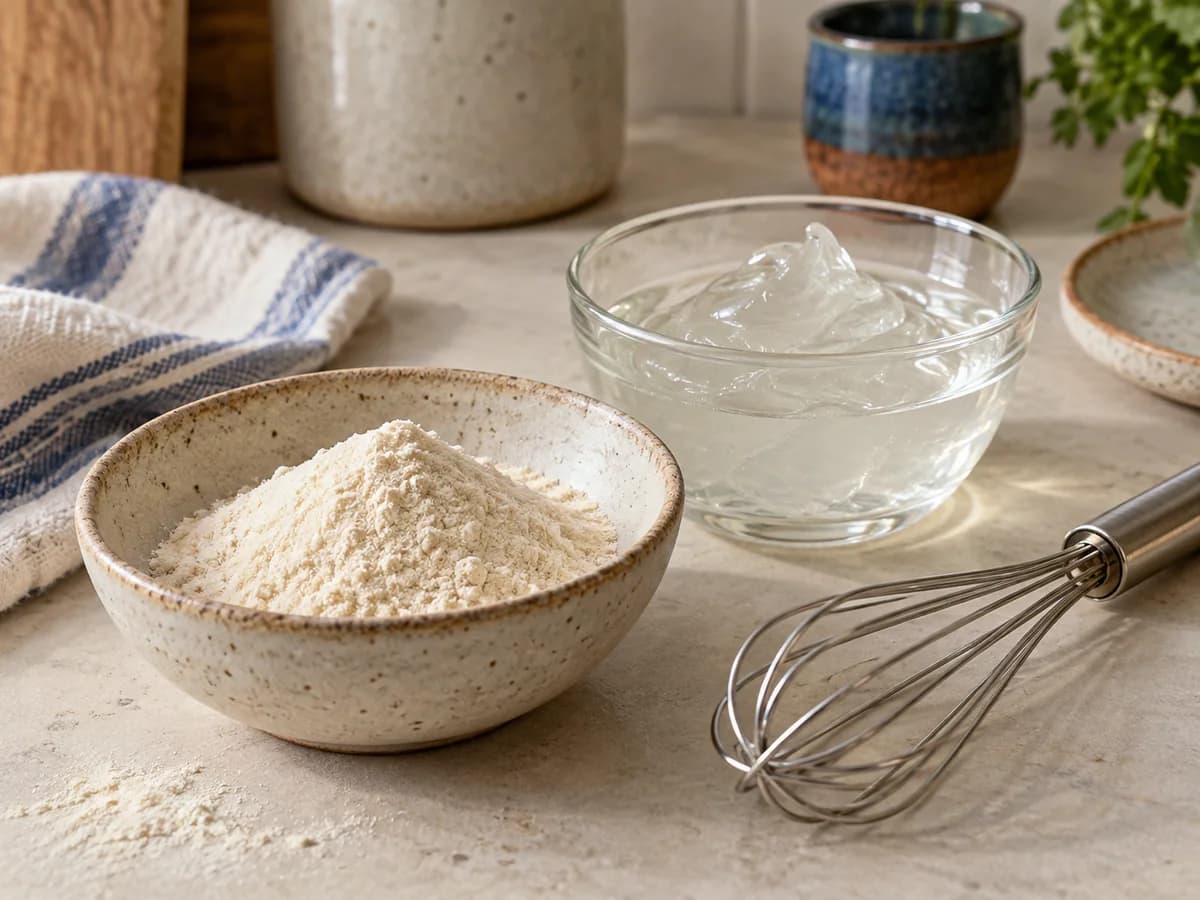
Xanthan gum is a fermentation-derived polysaccharide used to thicken and stabilize foods and cosmetics. It is not a live probiotic or proof that a product supports a healthy skin microbiome. CIR assessed microbial gums under reported cosmetic uses, while U.S. food rules specify separate production and food-grade conditions.1, 2
- A microbial fermentation-derived polysaccharide.2
- The U.S. food rule requires a process that removes viable production-organism cells.2
- The cosmetic gum assessment addresses safety and functions, not probiotic efficacy.1
What is Xanthan Gum?
A gel's texture can depend on a very different ingredient from its treatment claims. Xanthan helps control consistency and suspension, but it should not be mistaken for a primary cleansing surfactant just because it appears in the surfactants-and-emulsifiers index. The category groups formulation functions rather than identical chemistry.1, 2
Where it comes from
Natural sources
- Produced by controlled fermentation using Xanthomonas campestris
How it's made
Recovered, purified and specified as a gum; food-grade requirements include removal of viable production cells.
What it does in products
Benefits
Consistent texture and suspension
limited evidenceXanthan can help keep a formulation's texture and dispersed components manageable, rather than independently treating acne or wrinkles.1
The CIR microbial-gum report documents formulation functions and safety. It does not establish a clinical skin benefit or probiotic action of xanthan.
Evidence scope and limitations
Xanthan's cosmetic formulation roles and U.S. food-grade conditions; no probiotic or oral supplement health claim.
- The group cosmetic assessment does not establish efficacy for a finished product.
- Food and cosmetic grades and routes cannot be treated as interchangeable.
Evidence last checked: 2026-10-01
Side effects & safety
Safety considerations
- Food-grade specifications do not make a finished cosmetic edible or sterile.
- Not for: Do not infer that fermentation-derived means live probiotic.
- Not for: Use the grade and product intended for the route, rather than substituting unknown raw powder.
Amounts studied & product use
These figures describe research or common product use, not a personal dose or treatment recommendation.
In skincare studies and products
The amount needed for texture depends on the formula. The food regulation's laboratory viscosity test is an identity/specification procedure, not a skin-use concentration or a recipe for a cosmetic gel.
Regulatory status
- U.S. food use is specified in 21 CFR 172.695 under its conditions. Cosmetic use is a separate intended-use context; this is not a probiotic or therapeutic approval.
- INCI name on cosmetic labels: Xanthan Gum.
Fermented does not mean live
The food rule specifies a production process that removes viable cells of the fermentation organism. The gum is the recovered material, not a bottle of living bacteria.
This distinction keeps a process description from turning into a microbiome-health promise. A thickening role can be valuable without an unsupported medical narrative.
2, 1Frequently asked questions
Is xanthan gum a cleanser?
Its typical documented roles are thickening and stabilization. A cleanser containing xanthan generally relies on other ingredients for primary surfactant action.1
The bottom line
Xanthan is a useful texture ingredient. Fermentation origin is not evidence of live probiotic or skin-treatment effects.
References
- Fiume MM, Heldreth B, Bergfeld WF et al.. Safety Assessment of Microbial Polysaccharide Gums as Used in Cosmetics. International Journal of Toxicology / Cosmetic Ingredient Review (2016) · safety assessment · PMID 27383198; DOI 10.1177/1091581816651606
- 21 CFR 172.695: Xanthan gum. U.S. Food and Drug Administration / eCFR (2026) · government guidance · 21 CFR 172.695; current text checked October 1, 2026
- FDA Authority Over Cosmetics: How Cosmetics Are Not FDA-Approved, but Are FDA-Regulated. U.S. Food and Drug Administration (2013) · government guidance · Page updated August 3, 2013; accessed October 1, 2026
Revision history
- Initial AI-assisted evidence compilation with source-linked claims, formulation distinctions and explicit research limitations; not independent medical review.