Polyquaternium-10
Also known as: PQ-10, Polyquaternium 10
A cellulose-derived conditioning polymer whose surface-film behavior is a formulation property, not evidence of hair regrowth.
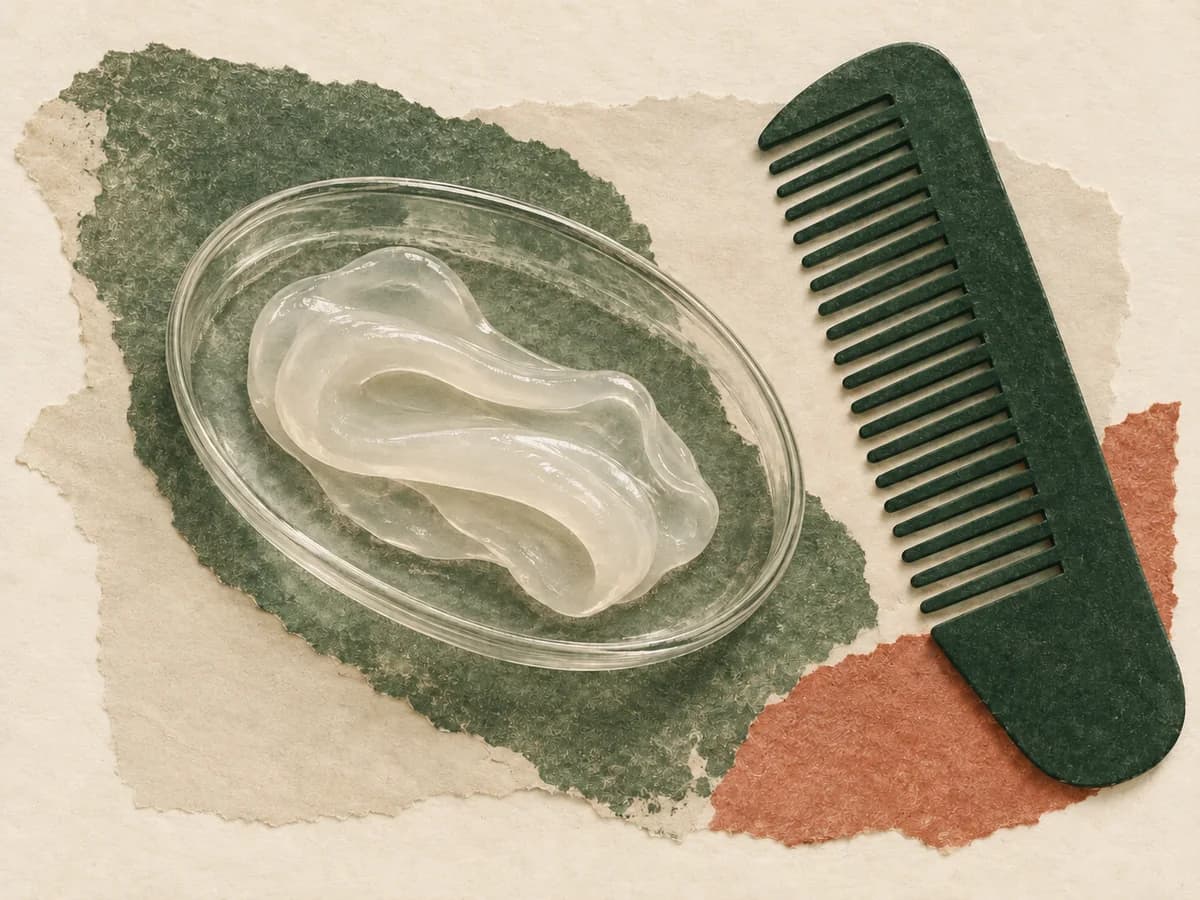
Polyquaternium-10 is a quaternized hydroxyethyl-cellulose polymer used for conditioning and thickening cosmetics. Laboratory work supports surface-film and hair-cuticle effects. Those findings do not demonstrate hair regrowth, permanent repair or the performance of every shampoo containing it.1, 2, 3
- The 1988 final safety report identified Polyquaternium-10 as a quaternary ammonium derivative of hydroxyethyl cellulose.1
- The 2003 experiment used atomic-force microscopy to measure surface indentation, not follicle growth.3
- Polymer-film comparisons changed when surfactant was included; ingredient identity alone did not define the test system.2
What is Polyquaternium-10?
Its positive charge and polymer structure matter to film behavior. A 2001 study compared polymer films with and without an anionic surfactant; a separate 2003 experiment measured treated hair surfaces. These are material and fiber tests, not trials of hair-loss treatment.1, 2, 3
Where it comes from
Natural sources
- Cellulose-derived backbone
How it's made
Chemically modified into a cationic polymer; cellulose ancestry does not make it unmodified plant fiber.
What it does in products
Benefits
A conditioning film, not a clinical hair treatment
limited evidenceThe physical evidence concerns film properties and softening of the cuticle face.3, 2
The 2003 fiber study found cuticle-face softening after addressing residue and between-fiber measurement issues. The 2001 work compared gloss and friction of polymer systems. Neither measures consumer-level regrowth, lasting split-end repair or a universal finished-product result.
Evidence scope and limitations
The named polymer's historical safety assessment and physical film/hair-fiber studies; no oral, ophthalmic or hair-regrowth use is evaluated.
- Material tests are not randomized consumer or clinical treatment trials.
- The 1988 conclusion is historical; it is not presented as a current product-by-product assessment.
- The published report abstract and available original study text/abstracts were checked; unpublished underlying test files were not independently read.
- Different surfactants, polymer properties and complete formulas can change the relevance of a laboratory comparison.
Evidence last checked: 2026-10-15
Side effects & safety
Safety considerations
- The relevant interaction here is formulation chemistry: the surfactant changes film properties. This cosmetic evidence does not establish oral or medical compatibility.
- Not for: Do not infer that raw powder or an eye exposure is cleared by a finished cosmetic's safety assessment.
- Not for: A persistent reaction needs evaluation of the complete product rather than attribution from one ingredient name alone.
Amounts studied & product use
These figures describe research or common product use, not a personal dose or treatment recommendation.
In skincare studies and products
The 1988 report described use concentrations from at or below 0.1% up to 5%, and human tests on specific materials or products. These are historical report conditions, not a current optimal concentration, a DIY recipe or permission to apply a concentrated raw polymer.
Regulatory status
- FDA generally does not preapprove cosmetic ingredients other than specified color additives; manufacturers remain responsible for safety. A CIR conclusion is not FDA approval. Hair-regrowth claims change the intended-use question and cannot be supported merely by a conditioning ingredient.
- INCI name on cosmetic labels: Polyquaternium-10.
- The final 1988 report concluded safe in the practices of cosmetic use then assessed; this guide does not represent it as a new assessment of every 2026 formula.
The test surface is part of the result
A smooth polymer film is useful for comparing materials, but removes some variability of real hair and complete formulations. Conversely, microscopic indentation of a hair cuticle does not by itself say how a shampoo will rinse, feel or perform over months.
For label reading, the practical judgment is narrower: this ingredient can explain a conditioning role without making the product a follicle treatment. Look for finished-formula evidence before accepting claims beyond surface feel.
2, 3, 5Frequently asked questions
The bottom line
Read Polyquaternium-10 as a conditioning-system clue, not proof of regrowth or a guarantee about the whole formula.
References
- Final Report on the Safety Assessment of Polyquaternium-10. Journal of the American College of Toxicology / Cosmetic Ingredient Review (1988) · safety assessment · DOI 10.3109/10915818809023135; final published report, 7(3):335–351; publisher abstract checked; not a new 2026 assessment
- Wu W, Alkema J, Shay GD, Basset DR. Quantitative methods for evaluating optical and frictional properties of cationic polymers. Journal of Cosmetic Science (2001) · primary study · PMID 11382843; 52(1):51–65; primary abstract and indexed original paper checked; material-film tests, not a clinical trial
- Ruetsch SB, Kamath YK, Kintrup L, Schwark HJ. Effects of conditioners on surface hardness of hair fibers: an investigation using atomic force microscopy. Journal of Cosmetic Science (2003) · primary study · PMID 14730374; 54(6):579–588; indexed primary abstract and original paper checked; publication year 2003, not indexing year
- Does the FDA approve cosmetics before they go on the market?. U.S. Food and Drug Administration · government guidance · Undated agency resource; checked October 15, 2026
- Is It a Cosmetic, a Drug, or Both? (Or Is It Soap?). U.S. Food and Drug Administration · government guidance · Undated agency resource; intended-use distinctions checked October 15, 2026
Revision history
- Initial AI-assisted source checks and claim-level citation mapping under the site-authorized publishing workflow. No separate human or independent medical review is claimed.