Behentrimonium Chloride
Also known as: Docosyltrimethylammonium chloride, BTAC, Behenyl trimethyl ammonium chloride
A cationic conditioning ingredient that reduces hair static and improves combing in rinse-off and leave-on formulas.
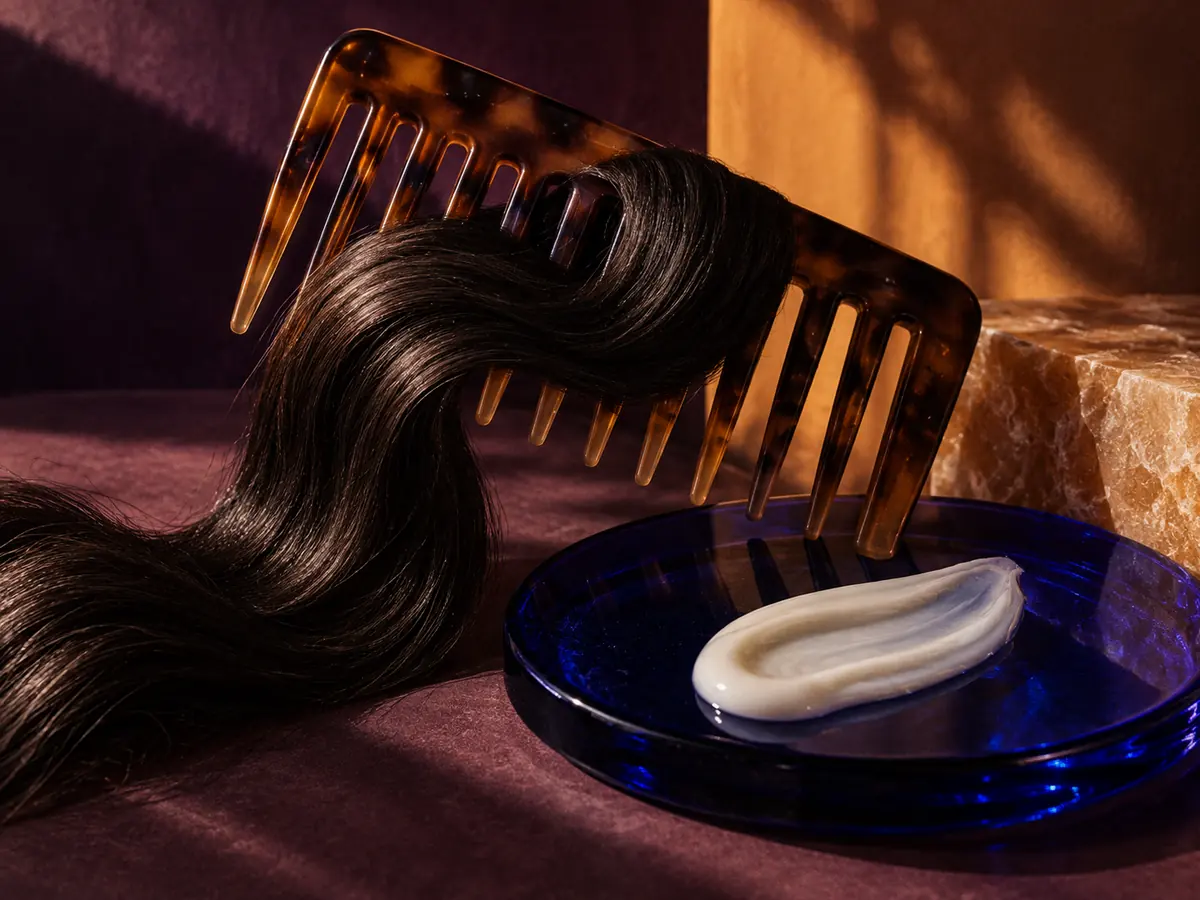
Behentrimonium chloride is a positively charged quaternary ammonium compound used mainly in hair conditioners and masks. It binds preferentially to negatively charged damaged hair, reducing static and improving wet combing. Concentration and product type matter because the raw surfactant can irritate; rinse-off conditioner evidence should not be transferred to concentrated DIY use.1, 2
- Positively charged cationic surfactant1, 2
- Deposits on damaged hair1, 2
- Reduces static and combing force1, 2
- Raw material and finished conditioner are different exposures1, 2
What is Behentrimonium Chloride?
Hair keratin acquires negative charge, especially after chemical or weathering damage. A cationic conditioner can adsorb to that surface and leave a lubricating hydrophobic chain behind.1, 2
Where it comes from
Natural sources
- The behenyl fatty chain may originate from rapeseed or other long-chain fatty-acid feedstocks
How it's made
The fatty chain is converted into a purified quaternary ammonium salt.
What it does in products
Benefits
Improved combing and reduced static
moderate evidenceCationic deposition lubricates hair fibers and neutralizes surface charge.2
This is an established conditioner mechanism; performance still depends on concentration and co-ingredients.
Repairs damaged hair
limited evidenceIt can improve feel and reduce friction but does not biologically restore dead hair fiber to its original state.2
Cosmetic deposition and structural regeneration should not be treated as the same claim.
Evidence scope and limitations
Cosmetic rinse-off and leave-on hair use is covered; raw-material and industrial exposure are outside scope.
- Commercial ingredient blends differ in active matter.
- Technical conditioning data do not demonstrate biological hair repair.
Evidence last checked: 2026-09-28
Side effects & safety
Safety considerations
- No special warning is established for properly formulated hair products.
- Not for: Using concentrated cosmetic raw material directly
- Not for: Known allergy to the formula
Amounts studied & product use
These figures describe research or common product use, not a personal dose or treatment recommendation.
In skincare studies and products
Rinse-off and leave-on limits differ. Use only finished products or supplier-guided formulas that comply with regional concentration limits.
Regulatory status
- A cosmetic conditioning ingredient, not an FDA-approved treatment for hair loss or scalp disease.
- INCI name on cosmetic labels: Behentrimonium Chloride.
- Evaluated with related quaternary ammonium hair-conditioning ingredients.
Conditioning is controlled deposition
The positive head group helps the molecule deposit; the long fatty chain provides slip. More is not automatically better because excess cationic surfactant can irritate or weigh hair down.
2Frequently asked questions
The bottom line
Behentrimonium chloride is effective because it deposits on hair, but that same cationic activity makes correct concentration and product format important.
References
- Behentrimonium chloride: compound summary. PubChem, National Library of Medicine (2026) · ingredient monograph · CID 3014969
- Confirmation of in vitro and clinical safety assessment of behentrimonium chloride-containing leave-on body lotions using post-marketing adverse event data. Toxicology in Vitro (2013) · safety assessment · PMID 24064305
- FDA Authority Over Cosmetics: How Cosmetics Are Not FDA-Approved, but Are FDA-Regulated. U.S. Food and Drug Administration (2013) · government guidance
Revision history
- Initial publication with claim-level citations, formulation limits, safety context, and editorial evidence review.