Hydrolyzed Hyaluronic Acid
Also known as: Hydrolyzed HA
Shorter hyaluronic-acid fragments; the label does not disclose a single molecular weight or prove filler-like effects.
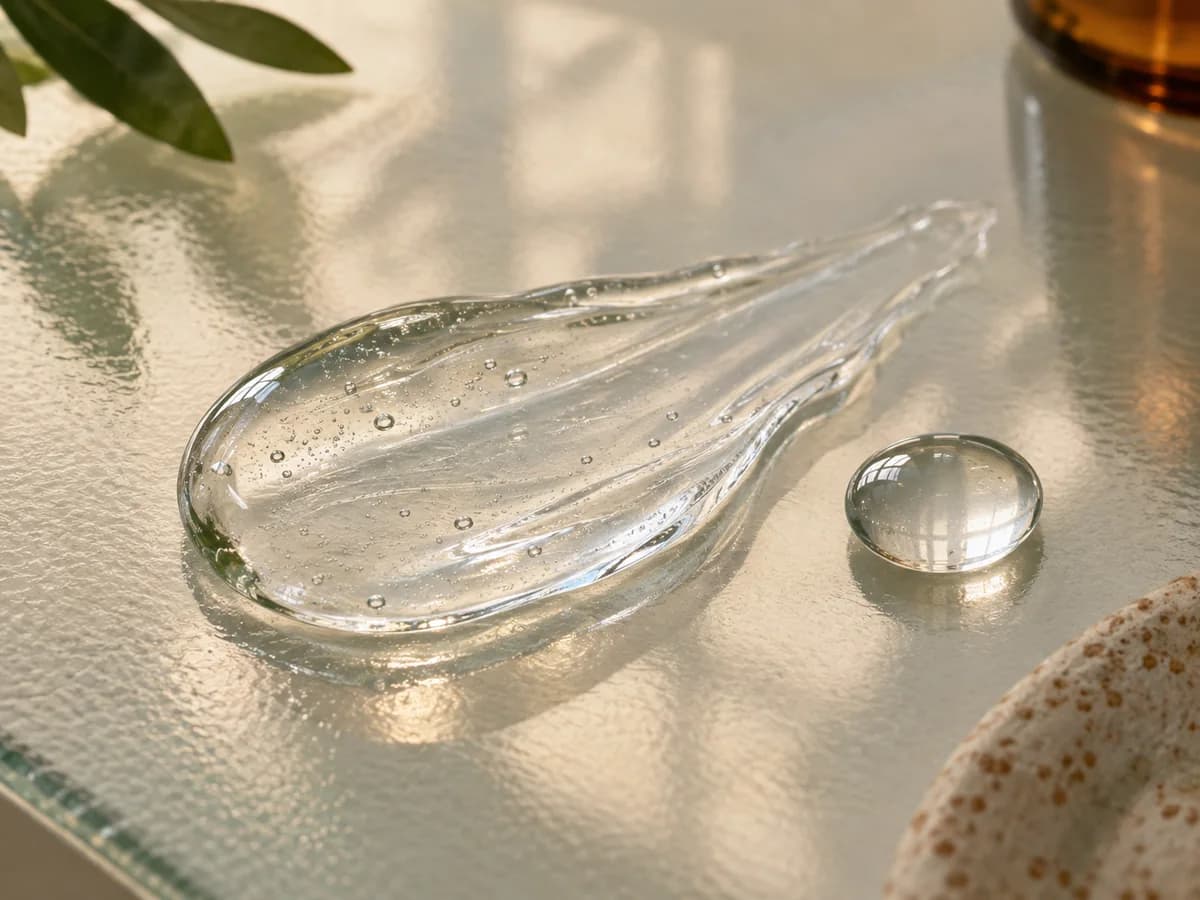
Hydrolyzed hyaluronic acid is hyaluronic acid broken into smaller fragments for formulation use. The name does not specify one exact molecular weight. A study of selected HA sizes in creams found hydration and some wrinkle-measure changes, but it did not validate every material sold as hydrolyzed HA or establish injectable-filler effects.1, 2
- The hydrolyzed label alone does not identify a fixed molecular weight.1
- A 76-person study compared 0.1% creams with five selected HA sizes for 60 days.1
- The older CIR report names HA and sodium/potassium hyaluronate, not every hydrolysate.2
What is Hydrolyzed Hyaluronic Acid?
Hyaluronic acid is a water-binding polymer. Breaking it into shorter pieces changes its material properties, but commercial hydrolysates can contain distributions of fragment sizes. Low molecular weight is therefore not one universal ingredient specification, and smaller is not a clinical synonym for better.1, 2
Where it comes from
Natural sources
- Hyaluronic acid occurs in biological tissues; commercial starting HA may be produced by fermentation.
How it's made
Controlled breakdown and purification produce lower-molecular-weight material with manufacturer-specific specifications.
What it does in products
Benefits
Hydration and fine-line appearance in selected HA creams
limited evidenceThe selected-size cream trial found hydration changes across its formulations and wrinkle-depth changes in the smaller-size groups.1
The randomized periocular study involved 76 women, five specified molecular weights and 0.1% creams for 60 days. It was not a trial of all hydrolyzed-HA grades or evidence of filler-like volume replacement.
Evidence scope and limitations
Topical hydrolyzed-HA interpretation using a selected-molecular-weight cream trial and explicitly limited parent-HA safety context.
- The trial did not test all commercial hydrolysates.
- The parent-HA CIR report is not a direct safety assessment of every hydrolyzed grade.
- No injectable or oral effect is inferred.
Evidence last checked: 2026-10-01
Side effects & safety
Safety considerations
- A claim that all small HA fragments are inflammatory, or all are harmless, goes beyond the cosmetic trial cited here.
- Not for: Avoid applying raw ingredient powders or unvalidated injectable preparations.
- Not for: Stop a serum that causes a recurring reaction.
Amounts studied & product use
These figures describe research or common product use, not a personal dose or treatment recommendation.
In skincare studies and products
The cited cream study used 0.1% HA at specified molecular weights twice daily for 60 days. Those study conditions cannot set an optimal hydrolyzed-HA percentage, predict an unknown fragment distribution or justify DIY injection.
Regulatory status
- A topical cosmetic ingredient should not inherit drug or device claims from injectable HA products.
- INCI name on cosmetic labels: Hydrolyzed Hyaluronic Acid.
- The cited 2009 report concerns parent HA and named hyaluronate salts; it is contextual evidence, not specific clearance of every hydrolyzed grade.
Ask which molecular weight was actually tested
The cream study selected 50, 130, 300, 800 and 2,000 kDa HA. A label saying hydrolyzed does not tell you which of those ranges, if any, the product matches.
Hydration-related smoothing and injected volume replacement are also different outcomes. Marketing that connects them solely through the term hyaluronic acid omits route, molecular specifications and the tested vehicle.
1, 2Frequently asked questions
Does hydrolyzed automatically mean deeper penetration?
The name indicates breakdown, not a measured penetration depth in your serum. Exact size distribution and formulation still matter.1
Will a hydrolyzed HA serum work like filler?
The cited evidence concerns topical hydration and wrinkle measurements, not injectable volume replacement.1
The bottom line
Keep molecular weight, vehicle and route attached to the evidence. Hydrolyzed is not a universal superiority or filler claim.
References
- Pavicic T, Gauglitz GG, Lersch P et al.. Efficacy of cream-based novel formulations of hyaluronic acid of different molecular weights in anti-wrinkle treatment. Journal of Drugs in Dermatology (2011) · randomized trial · PMID 22052267
- Becker LC, Bergfeld WF, Belsito DV et al.. Final report of the safety assessment of hyaluronic acid, potassium hyaluronate, and sodium hyaluronate. International Journal of Toxicology / Cosmetic Ingredient Review (2009) · safety assessment · PMID 19636067; DOI 10.1177/1091581809337738
- Allergens in Cosmetics. U.S. Food and Drug Administration · government guidance · Undated live resource; accessed October 1, 2026
- FDA Authority Over Cosmetics: How Cosmetics Are Not FDA-Approved, but Are FDA-Regulated. U.S. Food and Drug Administration (2013) · government guidance · Page updated August 3, 2013; accessed October 1, 2026
Revision history
- Initial AI-assisted evidence compilation with source-linked claims, formulation distinctions and explicit research limitations; not independent medical review.