Cholesterol (Skincare)
Also known as: Cholesterin, Cholesterol in skincare
A skin-barrier lipid used in creams; evidence about balanced lipid mixtures is not proof for cholesterol alone.
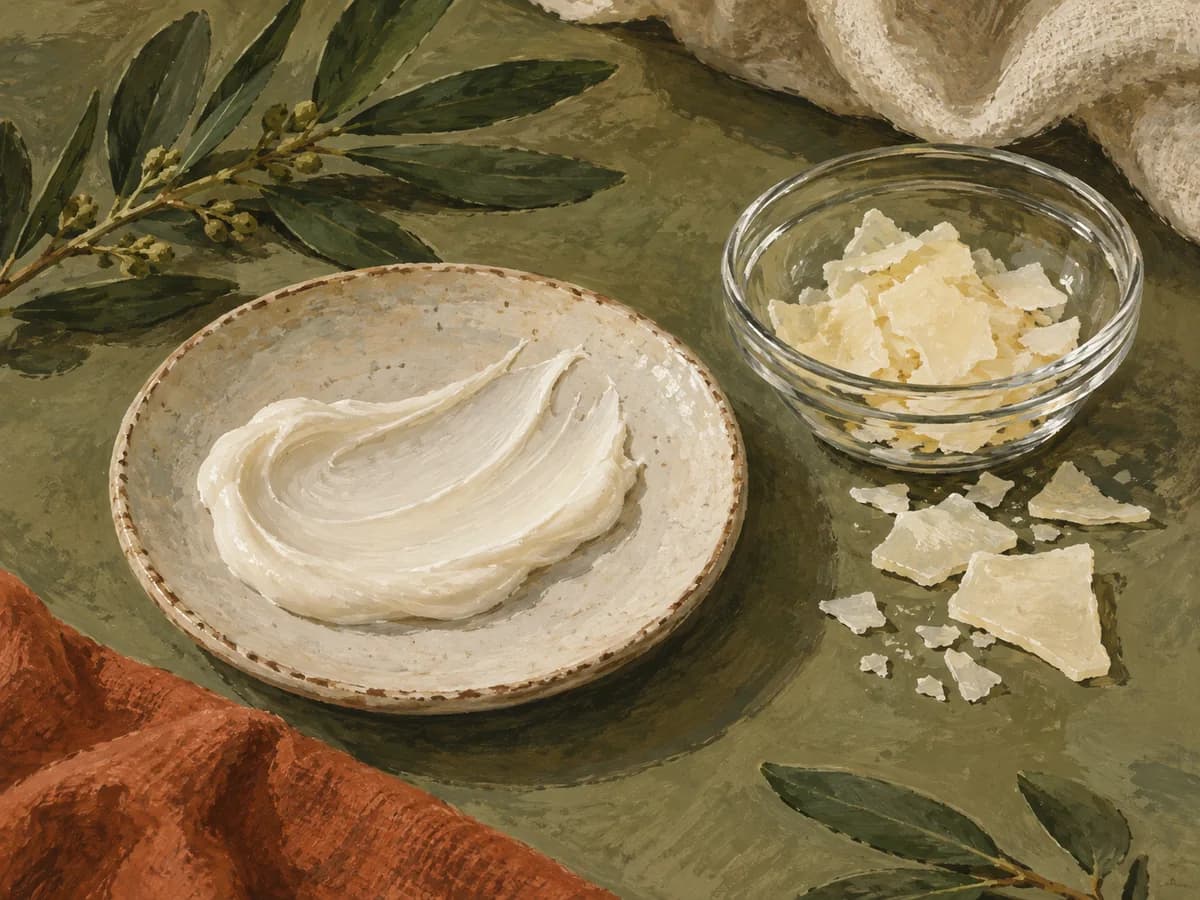
Cholesterol is one of the lipids found in the skin barrier and is used in cosmetic creams. Experimental work supports studying it alongside ceramides and fatty acids, but not treating isolated cholesterol as a proven eczema cure. The lipid mixture, vehicle and condition of the skin matter more than simply finding cholesterol on a label.1, 2, 3
- Topical barrier research evaluates cholesterol with other lipids.2, 3
- The 1997 experiment included only six elderly human participants, alongside animal work.3
- CIR released its summary of the 2024 cosmetic re-review in January 2025.1
What is Cholesterol (Skincare)?
This guide concerns topical cholesterol, not blood cholesterol or cardiovascular treatment. The outer skin's lipid organization gives a reason to study replacement mixtures, but a biological role is only the starting point. Commercial cholesterol can have animal-derived feedstocks; an INCI name does not establish a product's vegan status.1, 2
Where it comes from
Natural sources
- A lipid present in animal tissues and the human skin barrier
How it's made
Cosmetic supplies are manufactured and purified; origin and impurity controls are supplier-specific.
What it does in products
Benefits
Barrier recovery with a defined lipid mixture
limited evidenceEarly experiments found that the composition of cholesterol, ceramides and fatty acids influenced recovery of deliberately disrupted skin barriers.2, 3
The 1997 paper included animal work and six elderly people with experimentally disrupted skin. A short-term barrier measurement is not a long-term eczema treatment trial or evidence for cholesterol alone.
Evidence scope and limitations
Topical cholesterol in cosmetics and experimental multi-lipid skin-barrier research; excludes dietary and cardiovascular claims.
- Foundational studies include animal work, a very small human sample and short-term experimental barrier injury.
- Whole-mixture findings cannot be attributed to isolated cholesterol or generalized to all creams.
- Cosmetic use surveys describe exposure, not an effective therapeutic concentration.
Evidence last checked: 2026-10-07
Side effects & safety
Safety considerations
- The cited barrier experiments do not establish that every cholesterol cream is compatible with every prescription skin treatment.
- Not for: Select around known ingredient allergies and stop a formula that produces a persistent reaction. Skin disease requires assessment beyond a lipid ingredient list.
Amounts studied & product use
These figures describe research or common product use, not a personal dose or treatment recommendation.
In skincare studies and products
The CIR summary reports cosmetic cholesterol concentrations up to 0.25% in the 2022 use survey. In contrast, the 1997 research used an experimental 2% total lipid mixture; that is not 2% cholesterol. Neither figure establishes an ideal consumer dose or a universal cream recipe.
Regulatory status
- A cosmetic ingredient, not an FDA-approved eczema treatment or cholesterol-lowering medicine.
- INCI name on cosmetic labels: Cholesterol.
- The 2024 re-review reaffirmed the prior safe-as-used cosmetic conclusion; the final re-review summary was released in 2025.
A lipid ratio is not a universal seal of quality
The aged-skin study tested a cholesterol-dominant mixture in a particular vehicle and damaged-barrier model. It does not validate every modern cream advertising a lipid ratio, nor does it establish one optimum for every skin type.
Our reading: ratio marketing becomes useful only when the units, lipid identities, delivery system and tested population are clear. A label cannot show whether a finished product reproduces the intervention in a paper.
3, 2Frequently asked questions
Does applying cholesterol address high blood cholesterol?
No such benefit is established by the cited sources. These are topical cosmetic and skin-barrier studies, not cardiovascular or oral-treatment trials.1, 3
Is a cholesterol cream automatically vegan?
No. Commercial ingredient origin can vary, and animal-derived sources are discussed in the safety summary. Vegan status needs product-specific sourcing information.1
The bottom line
Look for evidence on the finished lipid formulation, not cholesterol alone or a ratio slogan. Topical barrier care and blood-lipid management are different topics.
References
- Safety Assessment of Cholesterol as Used in Cosmetics: Re-Review Summary. Cosmetic Ingredient Review (2025) · safety assessment · 2024 re-review; summary released January 17, 2025
- Man MQ, Feingold KR, Thornfeldt CR, Elias PM. Optimization of physiological lipid mixtures for barrier repair. Journal of Investigative Dermatology (1996) · primary study · PMID 8618046; DOI 10.1111/1523-1747.ep12340135
- Zettersten EM, Ghadially R, Feingold KR, et al.. Optimal ratios of topical stratum corneum lipids improve barrier recovery in chronologically aged skin. Journal of the American Academy of Dermatology (1997) · primary study · PMID 9308554; DOI 10.1016/S0190-9622(97)70140-3
- Allergens in Cosmetics. U.S. Food and Drug Administration · government guidance · Undated resource; accessed October 7, 2026
- FDA Authority Over Cosmetics: How Cosmetics Are Not FDA-Approved, but Are FDA-Regulated. U.S. Food and Drug Administration (2013) · government guidance
Revision history
- Initial AI-assisted source compilation with claim-level citations, formulation distinctions and explicit evidence limitations; not independent medical review.