Bentonite
Also known as: Bentonite clay
A variable mineral clay used for absorption and texture, with a specific unresolved safety boundary for incidental inhalation.
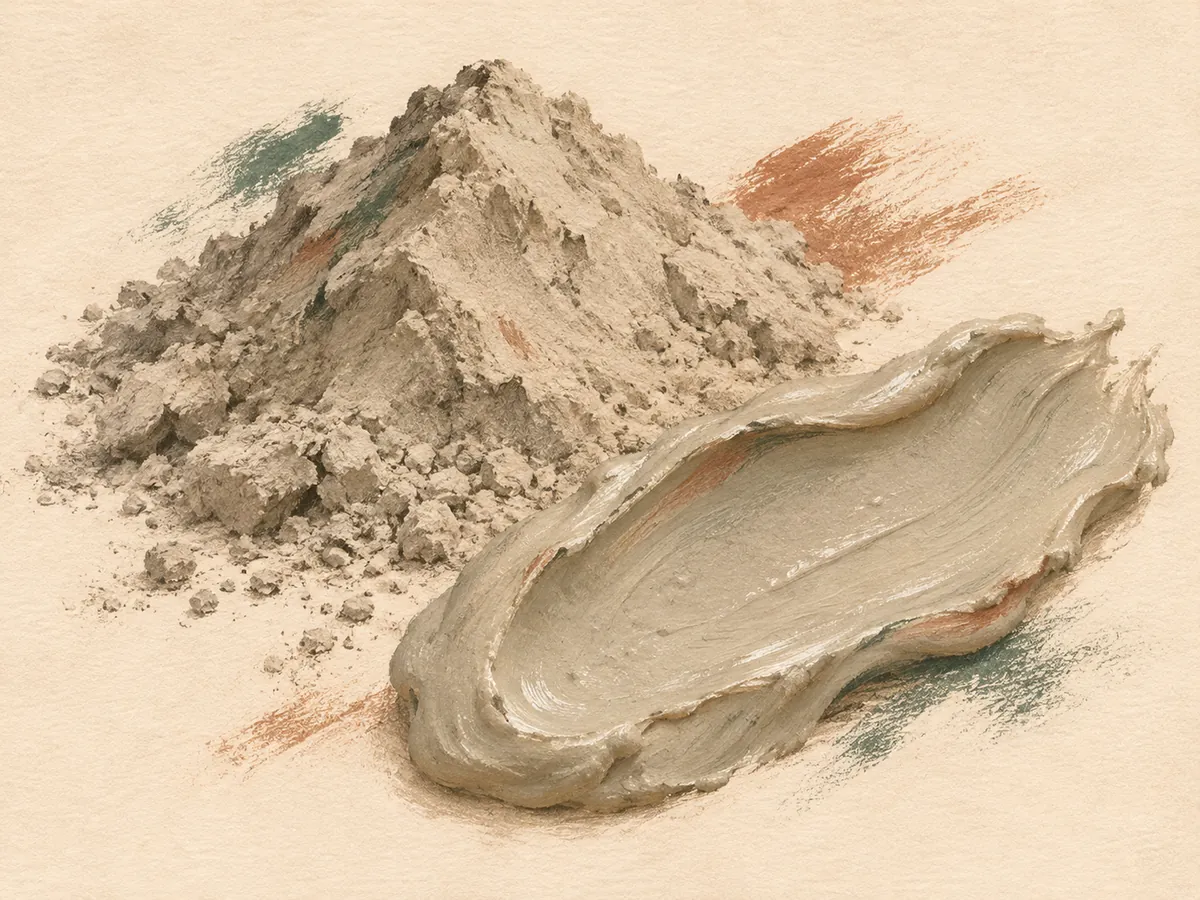
Bentonite is a naturally sourced mineral clay used in cosmetics for absorbency and formulation texture. CIR's final 2023 report concluded it was safe in the assessed cosmetic practices, while finding insufficient data for products involving incidental inhalation. That route-specific limitation is important for interpreting a general clay-safety claim.1
- CIR lists absorbent, bulking, emulsion-stabilizing and viscosity-related functions for this group of naturally sourced clays.1
- Bentonite's mineral composition and accompanying components can vary. A clay name alone does not specify a batch's purity.1, 2
- The final CIR conclusion leaves incidental-inhalation use of bentonite unresolved because of insufficient data.1
What is Bentonite?
Bentonite contains montmorillonite as a principal mineral, with composition varying by deposit and processing. The complete material specification matters. The cited reports describe mineral identity and cosmetic or environmental exposure, so this guide focuses on formulation use and the boundaries of those assessments.1, 2
Where it comes from
Natural sources
- A naturally sourced mineral clay principally associated with montmorillonite.
How it's made
Processing and specifications influence the finished ingredient. Raw geological material cannot be assumed equivalent to a specified cosmetic input.
What it does in products
Benefits
Formulation absorbency has a defined scope
insufficient evidenceThe safety reports describe useful material functions but do not establish acne treatment or whole-body detoxification.1, 2
CIR assessed cosmetic safety and use practices. WHO's mineral monograph examined identity and exposure hazards. Neither supplies a controlled clinical demonstration that a bentonite mask removes systemic toxins or treats acne. This rating applies to those health claims, while the technical roles are documented separately.
Evidence scope and limitations
Bentonite as a naturally sourced cosmetic formulation material, the final 2023 CIR assessment and WHO's historical mineral-exposure monograph. Clinical acne treatment and oral detoxification are outside the demonstrated findings.
- The CIR document checked is the final amended report, not a consultation draft. It retains an explicit incidental-inhalation data gap for bentonite.
- Occupational dust evidence includes mixed exposures and does not quantify risk from an occasional consumer mask.
- These sources do not authenticate a retail batch, establish a safe oral dose or provide a comprehensive clinical efficacy and interaction review.
Evidence last checked: 2026-11-12
Side effects & safety
Safety considerations
- The selected cosmetic and environmental assessments do not establish an oral regimen or a complete medication-interaction profile.
- Not for: CIR found insufficient data for bentonite-containing products with incidental inhalation. Avoid interpreting its dermal-use conclusion as clearance for airborne powder exposure.
- Not for: This source set does not establish safe ingestion of a cosmetic or raw-clay product.
Amounts studied & product use
These figures describe research or common product use, not a personal dose or treatment recommendation.
In finished cosmetic formulations
The final CIR report describes assessed cosmetic use practices, rather than a universal therapeutic concentration. Follow the finished product's intended route and directions. The report does not supply a home-mixing or ingestion dose.
Regulatory status
- FDA distinguishes cosmetics from drugs by intended use and claims. Acne-treatment claims require the relevant drug framework. A CIR safety conclusion does not itself confer FDA product approval.
- INCI name on cosmetic labels: Bentonite.
- Final amended report released March 31, 2023. Safe in assessed cosmetic practices, with insufficient data for bentonite in products involving incidental inhalation.
A clay name leaves important questions open
The final CIR report separates its conclusions by ingredient and exposure route. A statement copied from another clay, or a summary that omits inhalation, loses a material part of the assessment.
The WHO monograph describes limitations in historical occupational bentonite studies, including incomplete exposure measurements and silica co-exposure. Those studies warrant care around dust, while their designs do not give a numerical risk estimate for a modern finished cosmetic. A product-specific specification and route remain necessary to interpret the evidence.
1, 2Frequently asked questions
Does binding material in a clay prove a body-detox effect?
A material's surface interactions and a person's clinical outcomes require different evidence. These cited mineral and cosmetic assessments do not demonstrate removal of systemic toxins by a face mask or establish an oral detoxification regimen.1, 2
The bottom line
Read the final assessment together with its route, composition and finished-product limits before making a clay-safety claim.
References
- Expert Panel for Cosmetic Ingredient Safety. Amended Safety Assessment of Naturally-Sourced Clays as Used in Cosmetics. Cosmetic Ingredient Review (2023) · safety assessment · Final amended report released March 31, 2023 after the March 6–7 meeting; final cover and bentonite inhalation limitation checked
- Bentonite, Kaolin and Selected Clay Minerals. WHO / International Programme on Chemical Safety (2005) · ingredient monograph · Environmental Health Criteria 231; mineral identity and mixed-dust/crystalline-silica limitations checked
- Is It a Cosmetic, a Drug, or Both? (Or Is It Soap?). U.S. Food and Drug Administration · government guidance · Undated agency resource checked November 12, 2026 for intended-use and disease-treatment claim distinctions
Revision history
- Initial AI-assisted source compilation with claim-level citations, formulation distinctions and explicit evidence limitations; not independent medical review.