Yohimbe
Also known as: Pausinystalia yohimbe, Johimbi
A bark supplement with uncertain benefits, variable yohimbine exposure and significant cardiovascular and drug-interaction concerns.
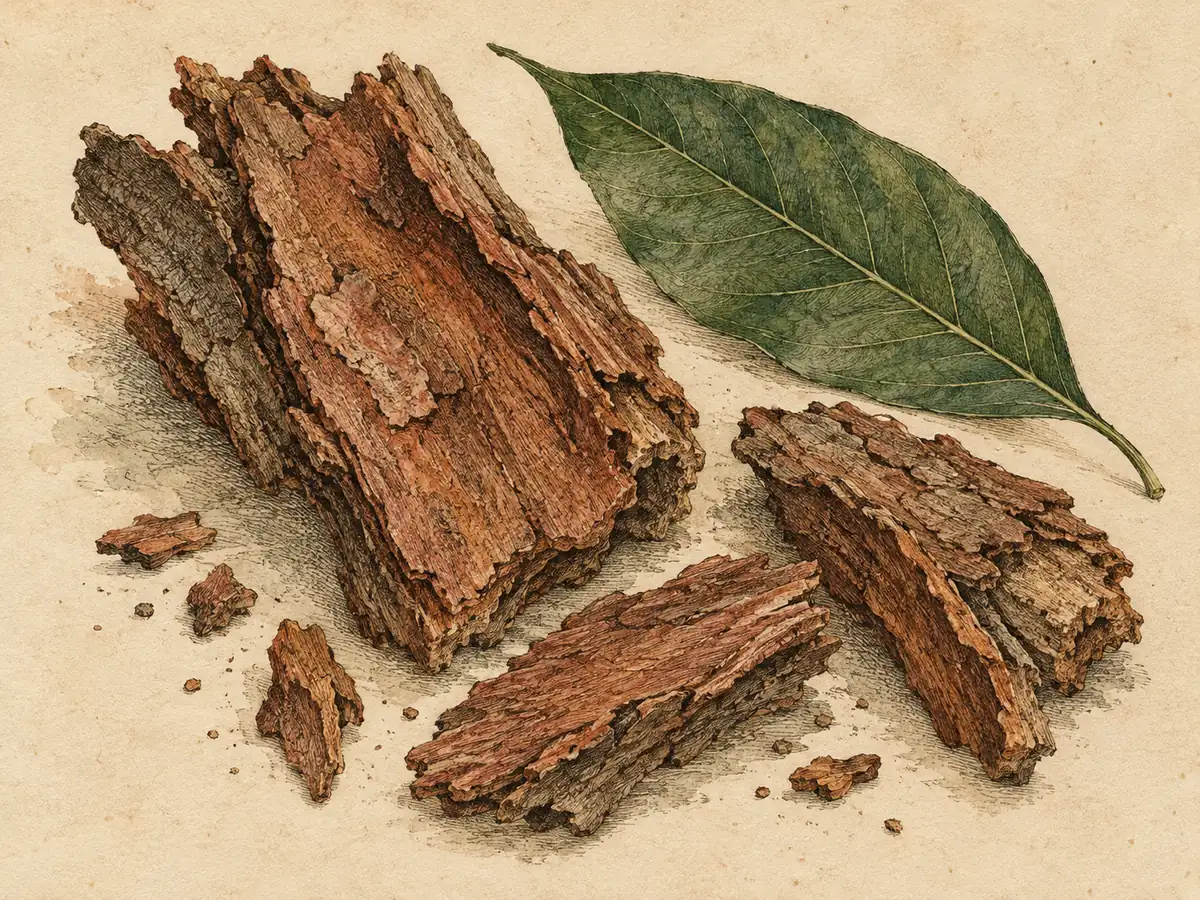
Yohimbe is tree bark used in supplements; yohimbine is one of its active compounds. NCCIH finds insufficient evidence that yohimbe supplements help any health condition and describes serious safety concerns, including blood-pressure problems, arrhythmias and seizures. Studies of isolated yohimbine do not establish the effects of a variable bark supplement.1
- Yohimbine is a compound in yohimbe, not a synonym for the whole bark.1
- A 49-brand analysis found serving-level yohimbine from none detected to 12.1 mg.2
- Poison-center reports are safety signals, not the percentage of all users who will react.3
What is Yohimbe?
The tree grows in central and western Africa. Bark material, a standardized extract and isolated yohimbine are different interventions. Milligrams of bark are not milligrams of yohimbine, and a supplement label may not reliably establish the alkaloid exposure.1, 2
Where it comes from
Natural sources
- Bark of Pausinystalia yohimbe from central and western Africa
How it's made
Highly purified or synthetic yohimbine is distinct from bark material; chemical analysis is needed to characterize a supplement.
What it does in products
Benefits
Sexual performance and weight-loss claims for bark supplements
insufficient evidenceEvidence scope and limitations
Oral yohimbe/yohimbine-containing supplements, label analysis and reported safety events; not a recommendation for isolated yohimbine therapy.
- Drug and bark preparations cannot be assumed equivalent.
- The label survey used historical, single-product samples and does not measure today's entire market.
- Poison-center reporting cannot estimate incidence among all users.
- No general safe supplement-dose window follows from these sources.
Evidence last checked: 2026-10-09
Side effects & safety
Safety considerations
- NCCIH cautions that oral use may be unsafe during pregnancy or breastfeeding.
- NCCIH advises against use with monoamine oxidase inhibitors or tricyclic antidepressants.
- Review the actual supplement with a clinician or pharmacist before combining it with other medicines.
- Not for: A blood-pressure or heart-rate condition warrants clinical discussion, not self-directed use of a stimulant-marketed product.
- Not for: Seek urgent medical care for a seizure, chest pain or severe cardiovascular symptoms.
Amounts studied & product use
These figures describe research or common product use, not a personal dose or treatment recommendation.
In supplement studies and products
No universal bark-supplement dose is supported here. The analytical survey's none-detected to 12.1 mg of yohimbine per labeled serving describes measured exposure, not a safe range or a dosing instruction.
Regulatory status
- Dietary supplements are not FDA-approved before sale. Marketing a supplement as an erectile-dysfunction treatment is not equivalent to authorization as a drug; NCCIH notes that such treatment claims require FDA approval.
Why bark milligrams do not settle the safety question
The published 49-brand survey tested products purchased in 2014; it is a historical snapshot, not a measurement of every current bottle. Most tested labels did not state a specific yohimbine quantity.
Our reading: the missing exposure information matters more than the word natural. An uncertain amount of a pharmacologically active alkaloid is not made predictable by an extraction ratio or a generic bark dose.
2, 1Frequently asked questions
Can yohimbine drug results be applied to a yohimbe supplement?
Not automatically. A defined compound and dose do not describe an uncharacterized bark preparation or a multi-ingredient supplement.1, 2
Does the poison-center study show how often side effects occur?
No. It reviewed 238 symptomatic adult cases reported during 2000–2006, without a denominator of all exposed users. It identifies a concern rather than a universal risk percentage.3
The bottom line
Uncertain benefit and unpredictable alkaloid exposure belong alongside the serious safety warnings, not below a performance claim.
References
- Yohimbe: Usefulness and Safety. National Center for Complementary and Integrative Health (2025) · government guidance · Last updated May 2025
- Cohen PA, Wang YH, Maller G, DeSouza R, Khan IA. Pharmaceutical quantities of yohimbine found in dietary supplements in the USA. Drug Testing and Analysis (2016) · primary study · PMID 26391406; DOI 10.1002/dta.1849; published online in 2015
- Kearney T, Tu N, Haller C. Adverse drug events associated with yohimbine-containing products: a retrospective review of the California Poison Control System reported cases. Annals of Pharmacotherapy (2010) · observational study · PMID 20442348; DOI 10.1345/aph.1P060
Revision history
- Initial AI-assisted source checks and claim-level citation mapping under the site-authorized publishing workflow. No separate human or independent medical review is claimed.