Tongkat Ali
Also known as: Eurycoma longifolia, Longjack
A root extract with limited testosterone evidence and an unresolved, extract-specific genotoxicity safety finding.
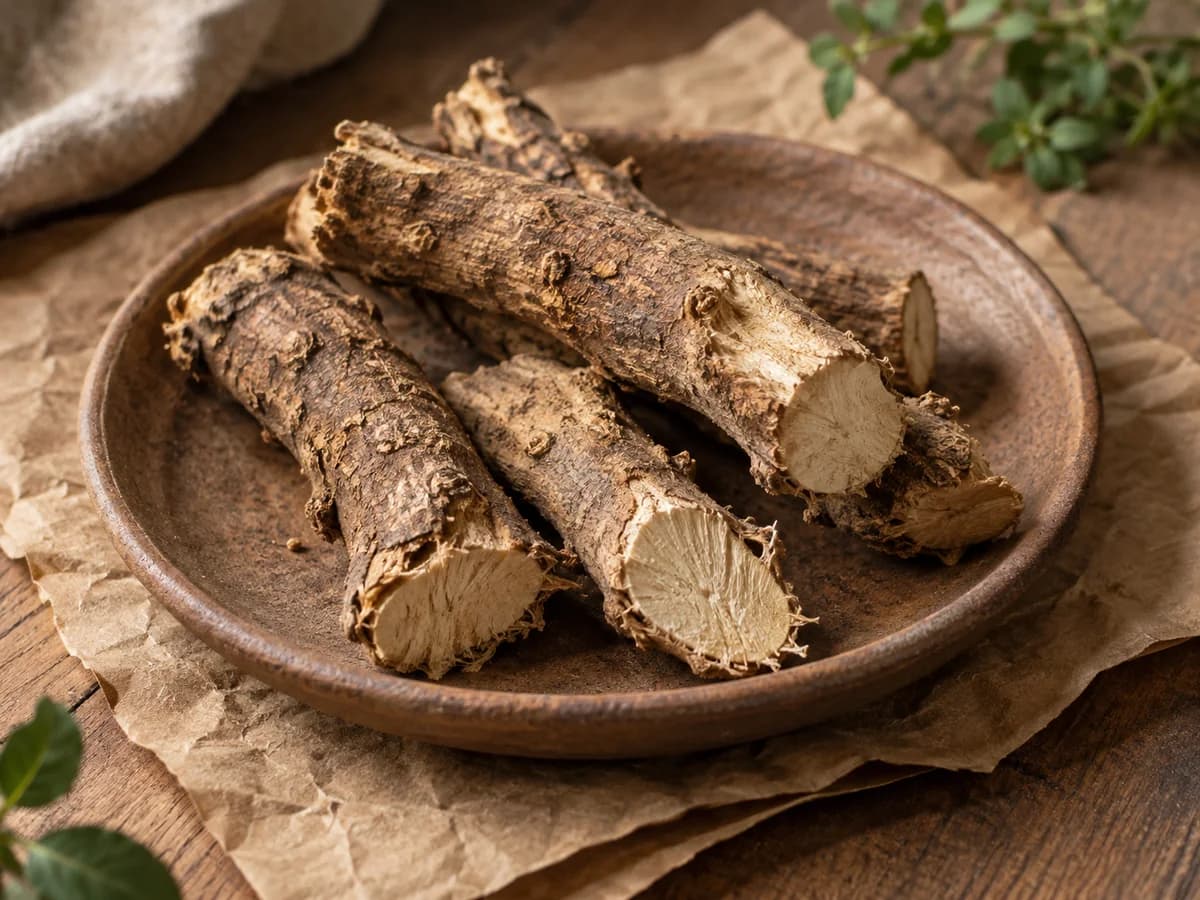
Tongkat ali is Eurycoma longifolia root material or extract, marketed for testosterone and vitality. Small trials of specified extracts show a total-testosterone signal in some men, not proof that all products improve fertility or sexual function. EFSA could not establish safety of the particular root extract it evaluated because of genotoxicity concerns. That finding cannot be dismissed by a short-term efficacy trial.1, 2, 3
- A 2022 review included nine studies, with five randomized trials in its meta-analysis.1
- A 2021 trial studied 105 men aged 50–70 with low baseline total testosterone.2
- EFSA's safety conclusion concerns the evaluated extract, not proof of DNA injury in every human user.3
What is Tongkat Ali?
Raw root, a standardized water extract and a product labeled with an extraction ratio are not automatically the same intervention. This guide separates measured hormone changes from clinical benefits and reads the human trials alongside a safety assessment, rather than assuming natural origin resolves either question.1, 3
Where it comes from
Natural sources
- Roots of the Southeast Asian plant Eurycoma longifolia
How it's made
Commercial extracts are processed and may be standardized; a root-to-extract ratio alone does not establish equivalence with a trial material.
What it does in products
Benefits
Total-testosterone changes in selected men
limited evidenceSome studies reported increases in serum total testosterone. That laboratory outcome does not establish treatment of hypogonadism, infertility or erectile dysfunction.2, 1
The 2021 trial used 100 or 200 mg/day of one standardized extract for 12 weeks in men aged 50–70 with total testosterone below 300 ng/dL. Free testosterone did not differ significantly between groups. Manufacturer funding and limited replication constrain generalization.
Evidence scope and limitations
Specified Eurycoma longifolia root extracts, adult male testosterone studies and EFSA's extract-specific novel-food safety opinion; not generic hormone optimization.
- Trials are small, short and heterogeneous; the biomarker is not a substitute for a clinical outcome.
- The 2021 trial was manufacturer-funded and included manufacturer-affiliated authors.
- Trial extract identity cannot be assumed from a retail extraction-ratio claim.
- The EFSA genotoxicity concern remains unresolved by short-term human tolerability observations.
Evidence last checked: 2026-10-07
Side effects & safety
Safety considerations
- Pregnant and breastfeeding people were excluded from the proposed use assessed by EFSA; safety is not established for these groups or children.
- These sources do not establish compatibility with every medicine or endocrine treatment. A missing documented interaction is not evidence of safety.
- Not for: People with endocrine disorders or fertility concerns need clinical assessment rather than self-treatment with a testosterone booster.
- Not for: An unresolved safety finding should not be reframed as a safe dosing window for a different retail extract.
Amounts studied & product use
These figures describe research or common product use, not a personal dose or treatment recommendation.
In supplement studies and products
The 2021 human trial used 100 or 200 mg/day of a specified standardized water extract for 12 weeks. Separately, EFSA assessed a proposed 200 mg/day use of the applicant's extract but did not establish its safety. These are study/application amounts, not a personal recommendation or interchangeable doses for raw root and extraction-ratio products.
Regulatory status
- U.S. dietary-supplement marketing is not FDA approval to treat low testosterone. EFSA's 2021 novel-food opinion is a European safety assessment, not an FDA approval or a statement of U.S. legal status.
Why a positive trial does not answer the safety question
The randomized trial measured hormones and short-term clinical laboratory tests. EFSA evaluated a different safety question using toxicology evidence. Lack of an obvious adverse event over 12 weeks cannot negate a genotoxicity signal.
Our reading: a clinical finding remains attached to its extract and population, and a regulatory finding remains attached to the material evaluated. It would be equally misleading to call all tongkat ali harmless or to claim that the animal tests prove DNA damage in every supplement user.
2, 3, 1Frequently asked questions
Does a testosterone increase prove a fertility benefit?
No. A serum hormone measurement is not a fertility outcome. The cited meta-analysis cannot establish that a general retail product improves conception or treats an endocrine disorder.1, 2
Does the EFSA opinion apply to every tongkat ali product?
The assessment concerned a specified root extract and its submitted safety data. It does not demonstrate that every product has identical hazards, but it also does not establish that other extracts are safe.3
The bottom line
A limited hormone signal is not an established clinical treatment or a safety clearance. Extract identity and unresolved toxicology deserve equal prominence.
References
- Leisegang K, Finelli R, Sikka SC, Panner Selvam MK. Eurycoma longifolia (Jack) Improves Serum Total Testosterone in Men: A Systematic Review and Meta-Analysis of Clinical Trials. Medicina (Kaunas) (2022) · meta analysis · PMID 36013514; DOI 10.3390/medicina58081047
- Chinnappan SM, George A, Pandey P, Narke G, Choudhary YK. Effect of Eurycoma longifolia standardised aqueous root extract–Physta® on testosterone levels and quality of life in ageing male subjects: a randomised, double-blind, placebo-controlled multicentre study. Food & Nutrition Research (2021) · randomized trial · PMID 34262417; DOI 10.29219/fnr.v65.5647; CTRI/2019/03/017959
- EFSA Panel on Nutrition, Novel Foods and Food Allergens. Safety of Eurycoma longifolia (Tongkat Ali) root extract as a novel food pursuant to Regulation (EU) 2015/2283. EFSA Journal (2021) · safety assessment · DOI 10.2903/j.efsa.2021.6937
- Dietary Supplements. U.S. Food and Drug Administration · government guidance · Undated resource; accessed October 7, 2026
Revision history
- Initial AI-assisted source compilation with claim-level citations, formulation distinctions and explicit evidence limitations; not independent medical review.