Urolithin A
Also known as: UA, Urolithin-A
A microbiota-derived metabolite with exploratory muscle findings, not established human longevity or a reproducible mobility benefit.
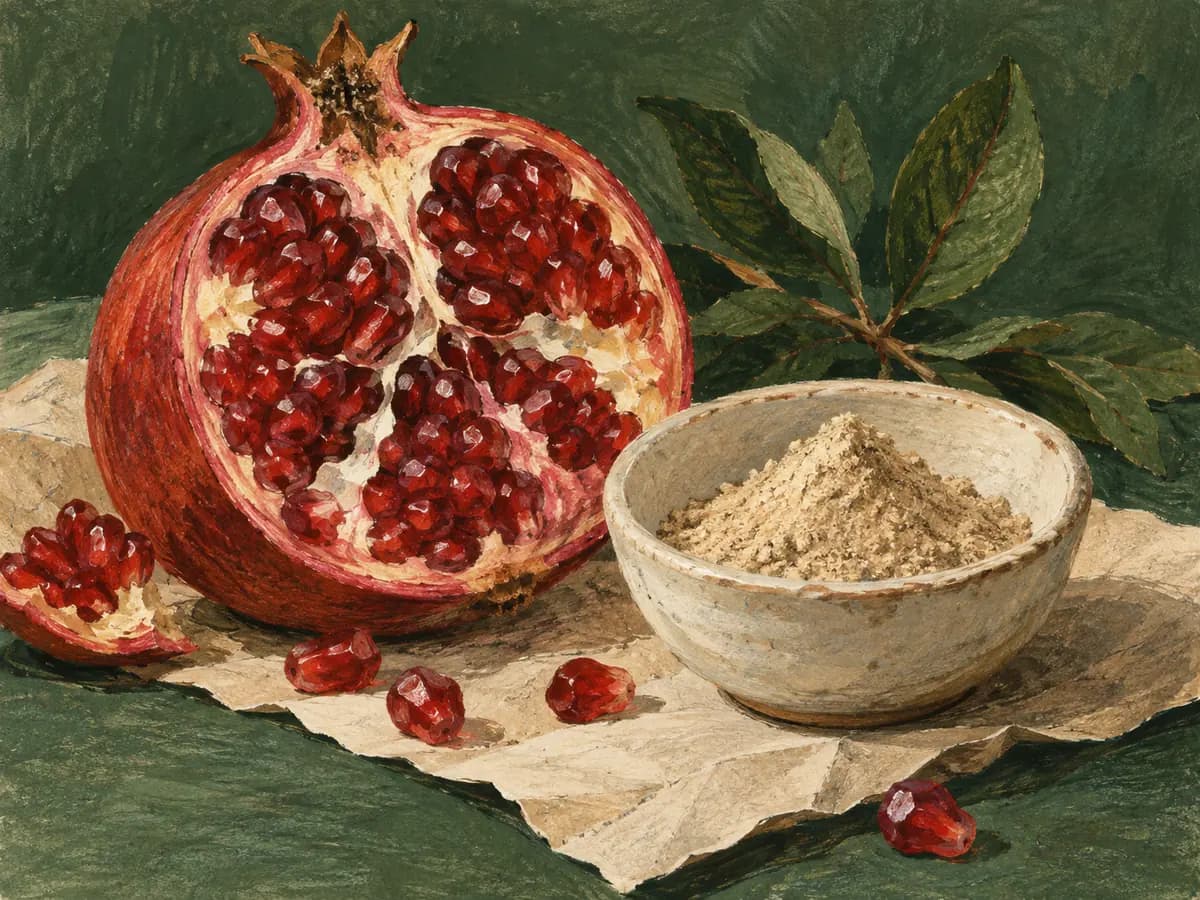
Urolithin A is a metabolite associated with gut-microbial conversion of dietary ellagitannins, also manufactured as an ingredient. Some trials report muscle-endurance or biomarker signals. A 2026 review found statistically inconclusive walking-distance results with low certainty; these findings do not establish longer human life or a general mobility treatment.2, 3
- The older-adult trial enrolled 66 people aged 65–90 and used 1,000 mg/day for four months.1
- Its primary walking-distance and maximal ATP-production outcomes were not significantly better than placebo.1
- The 2026 review included five small trials; only walking distance could be quantitatively pooled.2
What is Urolithin A?
Direct supplementation and eating an ellagitannin-containing food are not equivalent interventions. Microbial conversion varies between people, while trials supplied a defined manufactured ingredient. The term mitophagy describes a biological process; a mechanistic rationale is not itself a patient-important outcome.2, 3
Where it comes from
Natural sources
- Gut-microbial metabolite of dietary ellagitannins
How it's made
The material described in FDA's GRN 791 response is chemically synthesized to stated specifications; a fruit serving is not a measured supplement dose.
What it does in products
Benefits
Exploratory muscle-endurance findings
limited evidenceSelected fatigue tests improved in one older-adult trial. The wider evidence does not yet show a consistent functional benefit across populations.1, 2
The four-month trial found secondary endurance signals despite nonsignificant primary outcomes. Amazentis funded it and participated in study design and analysis. The 2026 review judged pooled walking-distance evidence low certainty and other findings exploratory.
Evidence scope and limitations
Manufactured oral urolithin A in human muscle trials, the July 2026 systematic review and GRN 791; not all postbiotics or dietary ellagitannin foods.
- Five small, short, heterogeneous trials do not support broad clinical recommendations.
- Secondary fatigue tests and biomarkers are not interchangeable with mobility or lifespan.
- The prominent older-adult trial was manufacturer-funded and enrolled a demographically narrow sample.
- Food-use specifications and exposures cannot be generalized to every supplement, population or combination.
Evidence last checked: 2026-10-10
Side effects & safety
Safety considerations
- The cited muscle trials do not establish supplement safety during pregnancy, breastfeeding or childhood.
- These studies do not provide a comprehensive medicine-interaction assessment; selected research participants are not every person receiving chronic treatment.
- Not for: Do not treat the cited food-use safety letter as clearance of arbitrary doses, combination supplements or a diagnosed muscle disorder.
Amounts studied & product use
These figures describe research or common product use, not a personal dose or treatment recommendation.
In supplement studies and products
Trials summarized in the 2026 review used 500–1,000 mg/day orally for approximately four weeks to four months. The older-adult trial used 1,000 mg/day for four months. These are studied ranges for specified preparations, not a personalized dose or a food-equivalence calculation.
Regulatory status
- FDA's 2018 GRN 791 letter states it had no questions about the notifier's GRAS conclusion for specified food uses. The letter explicitly is not an FDA affirmation of GRAS status under 21 CFR 170.35, and it does not approve a muscle or anti-aging drug claim. U.S. supplement marketing is not premarket FDA efficacy approval.
Look past the mitochondrial headline
A change in contractions until fatigue is not the same as improved everyday walking or fewer disability events. The newer review found an inconclusive pooled walking-distance estimate; heterogeneous strength and biomarker findings could not be combined into a reproducible effect.
Our reading: keep the primary outcomes visible next to positive secondary results. Neither a short trial nor a food-use notification answers whether supplement use improves long-term independence or human lifespan.
2, 1, 3Frequently asked questions
The bottom line
Treat endurance signals as provisional, keep the null primary outcomes in view, and separate a specified food-use safety conclusion from clinical benefit.
References
- Liu S, D'Amico D, Shankland E, Bhayana S, Garcia JM, Aebischer P, Rinsch C, Singh A, Marcinek DJ. Effect of Urolithin A Supplementation on Muscle Endurance and Mitochondrial Health in Older Adults: A Randomized Clinical Trial. JAMA Network Open (2022) · randomized trial · PMID 35050355; DOI 10.1001/jamanetworkopen.2021.44279; NCT03283462
- Dao T, Nguyen TT, Gariani K, Kim HJ, Ryu D. Effects of Urolithin A supplementation on muscle health outcomes in humans from randomized controlled trials. Frontiers in Nutrition (2026) · systematic review · PMID 42559151; DOI 10.3389/fnut.2026.1834344; published July 22, 2026
- GRAS Notice 791: FDA Agency Response Letter. U.S. Food and Drug Administration (2018) · government guidance · GRN 000791; signed December 20, 2018
- Dietary Supplements. U.S. Food and Drug Administration · government guidance · Undated resource; accessed October 10, 2026
Revision history
- Initial AI-assisted source checks and claim-level citation mapping under the site-authorized publishing workflow. No separate human or independent medical review is claimed.