Tragacanth
Also known as: Gum tragacanth, E413
A plant-exudate thickener with food-use safety assessment and a very small human physiology study.
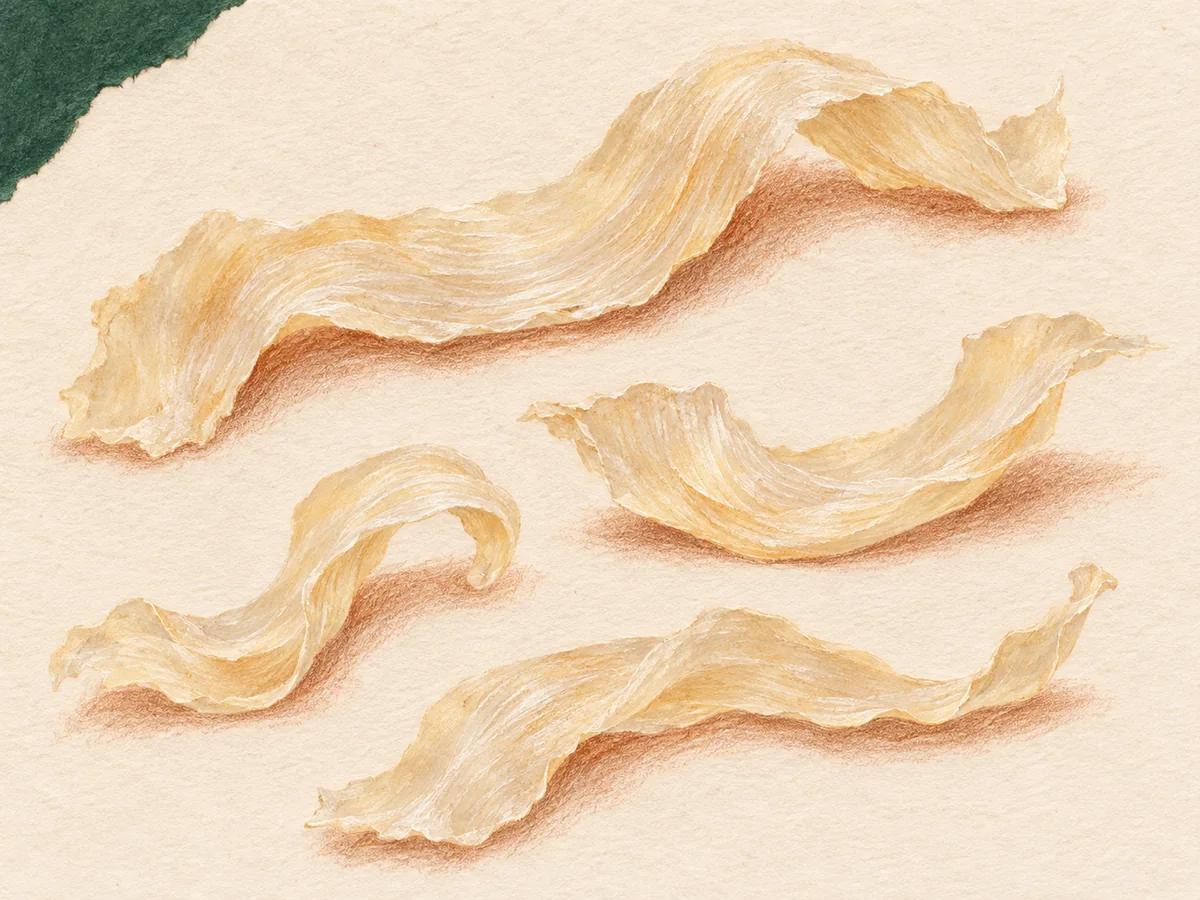
Tragacanth, or E413, is a plant-exudate gum used to thicken and stabilize foods. EFSA found no safety concern at the reported food uses and exposure levels it assessed. Therapeutic claims remain uncertain. The cited human study involved five men over 21 days, providing a limited view of physiology and tolerance.1, 2, 3
- The U.S. rule lists emulsification, stabilization and thickening among gum tragacanth's technical food functions.1
- EFSA's 2017 conclusion concerns reported uses and refined food-additive exposure estimates.2
- Five male volunteers consumed 9.9 g/day for 21 days after a seven-day control period in the 1984 study.3
What is Tragacanth?
U.S. rules identify gum tragacanth as an exudate from Astragalus shrubs. The relevant ingredient is the collected gum, with its own technical uses and food specifications. Plant part and preparation are essential when reading a botanical ingredient name.1
Where it comes from
Natural sources
- Gum exudate collected from specified Astragalus shrubs.
How it's made
The cited food rule describes the gum's identity and purity requirements for use as an additive.
What it does in products
Benefits
Digestive-treatment claims remain uncertain
insufficient evidenceThe small human study observed physiological changes.3
Stool wet and dry weights increased in all five participants, while transit time decreased in four. The same study found no significant cholesterol or glucose-tolerance change. Its short control-then-exposure design leaves treatment effects in people with constipation or metabolic disease unresolved.
Evidence scope and limitations
Plant-exudate food identity, the final E413 safety assessment and one five-person physiology study.
- The 1984 study was checked through its original indexed abstract. Its all-male sample and 21-day exposure leave population differences and durability unresolved.
- Food-additive safety applies to the assessed exposure. Therapeutic dosing, other Astragalus plant parts and other administration routes require separate evidence.
Evidence last checked: 2026-11-15
Side effects & safety
Amounts studied & product use
These figures describe research or common product use, not a personal dose or treatment recommendation.
In food formulation and a physiology study
The human study's 9.9 g/day describes experimental exposure. Food formulation follows category-specific conditions. U.S. maximum levels include 0.2% in baked goods, 0.8% in gravies and sauces, and 0.1% in other categories covered by the rule. These figures describe different contexts and supply no established therapeutic intake.
Regulatory status
- 21 CFR 184.1351 permits specified food functions with category-specific maximum levels. EFSA's 2017 E413 re-evaluation found no need for a numerical acceptable daily intake and no safety concern at the assessed reported uses and levels.
Read the gum specification alongside the health claim
The food identity specifies an exudate. An ingredient list that names gum tragacanth therefore identifies a particular plant material and formulation role. Botanical naming alone leaves other plant parts and extracts outside that specification.
EFSA's food-additive assessment and the small volunteer study answer different questions. The former evaluates safety at reported food exposures. The latter describes short-term physiological changes. Clinical effectiveness in a diagnosed condition remains an evidence gap.
1, 2, 3Frequently asked questions
The bottom line
Use the gum's identity and food-use conditions to interpret E413, while keeping therapeutic claims open to direct clinical testing.
References
- 21 CFR 184.1351 — Gum tragacanth. U.S. Food and Drug Administration / eCFR · government guidance · Current food regulation checked November 15, 2026 for botanical exudate identity, technical functions and category-specific maximum levels
- EFSA Panel on Food Additives and Nutrient Sources added to Food. Re-evaluation of tragacanth (E 413) as a food additive. EFSA Journal (2017) · safety assessment · DOI 10.2903/j.efsa.2017.4789; 15(6):4789; final food-additive assessment checked for reported-use exposure and human-study scope
- Eastwood MA, Brydon WG, Anderson DM. The effects of dietary gum tragacanth in man. Toxicology Letters (1984) · primary study · PMID 6372167; DOI 10.1016/0378-4274(84)90226-1; April 1984, 21(1):73–81; indexed original abstract checked, full text unavailable
Revision history
- Initial AI-assisted source compilation with claim-level citations, formulation distinctions and explicit evidence limitations; not independent medical review.