Locust Bean Gum
Also known as: Carob bean gum, Carob gum, LBG, E410
A carob-seed thickener with food-category limits and infant-formula evidence that depends on the complete formulation and age group.
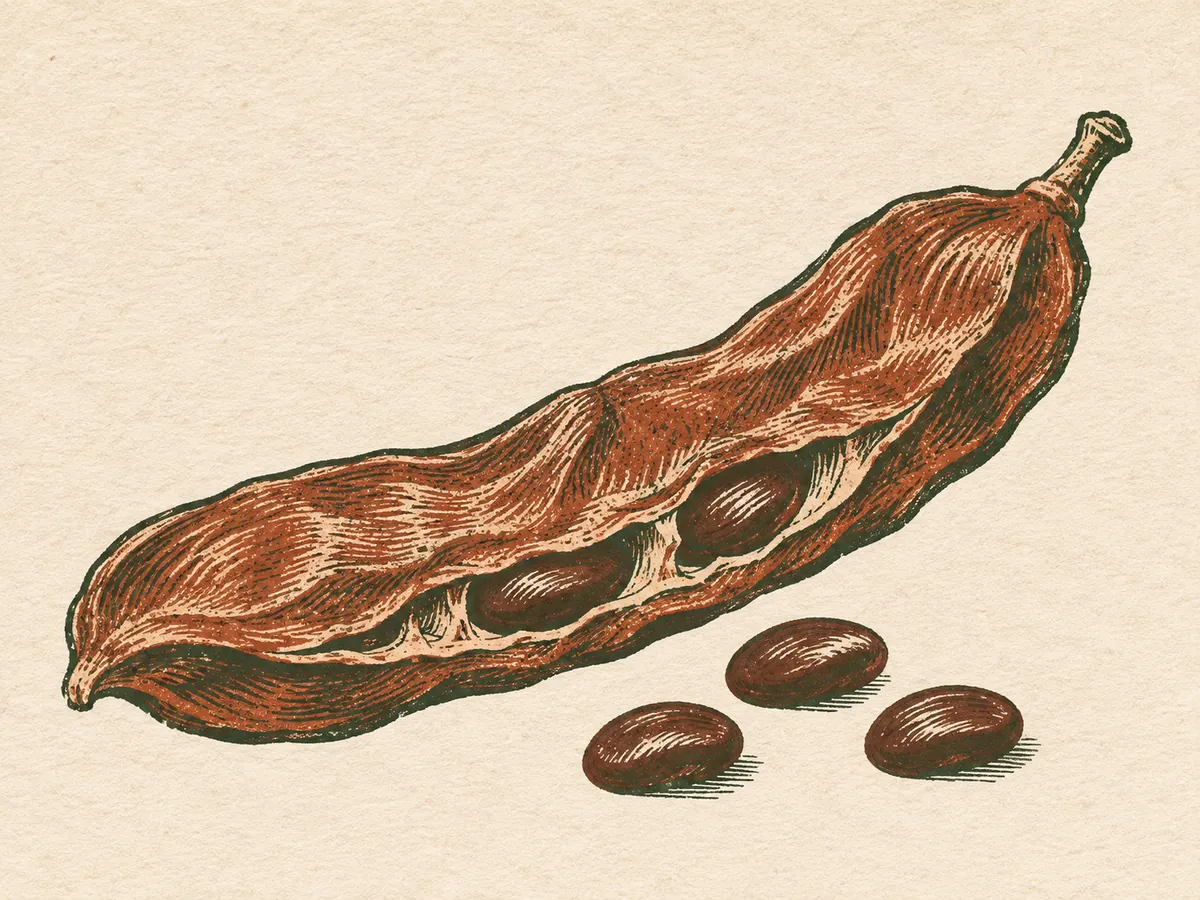
Locust bean gum is a thickener obtained from carob seeds. It helps control food texture and is used in some anti-regurgitation infant formulas. Evidence supports fewer visible spit-up episodes with some thickened formulas, while the exact gum, complete formula and infant population affect the conclusion.1, 2
- U.S. food rules set different maximum levels by food category, including 0.15% in baked goods and 0.25% in nonalcoholic beverages.1
- A 2024 randomized trial studied 103 full-term infants and a complete formula containing 0.4 g/100 mL locust bean gum.3
- EFSA's 2023 infant assessment used a zinc-related reference point from piglets and assessed margins of exposure by scenario.5
What is Locust Bean Gum?
The U.S. identity definition describes material made primarily from the seed endosperm of Ceratonia siliqua. The food ingredient has specified manufacturing and use conditions. A carob-food name alone gives incomplete information about an isolated gum's composition or its suitability for a particular infant feed.1, 4
Where it comes from
Natural sources
- Endosperm from seeds of the carob tree, Ceratonia siliqua.
How it's made
Processing and clarification affect the ingredient specification, including residual protein.
What it does in products
Benefits
Visible regurgitation may decrease with selected formulas
limited evidenceInterpret the result at the level of the finished feed.2, 3
ESPGHAN's 2024 position paper describes fewer visible regurgitations with some thickened formulas and insufficient comparative evidence to favor one thickener. The 2024 LBG trial primarily assessed stool-consistency tolerance, used differing prebiotic amounts and received industry funding. It cannot isolate every effect of the gum alone.
Evidence scope and limitations
Carob-seed food thickener identity, U.S. category limits, final EFSA safety opinions and selected infant-formula research and guidance.
- The term-infant trial compared complete formulas and was powered primarily for stool-consistency noninferiority. It received Danone Nutricia funding.
- The infant safety reference point came from piglets. Exposure scenarios and age restrictions matter, and a food-use maximum is not a feeding prescription.
- This review does not evaluate every thickener, aspiration indication, adult fiber claim or current EU formula authorization.
Evidence last checked: 2026-11-13
Side effects & safety
Safety considerations
- The 2023 safety assessment considered an interaction with zinc availability in the gut. Its animal-derived reference point is not an individual nutrient threshold.
- Not for: Infant feeding decisions need professional guidance, particularly with prematurity, suspected allergy or poor growth. The position paper flags postconception-age restrictions for carob-gum thickeners.
- Not for: A trial in term infants with uncomplicated regurgitation does not establish safety for every premature infant or a child with a feeding disorder.
Amounts studied & product use
These figures describe research or common product use, not a personal dose or treatment recommendation.
In food and studied infant formulas
The 2024 trial used 0.4 g/100 mL in a manufactured complete formula. This is study context, not a home-thickening recipe. U.S. food maximums are category-specific and should be read directly in 21 CFR 184.1343.
Regulatory status
- 21 CFR 184.1343 covers locust (carob) bean gum in the U.S. GRAS food framework with identity, specifications and category-specific maximums. Those provisions do not establish a therapeutic dose or independently authorize every infant-formula application.
- GRAS (generally recognized as safe) for food use.
What the infant safety assessment actually evaluated
EFSA's 2023 opinion applied margins of exposure using a reference point based on reduced blood zinc in piglets. Its conclusions depended on the exposure scenario. The reference point should retain its animal-study context rather than becoming a human dose recommendation.
The opinion also recommended tighter impurity specifications. Scientific recommendations and the terms of a particular finished formula each require their own interpretation. The earlier general-population review addressed a different exposure scope.
5, 4Frequently asked questions
The bottom line
Consider the full formula, age and outcome alongside the thickener's name.
References
- 21 CFR 184.1343: Locust (carob) bean gum. Electronic Code of Federal Regulations · government guidance · Current identity, technical functions and food-category-specific maximum levels checked November 13, 2026
- Haiden N, et al.. Infant formulas for the treatment of functional gastrointestinal disorders: A position paper of the ESPGHAN Nutrition Committee. Journal of Pediatric Gastroenterology and Nutrition (2024) · clinical guideline · DOI 10.1002/jpn3.12240; 79(1):168–180; position statement, visible regurgitation and postconception-age cautions checked
- Salvatore S, Klymenko V, Karpushenko Y, et al.. Tolerance and Safety of an Anti-Regurgitation Formula Containing Locust Bean Gum, Pre-, and Postbiotics: A Multi-Country Multi-Center Prospective Randomized Controlled Study in Infants with Regurgitation. Nutrients (2024) · randomized trial · DOI 10.3390/nu16060899; published March 20, 2024; complete formula comparison, primary stool-consistency outcome and industry funding checked
- EFSA Panel on Food Additives and Nutrient Sources added to Food. Re-evaluation of locust bean gum (E 410) as a food additive. EFSA Journal (2017) · safety assessment · DOI 10.2903/j.efsa.2017.4646; final general-population opinion, protein-related hypersensitivity limitations checked
- EFSA Panel on Food Additives and Flavourings. Re-evaluation of locust bean gum (E 410) as a food additive in foods for infants below 16 weeks of age and follow-up of its re-evaluation as a food additive for uses in foods for all population groups. EFSA Journal (2023) · safety assessment · DOI 10.2903/j.efsa.2023.7775; final opinion, zinc-related reference point and exposure-dependent conclusions checked
Revision history
- Initial AI-assisted source compilation with claim-level citations, formulation distinctions and explicit evidence limitations; not independent medical review.