Shilajit
Also known as: Shilajeet, Mumie
A variable resin-like material with limited hormone evidence; purification and contamination testing are separate questions.
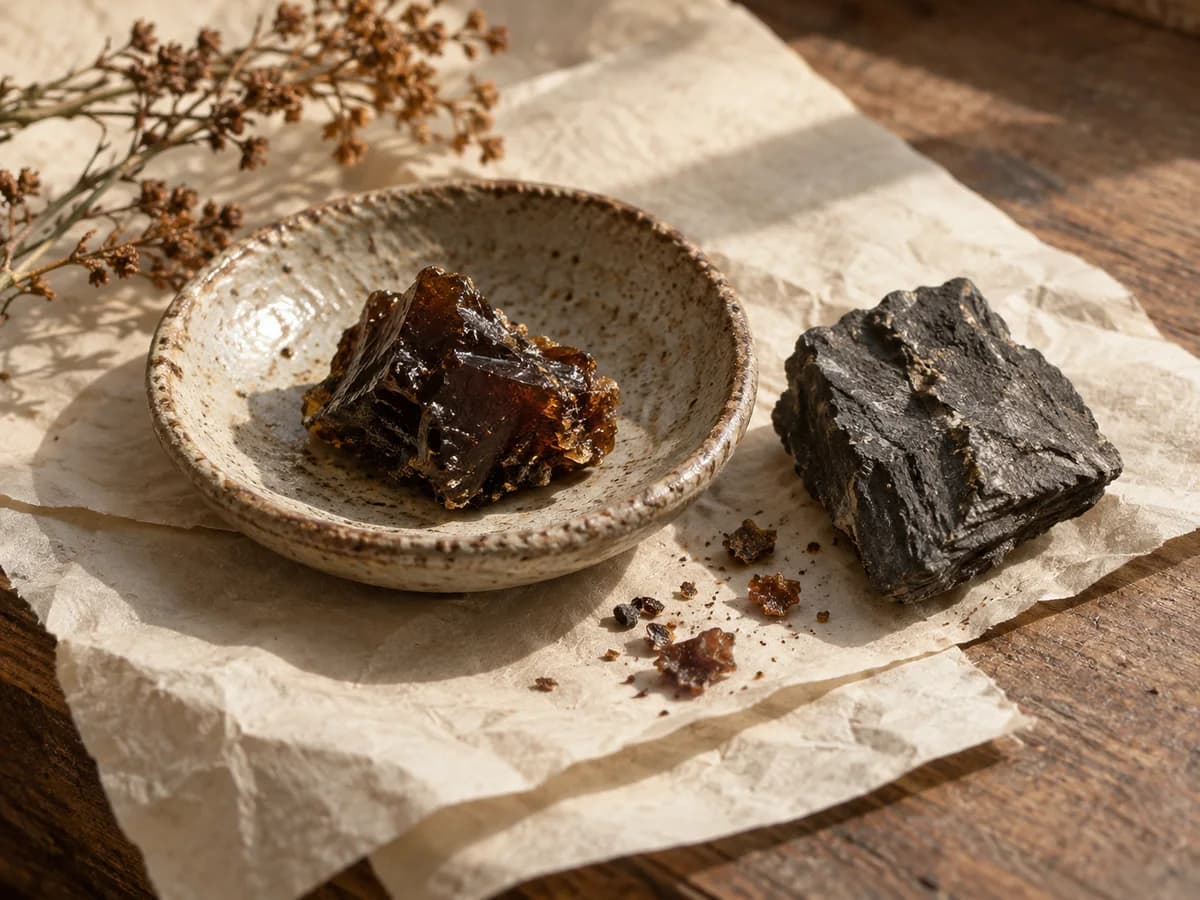
Shilajit is a variable, resin-like mountain material used in supplements. One trial of a purified preparation found higher testosterone measurements in selected men, not an established fertility or sexual-function treatment. A separate analysis detected thallium in sampled raw materials and supplements; it did not measure illness in users.1, 2
- The testosterone trial studied men aged 45–55, not all supplement users.1
- Its intervention was a specific purified preparation, not unprocessed resin.1
- Contaminant measurements vary by sample and do not establish a market-wide poisoning rate.2
What is Shilajit?
Shilajit is a mixture rather than one chemically defined nutrient. Geographic origin and processing affect what is present. A dark resin, a dried extract and the preparation used in a trial should not be treated as interchangeable just because each carries the same name.2, 1
Where it comes from
Natural sources
- Resin-like material associated with mountainous rock formations
How it's made
Commercial products may be processed and purified; the ingredient name alone does not establish composition or purity.
What it does in products
Benefits
Testosterone measurements in a selected population
limited evidenceThe trial reported a hormone signal. That is not the same endpoint as improved fertility, sexual function or everyday energy.1
Men aged 45–55 received a specified purified preparation for 90 days. Natreon funded the study; 21 discontinuations were excluded from the calculations. Replication and clinical outcomes remain important gaps.
Evidence scope and limitations
A specified purified shilajit preparation in a male hormone trial and sample-level contamination research; not a comprehensive review of all traditional uses.
- The trial was manufacturer-funded and excluded discontinuations from calculations.
- Hormone changes are not established clinical benefit.
- An analytical sample survey cannot quantify human poisoning incidence.
- Safety across other populations, medicines and longer exposure remains unresolved.
Evidence last checked: 2026-10-09
Side effects & safety
Safety considerations
- The cited male trial does not establish safety in pregnancy, breastfeeding or children.
- Compatibility with long-term medication was not established by this selected-volunteer trial.
- Not for: Do not treat an untested material or a purification claim as a documented safety clearance.
Amounts studied & product use
These figures describe research or common product use, not a personal dose or treatment recommendation.
In supplement studies and products
The trial used 250 mg twice daily for 90 days of its specified purified preparation. This is a research amount, not a recommended dose for raw resin or another extract.
Regulatory status
- U.S. supplement regulation is not approval to treat a hormone or fertility disorder. Manufacturers are responsible for product safety and labeling; FDA can act against adulterated or misbranded products.
Purified is not a batch-test result
Some processed supplements in the 2025 analysis contained more thallium than some raw samples. Detecting a metal does not by itself establish clinical harm, but the word purified does not answer how much of it is present either.
Our reading: ask which material was studied and whether the actual batch has a relevant analytical report. A fulvic-acid marketing percentage cannot replace contaminant measurements.
2, 1Frequently asked questions
Does the trial prove shilajit treats low testosterone?
No. A selected-volunteer biomarker study is not a treatment trial for a diagnosed endocrine disorder.1
Does detectable thallium mean every shilajit product is poisonous?
No. The analysis assessed particular samples, not clinical outcomes or every product on the market. It supports a testing question, not a universal harm claim.2
The bottom line
The useful questions are preparation identity, meaningful clinical outcomes and batch-specific testing—not a generic natural or purified claim.
References
- Pandit S, Biswas S, Jana U, De RK, Mukhopadhyay SC, Biswas TK. Clinical evaluation of purified Shilajit on testosterone levels in healthy volunteers. Andrologia (2016) · randomized trial · PMID 26395129; DOI 10.1111/and.12482; published online in 2015
- Kamgar E, Zembrzuska J, Zembrzuski W, Kaykhaii M. Quantifying of thallium in Shilajit and its supplements to unveil the potential risk of consumption of this popular traditional medicine. BMC Chemistry (2025) · primary study · PMID 39827344; DOI 10.1186/s13065-025-01384-7
- Dietary Supplements. U.S. Food and Drug Administration · government guidance · Undated resource; accessed October 9, 2026
Revision history
- Initial AI-assisted source checks and claim-level citation mapping under the site-authorized publishing workflow. No separate human or independent medical review is claimed.