Povidone-Iodine
Also known as: PVP-I, Iodopovidone
An antiseptic ingredient whose concentration, vehicle and route matter; surgical skin evidence cannot authorize a homemade nasal or oral preparation.
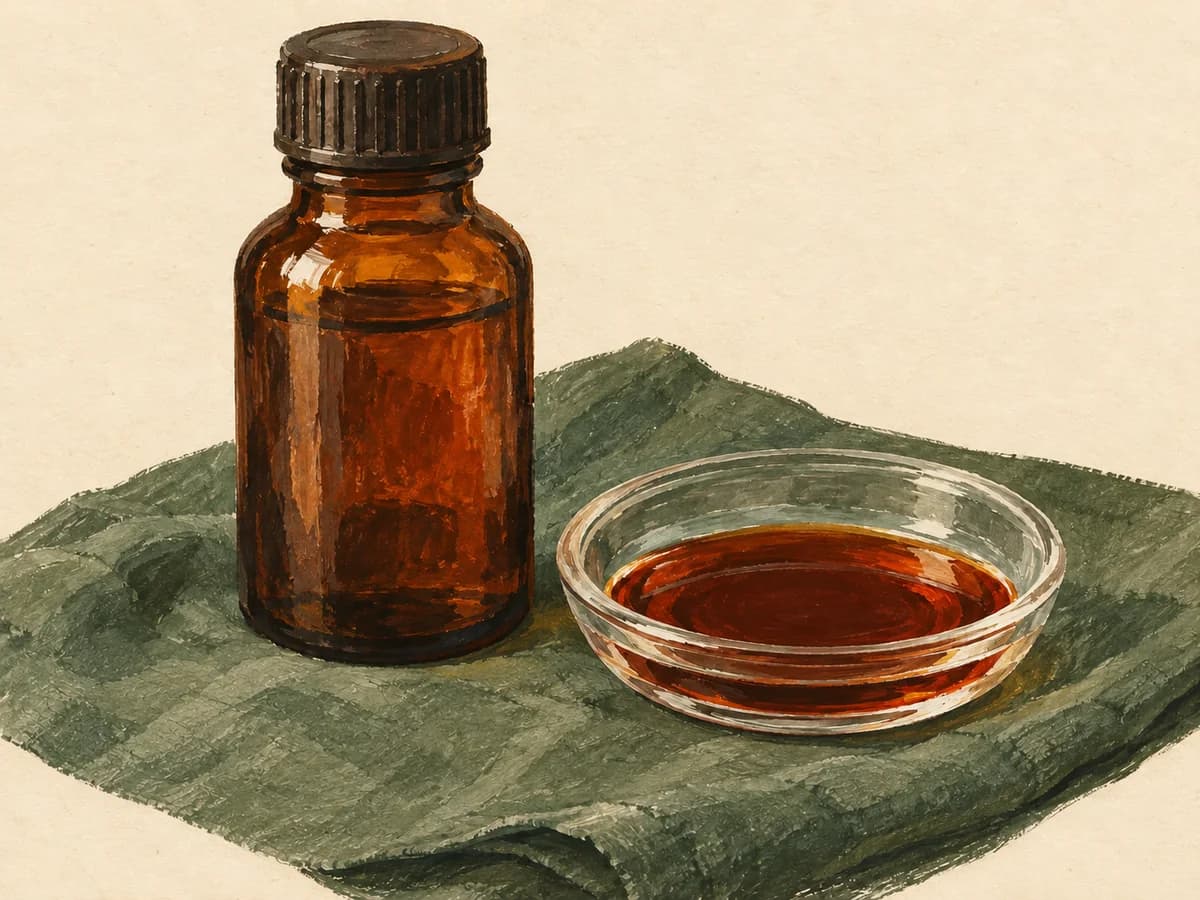
Povidone-iodine is an antiseptic used in specified skin and other medicinal preparations, not a nutritional iodine substitute. An alcohol-based preparation performed noninferiorly to alcohol-based chlorhexidine in one surgical trial. That result does not clear a skin bottle for eyes, gargling, swallowing or nasal use.1, 2, 3, 4
- The 2024 surgical trial enrolled 3,360 patients and compared two alcohol-based antiseptic protocols.3
- The cited 10% first-aid label means 1% available iodine, not 10% elemental iodine.1
- The separate 0.5% gargle label prohibits swallowing and lists thyroid conditions among its do-not-use warnings.2
What is Povidone-Iodine?
A cited first-aid label lists 10% povidone-iodine with 1% available iodine, while a separate gargle lists 0.5% with 0.05% available iodine. Those numbers refer to different quantities and distinct products. Color alone cannot identify concentration, alcohol content, sterility or an appropriate route.1, 2
Where it comes from
Natural sources
- No botanical or nutritional-food source is claimed for this medicinal preparation.
How it's made
A formulated povidone-iodine antiseptic material; the actual product and available-iodine specification matter.
What it does in products
Benefits
Evidence for a defined preoperative antisepsis protocol
moderate evidenceThe hospital comparison supported noninferiority within its prespecified margin.3
The cluster-randomized crossover trial in three Swiss hospitals found surgical-site infection in 5.1% versus 5.5% with povidone-iodine and chlorhexidine, respectively, both in alcohol. It did not show universal superiority or test an aqueous home first-aid product against no antiseptic.
Evidence scope and limitations
Two specific U.S. labeling examples, one alcohol-based preoperative trial and one FDA warning letter; not every iodine antiseptic or infection indication.
- Noninferiority in a professional protocol is not superiority or proof of household-product equivalence.
- First-aid, oral and ophthalmic products cannot be interchanged on ingredient name alone.
- One label's warnings and available-iodine specification are not a comprehensive monograph for all products.
- The trial primary abstract was checked; unseen formulation details or subgroup advantages are not asserted.
Evidence last checked: 2026-10-15
Side effects & safety
Safety considerations
- The cited gargle specifically says not to combine it with hydrogen peroxide. That is a product-specific warning, not a complete interaction inventory.
- Not for: The first-aid solution is external only: avoid eyes and large body areas; deep wounds, bites or serious burns require medical advice.
- Not for: The gargle label separately excludes thyroid conditions and allergy to its ingredients. Do not assume that a lower percentage removes its restrictions.
- Not for: Swallowing the first-aid solution requires immediate medical or poison-control advice. Do not convert it into an oral or nasal preparation.
Amounts studied & product use
These figures describe research or common product use, not a personal dose or treatment recommendation.
In skincare studies and products
The example labels are 10% first-aid solution and 0.5% gargle, with 1% and 0.05% available iodine respectively. These are label specifications, not a dilution recipe. The surgical study used standardized alcohol-containing preparations and professional application, not a home-mixing protocol.
Regulatory status
- DailyMed supplies specific manufacturer labeling, not a blanket FDA efficacy endorsement. FDA's 2022 Viraldine warning addressed particular nasal/throat products and unsupported COVID-19 claims; it neither approves every antiseptic route nor bans every povidone-iodine preparation.
Changing the vehicle or body site changes the evidence question
The surgical experiment kept both antiseptics in alcohol and used professional protocols. Substituting an aqueous bottle, a different body site or a household dilution is an untested change, not a replication of that result.
The FDA letter is another distinct kind of evidence: it challenges specific disease-prevention marketing. A laboratory antimicrobial idea or a familiar active name cannot supply the missing clinical and regulatory support for a nasal claim.
3, 1, 4Frequently asked questions
The bottom line
Match the complete medicine, route and protocol—not just the brown color or iodine percentage—to the evidence and label.
References
- Povidone-Iodine Solution, 10%: First Aid Antiseptic Drug Facts. DailyMed / U.S. National Library of Medicine (2026) · ingredient monograph · SPL set ID c2f07152-d7fb-4b1f-be77-c94618d5abd6; version 5, effective September 15, 2026; example labeling, not a product endorsement
- Povidone-iodine 0.5% sore throat gargle: Drug Facts. DailyMed / U.S. National Library of Medicine · ingredient monograph · SPL set ID 5f0a3377-1398-2603-c632-f0d214bb88ec; label checked October 15, 2026; no publication year inferred
- Widmer AF, Atkinson A, Kuster SP, et al.. Povidone Iodine vs Chlorhexidine Gluconate in Alcohol for Preoperative Skin Antisepsis: A Randomized Clinical Trial. JAMA (2024) · randomized trial · PMID 38884982; DOI 10.1001/jama.2024.8531; NCT03685604; primary abstract checked
- Viraldine, LLC: Warning Letter MARCS-CMS 625675. U.S. Food and Drug Administration (2022) · government guidance · March 7, 2022; specific nasal/throat products and COVID-19 claims; not a ban on every povidone-iodine use
Revision history
- Initial AI-assisted source checks and claim-level citation mapping under the site-authorized publishing workflow. No separate human or independent medical review is claimed.