Nattokinase
Also known as: Subtilisin NAT, Natto-derived nattokinase
A fermented-soy enzyme with limited blood-pressure signals; clot-dissolving language overstates the demonstrated oral clinical evidence.
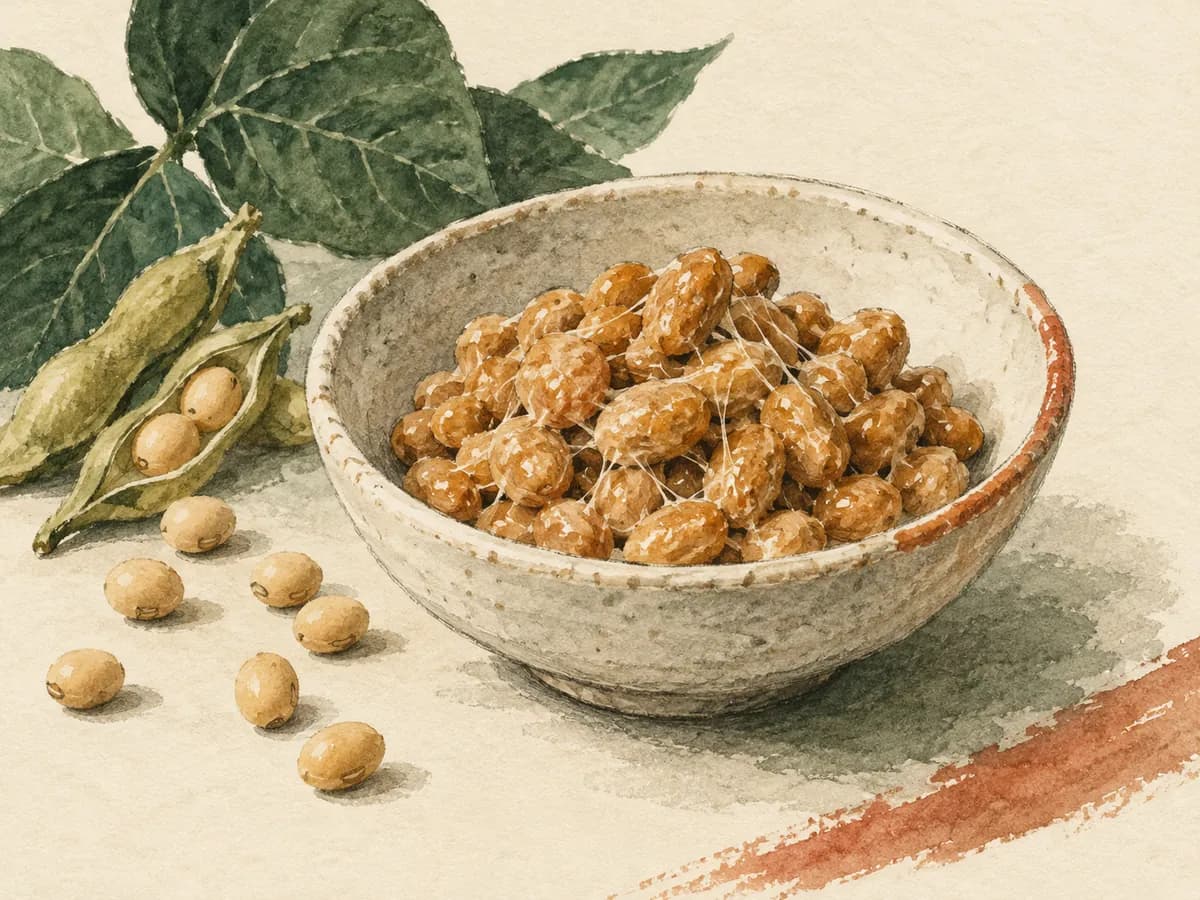
Nattokinase is an enzyme associated with fermented soybeans. Small trials suggest a blood-pressure signal, but a three-year placebo-controlled study did not slow measured carotid changes. Oral supplement evidence does not establish a clot-dissolving treatment or a substitute for prescribed anticoagulation.2, 1, 4
- The three-year vascular trial randomized 265 adults without clinical cardiovascular disease.1
- The 2023 blood-pressure pooling used three trials and 223 people, not the entire review population.2
- A newer six-month trial did not improve global cognition; its visuospatial finding was exploratory.3
What is Nattokinase?
Natto is a food; nattokinase is an enzyme that can be present in standardized extracts. Fibrin degradation units describe measured activity, not simply powder weight. EFSA also found the available absorption information insufficient to establish how active enzyme or functional metabolites reach the circulation.4
Where it comes from
Natural sources
- Enzyme originally isolated from natto fermentation
How it's made
Commercial extracts are processed and standardized; a food serving, powder mass and fibrin degradation units are different quantities.
What it does in products
Benefits
A modest blood-pressure signal with narrow evidence
limited evidenceSome small trials support a signal, not a demonstrated prevention of cardiovascular events.2, 1
The 2023 review pooled only three blood-pressure trials. Its lipid and glucose findings did not establish an overall cardiometabolic benefit; the longer healthy-population trial found no blood-pressure effect. Different baseline populations matter.
Slower atherosclerosis has not been established
insufficient evidenceThe larger long-duration placebo comparison did not confirm the main vascular claim.1
At 2,000 FU/day, median three-year treatment did not significantly change carotid thickness progression or stiffness. These surrogate outcomes also cannot stand in for a demonstrated reduction in stroke or heart attack.
Evidence scope and limitations
Oral standardized nattokinase extracts, specified vascular/BP/cognitive trials, one material-specific safety assessment and a case signal; not natto servings or injectable thrombolytic drugs.
- A small blood-pressure change is not proof of fewer strokes, clots or cardiovascular events.
- The cognition abstract reports a negative global endpoint and an exploratory domain finding; no unseen trial detail is asserted.
- The bleeding report is a single case and cannot prove cause or frequency.
- EFSA's material, intended population and activity specification cannot be transferred to every commercial extract.
Evidence last checked: 2026-10-12
Side effects & safety
Safety considerations
- EFSA's assessed extract was intended for healthy adults over 35, excluding pregnant and breastfeeding women; it does not clear those other populations.
- Discuss medicines affecting clotting with a clinician or pharmacist before combining them with a fibrinolytic-marketed supplement. The reviewed studies do not establish comprehensive interaction safety.
- Not for: Soy-derived material can retain an allergy concern; the specified extract's assessment is not clearance of every manufacturing process.
- Not for: Do not replace prescribed anticoagulation or urgent evaluation of possible vascular symptoms with this supplement.
Amounts studied & product use
These figures describe research or common product use, not a personal dose or treatment recommendation.
In supplement studies and products
The vascular trial studied 2,000 FU/day for a median three years; the cognition trial studied 8,000 FU/day for six months. These are research exposures, not recommendations. EFSA assessed a specified extract at 100 mg/day; without a verified activity specification, another powder's milligrams cannot be converted to FU.
Regulatory status
- U.S. dietary-supplement marketing is not FDA approval to dissolve clots or treat vascular disease. EFSA's 2016 conclusion concerned the specified fermented-soy extract under its intended use, not every nattokinase product or a therapeutic claim.
A higher studied exposure did not establish global cognitive benefit
The newer stenosis-population trial randomized 120 people to 8,000 FU/day or placebo. Only 88 completed the per-protocol follow-up, and the global cognition comparison was negative. An exploratory visuospatial result cannot be relabeled as proven general memory improvement.
Our reading: activity, absorption, surrogate markers and clinical treatment are successive questions—not interchangeable claims. The limited blood-pressure signal deserves reporting, but it does not erase negative primary endpoints or supply a treatment for an existing clot.
3, 2, 1, 4Frequently asked questions
Are milligrams and fibrin degradation units interchangeable?
No. FU measures activity under assay conditions; milligrams measure mass. Conversion requires the specific material's verified activity per unit mass, not a generic natto-serving estimate.4
The bottom line
Read the primary endpoint before the fibrinolysis marketing, and treat activity units and medicine-interaction safety as separate checks.
References
- Nattokinase atherothrombotic prevention study: A randomized controlled trial. Clinical Hemorheology and Microcirculation (2021) · randomized trial · PMID 33843667; DOI 10.3233/CH-211147; publisher's primary abstract checked
- Nattokinase Supplementation and Cardiovascular Risk Factors: A Systematic Review and Meta-Analysis of Randomized Controlled Trials. Reviews in Cardiovascular Medicine (2023) · meta analysis · DOI 10.31083/j.rcm2408234; CRD42022315020; blood-pressure analysis separate from total review population
- Nattokinase supplementation for cognitive enhancement in asymptomatic intracranial/carotid stenosis: A randomized controlled trial. Journal of Stroke and Cerebrovascular Diseases (2026) · randomized trial · PMID 41325794; DOI 10.1016/j.jstrokecerebrovasdis.2025.108511; online November 2025, issue January 2026; primary abstract checked
- EFSA Panel on Dietetic Products, Nutrition and Allergies. Safety of fermented soybean extract NSK-SD as a novel food pursuant to Regulation (EC) No 258/97. EFSA Journal (2016) · safety assessment · DOI 10.2903/j.efsa.2016.4541; EFSA-Q-2015-00294; specific standardized ingredient and intended population
- Ramachandran L, Aqeel A, Jafri A, Sidhu Y, Djirdeh TM. Nattokinase-Associated Hemoperitoneum in an Elderly Woman. Cureus (2021) · primary study · PMID 35003944; DOI 10.7759/cureus.20074; single case report, indexed primary abstract checked
- Dietary Supplements. U.S. Food and Drug Administration · government guidance · Undated agency resource; accessed October 12, 2026
Revision history
- Initial AI-assisted source checks and claim-level citation mapping under the site-authorized publishing workflow. No separate human or independent medical review is claimed.