Hydroxyethylcellulose
Also known as: Hydroxyethyl cellulose, HEC polymer
A modified-cellulose gel former; physical spreading and historical cosmetic compatibility do not certify a sterile medicine or protective biological effect.
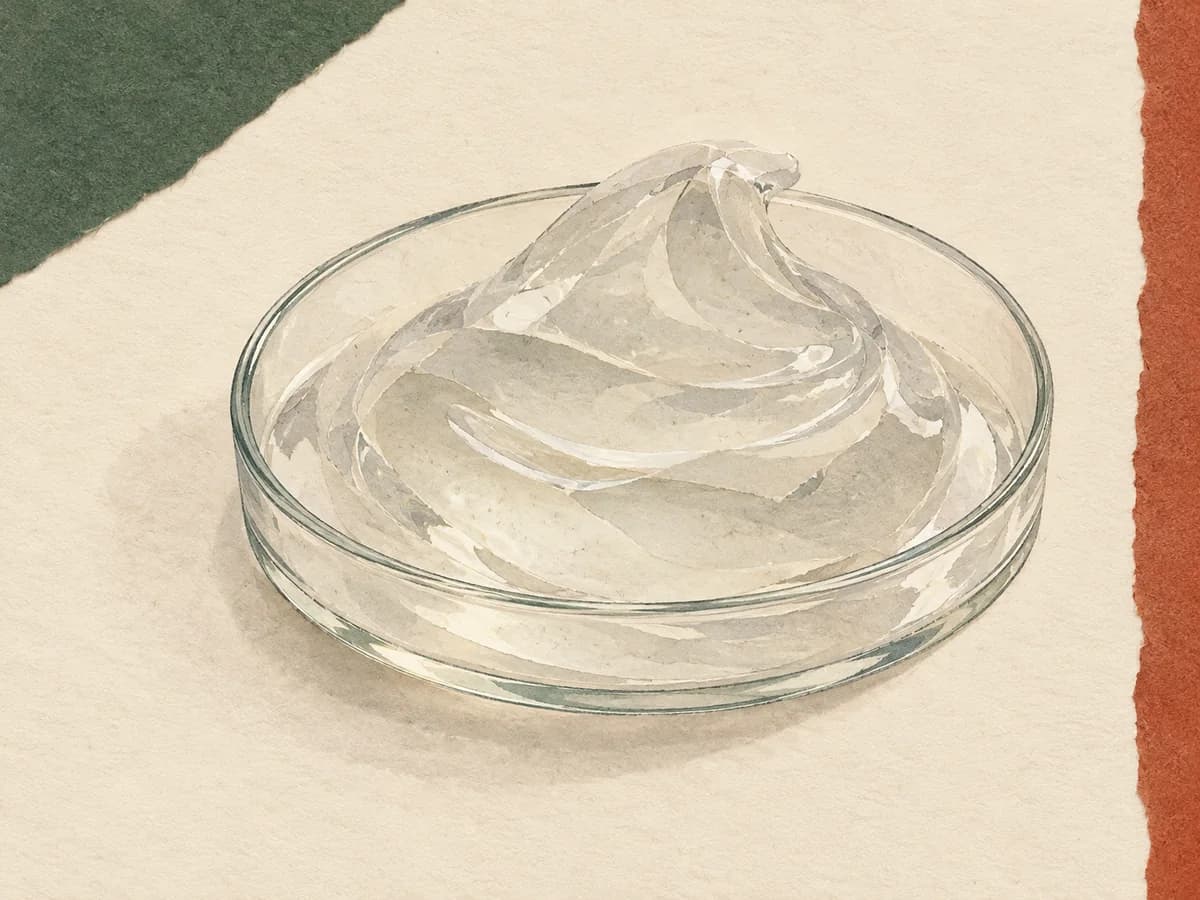
Hydroxyethylcellulose is a modified-cellulose polymer used in cosmetic and experimental gel systems. It can shape a formulation's flow, but a spreading experiment is not evidence that the polymer treats disease. Cosmetic compatibility and the safety of a complete medicine are separate assessments.1, 2, 3
- The final cosmetic report covers a group of cellulose derivatives; a group-wide summary should not become an exact claim about every HEC grade.1
- The engineering research compared physical flow experiments with numerical models, rather than infection-prevention outcomes.2
- A cosmetic ingredient generally does not receive FDA premarket approval; the marketer remains responsible for finished-product safety.3
What is Hydroxyethylcellulose?
The 1986 final CIR report assessed this material alongside several other cellulose derivatives. A 2013 engineering study used hydroxyethylcellulose solutions to examine three-dimensional gel spreading. Those sources concern defined materials and physical systems, not every product with a cellulose-related name.1, 2
Where it comes from
Natural sources
- Cellulose-derived backbone
How it's made
A chemically modified cellulose polymer, distinct from an unchanged plant fiber and from the other derivatives grouped in the historical report.
What it does in products
Benefits
A formulation tool for controlling flow
limited evidencePhysical experiments show why gel properties belong to the complete system, not just an ingredient name.2
The 2013 work compared spreading of shear-thinning polymer solutions with three-dimensional calculations. This supports a physical formulation role, not clinical protection, antimicrobial activity or a guaranteed result for every cosmetic.
Evidence scope and limitations
A historical final cosmetic-group assessment and a physical gel-flow study; not a full current medical-excipient review or proof of infection prevention.
- The group assessment is historical and cannot certify a particular present-day grade or formula.
- Physical and numerical experiments are not human efficacy trials.
- The final-report abstract and indexed original engineering methods were checked when live retrieval timed out or challenged; unavailable underlying reports were not independently reviewed.
Evidence last checked: 2026-10-16
Side effects & safety
Safety considerations
- Flow and dilution effects in a model are formulation interactions, not a clinical medicine-interaction study.
- Not for: A cosmetic assessment does not establish that a raw powder or homemade gel is appropriate for oral, ocular or internal medical use.
- Not for: Do not infer sterility or infection protection from the ingredient's role as a gel vehicle.
Amounts studied & product use
These figures describe research or common product use, not a personal dose or treatment recommendation.
In skincare studies and products
The old report summarized cosmetic uses of several derivatives at concentrations up to 10%; that is a historical group description, not an optimal HEC percentage or a DIY recipe. Experimental flow conditions also cannot define a universally safe or effective finished-product concentration.
Regulatory status
- FDA generally does not preapprove cosmetic ingredients other than specified color additives. Manufacturers and marketers remain responsible for safety; a CIR conclusion is not FDA product approval.
- INCI name on cosmetic labels: Hydroxyethylcellulose.
- The 1986 final report concluded the assessed derivatives safe under the practices then reviewed. It is cited as historical evidence, not a new assessment of every current formula.
A delivery vehicle is not the treatment it might carry
Flow over an experimental surface can help a formulator compare how gels distribute. It does not measure a pathogen, symptom, patient benefit or the sterility of the preparation. The study's intended application should not be substituted for an efficacy endpoint.
For a label reader, HEC mainly explains consistency. Claims about therapeutic protection or a finished product need their own evidence; neither a modeled gel layer nor a historical ingredient-group assessment provides it.
2, 1, 3Frequently asked questions
Does a gel-spreading study show that HEC prevents infection?
No. The cited engineering experiment measured flow and model performance, not clinical infection incidence.2
The bottom line
Read HEC as a formulation-role clue; require separate evidence for the complete product and any biological claim.
References
- Final Report on the Safety Assessment of Hydroxyethylcellulose, Hydroxypropylcellulose, Methylcellulose, Hydroxypropyl Methylcellulose, and Cellulose Gum. Journal of the American College of Toxicology / Cosmetic Ingredient Review (1986) · safety assessment · DOI 10.3109/10915818609141925; 5(3):1–59; indexed original final-report abstract checked through CIR after publisher timeout; not a new 2026 assessment
- Kheyfets VO, Kieweg SL. Experimental and numerical models of three-dimensional gravity-driven flow of shear-thinning polymer solutions used in vaginal delivery of microbicides. Journal of Biomechanical Engineering (2013) · primary study · DOI 10.1115/1.4024140; PMID 23699721; indexed original formulation/methods text checked; physical flow experiments and numerical models, not an infection-prevention trial
- Does the FDA approve cosmetics before they go on the market?. U.S. Food and Drug Administration · government guidance · Undated agency resource; current manufacturer responsibility and premarket-approval distinction checked October 16, 2026
Revision history
- Initial AI-assisted source checks and claim-level citation mapping under the site-authorized publishing workflow. No separate human or independent medical review is claimed.