D-Mannose
Also known as: D mannose, Mannose supplements
A sugar marketed for urinary health; a large placebo-controlled community trial did not support recurrent-UTI prevention.
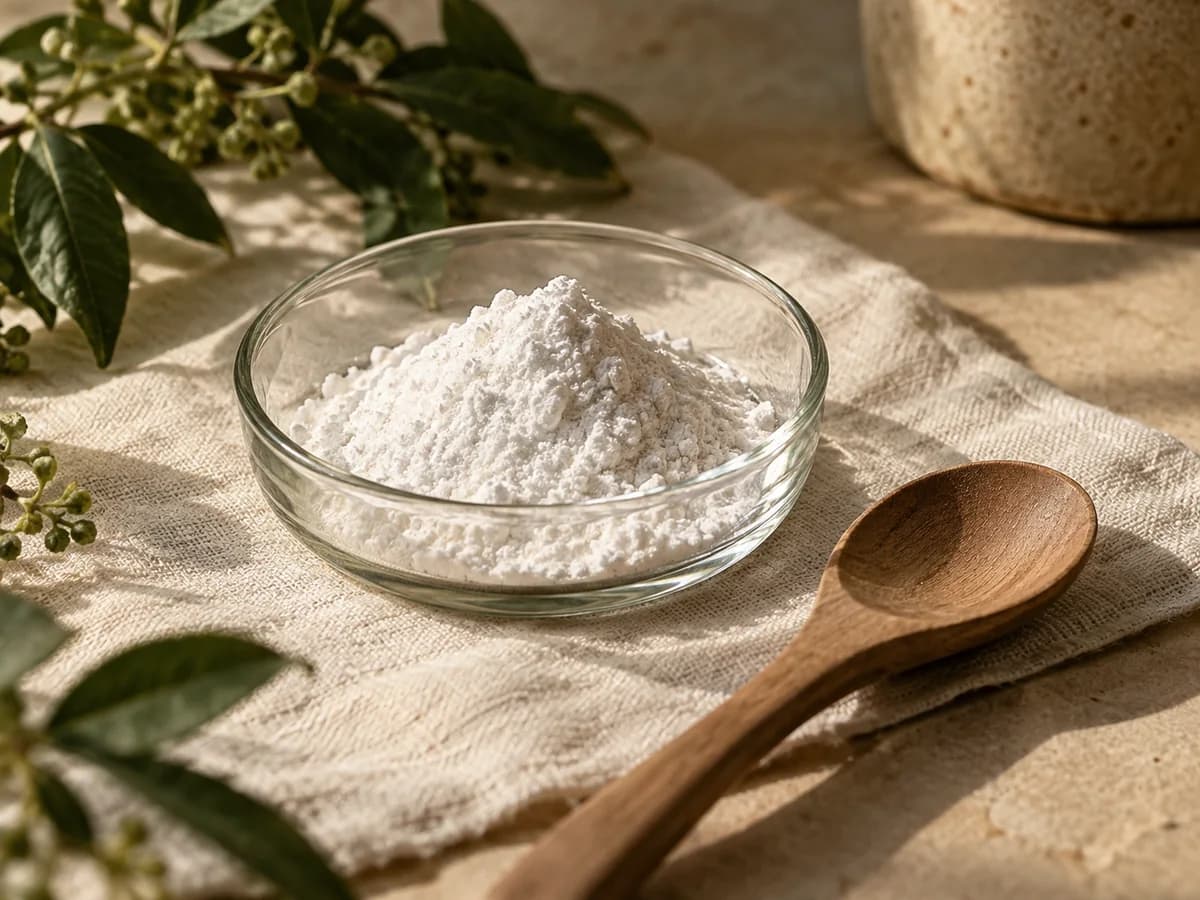
D-mannose is a sugar marketed for urinary health. A large trial in women with recurrent urinary tract infections found no significant prevention benefit from daily powder versus placebo. The 2025 AUA amendment cautions that D-mannose alone may not prevent recurrence; it is not a substitute for assessment and treatment of an active infection.1, 3, 5
- The 2024 trial randomized 598 community-dwelling women across 99 UK primary-care centers.1
- Its tested exposure was approximately 2 g/day of powder for six months, not an acute-treatment protocol.1
- The 2022 Cochrane review predates this larger trial and rated the earlier evidence very uncertain.2
What is D-Mannose?
The proposed anti-adhesion mechanism concerns bacterial attachment to urinary-tract cells. A plausible mechanism and results from early small studies do not settle whether a supplement prevents clinically important infections. Prevention, treatment and a multi-ingredient combination are separate questions.2
Where it comes from
Natural sources
- A monosaccharide present in normal metabolism and dietary sources
How it's made
Supplement powders provide concentrated D-mannose; a food serving is not the trial's measured powder exposure.
What it does in products
Benefits
Recurrent-UTI prevention is not supported in the tested community setting
insufficient evidenceThe better-controlled community evidence did not confirm the benefit suggested by some earlier studies.1, 2, 3
Medically attended suspected recurrence affected 51.0% with D-mannose and 55.7% with placebo; the difference was not significant. This NIHR-funded trial had no reported conflicts. It does not settle every specialist population or combination product.
Evidence scope and limitations
Oral D-mannose for recurrent-UTI prevention, the 2024 community trial and the official 2025 AUA amendment statement; not a treatment protocol or every specialist population.
- The trial's pragmatic endpoint was medically attended suspected infection, not culture confirmation of every episode.
- Selected adult women do not represent pregnancy, catheter use, children or institutional care.
- Earlier combinations and small studies do not isolate or establish a D-mannose benefit.
- AUA's official indexed amendment statement was checked; direct PDF retrieval returned an access error, so no unseen guideline detail is asserted.
Evidence last checked: 2026-10-11
Side effects & safety
Safety considerations
- The large trial excluded pregnancy, breastfeeding and planned pregnancy; it does not establish safety in those circumstances.
- The cited studies do not provide a comprehensive interaction assessment or a basis to stop prescribed treatment.
- Not for: Contact a healthcare professional for bladder-infection symptoms. Fever, chills, vomiting or back/side pain can indicate kidney involvement and require prompt assessment.
- Not for: The community trial excluded catheter users and nursing-home residents; its results do not establish a prevention plan for those groups.
Amounts studied & product use
These figures describe research or common product use, not a personal dose or treatment recommendation.
In supplement studies and products
The large trial tested about 2 g/day orally for six months and did not demonstrate a prevention benefit. This is a studied exposure, not a recommended regimen; increasing it is not justified by that result. Different earlier combinations and schedules cannot be treated as equivalent.
Regulatory status
- D-mannose supplement sale is not FDA premarket efficacy approval. The AUA's 2025 statement is clinical guidance about prevention, not a U.S. drug authorization. Active bladder infection requires a diagnosis-directed treatment decision rather than a supplement disease-treatment claim.
Earlier uncertainty is not newer evidence of benefit
Cochrane's 2022 review found seven small, heterogeneous trials and could not pool comparable interventions. Its request for better placebo-controlled research was followed by a much larger community trial with a negative result.
Our reading: do not cite the older review's uncertainty while omitting the newer trial. Also keep prevention separate from acute care: NIDDK describes diagnosis-directed treatment, often antibiotics for bacterial infection. Adding cranberry or another ingredient does not retrospectively make the D-mannose-only trial positive.
2, 1, 5Frequently asked questions
Does the 2 g study amount mean that is the recommended dose?
No. It is the amount tested in a trial that did not establish prevention benefit. A research exposure is not a personal-use recommendation.1
The bottom line
A bacterial-attachment rationale is not a successful prevention trial; keep current evidence and timely symptom assessment ahead of urinary-health marketing.
References
- Hayward G, Mort S, Hay AD, Moore M, Thomas NPB, Cook J, Robinson J, Williams N, Maeder N, Edeson R, Franssen M, Grabey J, Glogowska M, Yang Y, Allen J, Butler CC. d-Mannose for Prevention of Recurrent Urinary Tract Infection Among Women: A Randomized Clinical Trial. JAMA Internal Medicine (2024) · randomized trial · PMID 38587819; DOI 10.1001/jamainternmed.2024.0264; ISRCTN13283516
- Cooper TE, Teng C, Howell M, Teixeira-Pinto A, Jaure A, Wong G. D-mannose for preventing and treating urinary tract infections. Cochrane Database of Systematic Reviews (2022) · systematic review · PMID 36041061; DOI 10.1002/14651858.CD013608.pub2; search through February 22, 2022
- Recurrent UTI Guideline: 2025 Amendment Summary. American Urological Association / CUA / SUFU (2025) · clinical guideline · Statement 14; official indexed summary checked; direct PDF retrieval returned an access error
- Symptoms & Causes of Bladder Infection in Adults. National Institute of Diabetes and Digestive and Kidney Diseases (2024) · government guidance · Reviewed April 2024
- Treatment for Bladder Infection in Adults. National Institute of Diabetes and Digestive and Kidney Diseases (2024) · government guidance · Reviewed April 2024
- Dietary Supplements. U.S. Food and Drug Administration · government guidance · Undated agency resource; accessed October 11, 2026
Revision history
- Initial AI-assisted source checks and claim-level citation mapping under the site-authorized publishing workflow. No separate human or independent medical review is claimed.