Camphor
Also known as: Topical camphor, Camphor crystals
A topical medicine ingredient whose allowed use depends on concentration and formulation; swallowing it can cause serious poisoning.
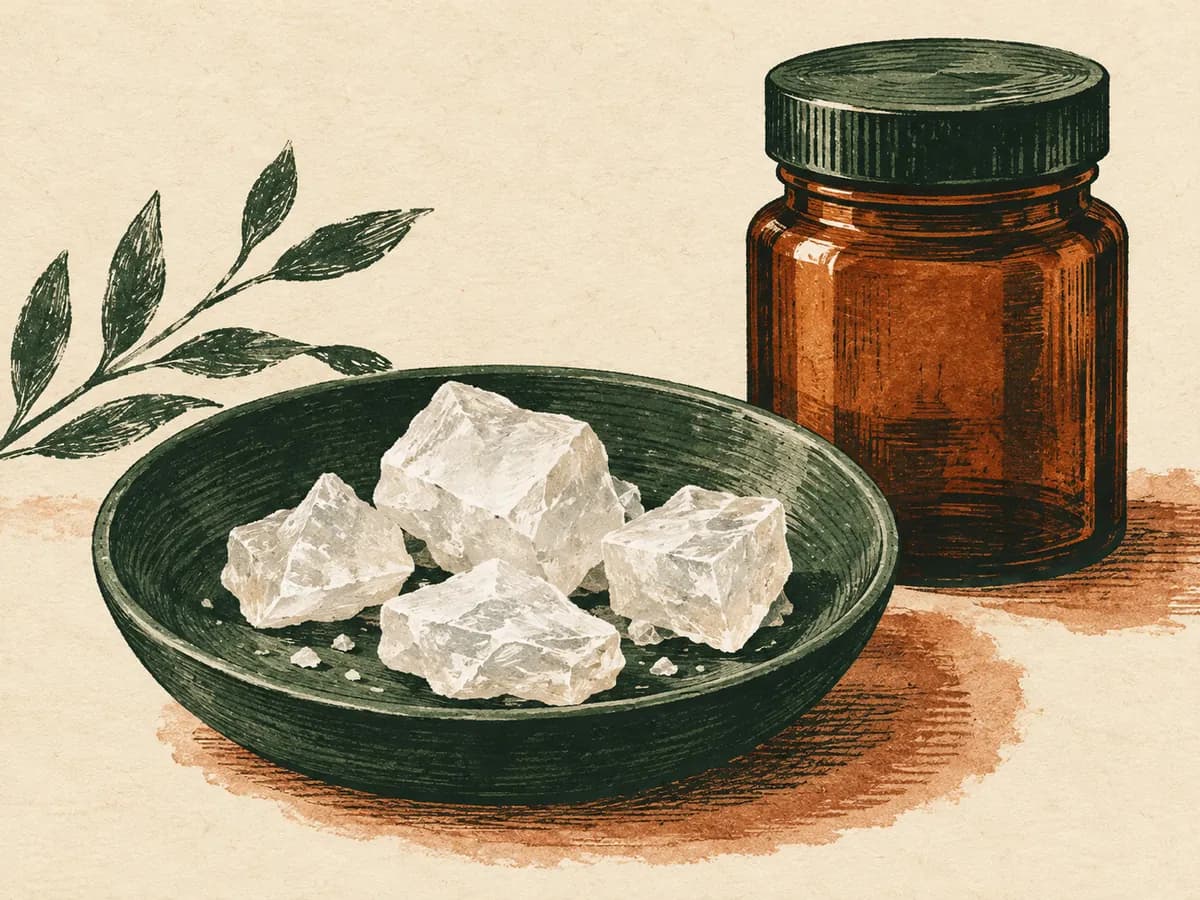
Camphor is a strongly scented white material used in some topical medicines. FDA's external-analgesic monograph includes concentration-specific uses, while a cough study tested a blend, not camphor alone. External-use evidence does not support ingestion: camphor poisoning can cause seizures and breathing problems.1, 2, 3
- M017 distinguishes lower-concentration camphor from the >3–11% counterirritant category.1
- The nocturnal-cough trial involved 138 children aged 2–11 and one application of a combination rub.2
- Ingestion-related poisoning can involve seizures; being available in a topical product does not make camphor edible.3
What is Camphor?
A low-concentration external analgesic and a counterirritant are not interchangeable regulatory descriptions. M017 lists camphor at 0.1–3% in one category and exceeding 3% up to 11% in the counterirritant category. These conditions describe finished topical medicines, not raw-crystal home recipes.1, 3
Where it comes from
Natural sources
- Camphor-containing botanical materials
How it's made
The medicinal ingredient is a specified material; a botanical oil or raw crystalline sample is not interchangeable with a formulated medicine.
What it does in products
Benefits
Temporary minor muscle and joint pain relief
moderate evidenceM017 provides conditions for counterirritant products making this limited symptom-relief claim, not disease modification.1
The monograph supports a defined OTC use. It does not establish identical performance of every vehicle or concentration, and its listed category excludes patches, plasters and poultices.
Nighttime symptom relief from one combination rub
limited evidenceParents rated several nighttime outcomes more favorably with the studied blend. The effect cannot be attributed to camphor by itself.2
The single-night, partly blinded trial used camphor 4.8%, menthol 2.6% and eucalyptus oil 1.2%. Parent ratings and a multi-active formula limit interpretation; irritant effects were more frequent with the rub.
Evidence scope and limitations
Camphor in U.S. OTC external analgesics, a specific one-night combination-rub study and poisoning guidance; not all essential oils or cough-medicine approvals.
- The pediatric trial does not isolate camphor, measure viral clearance or establish long-term outcomes.
- Trial claims are limited to the primary abstract and indexed original methods available during these checks.
- Monograph concentration categories and dosage-form restrictions cannot be generalized to DIY formulations.
- Poisoning reports describe a hazard, not the incidence of events during correctly labeled topical use.
Evidence last checked: 2026-10-11
Side effects & safety
Safety considerations
- The selected pediatric combination study does not establish pregnancy or breastfeeding safety; use the actual medicine's labeling and professional advice.
- A three-active rub trial cannot clear arbitrary blends with other topical medicines or oils.
- Not for: Do not swallow camphor-containing products; suspected poisoning needs immediate medical or poison-control help, not induced vomiting or a home antidote.
- Not for: M017 counterirritant warnings exclude application to damaged skin and tight bandaging; keep away from eyes and children.
- Not for: Follow the actual product's age and route restrictions rather than extending this one trial to infants or nasal application.
Amounts studied & product use
These figures describe research or common product use, not a personal dose or treatment recommendation.
In skincare studies and products
M017 lists 0.1–3% in its alcohol/ketone group and >3–11% as a counterirritant, with separate conditions for some combinations. The cough study's 4.8% came in a finished multi-ingredient rub. These are distinct regulatory and research contexts, not a DIY mixing range or oral dose.
Regulatory status
- M017 sets U.S. OTC external-analgesic conditions, including permitted ingredients, combinations, claims and warnings. Compliance requires the full conditions, not simply a camphor percentage. A cough-combination trial is not an approval of camphor-only cough treatment or ingestion.
A blend cannot isolate the contribution of camphor
The vapor-rub study compared the complete ointment against petrolatum and no treatment. It did not remove camphor while keeping the other actives constant. Consequently, the trial cannot tell us how much of the observed difference came from camphor.
Our reading: preserve the limited symptom claim and the tested route. A familiar smell does not convert a topical medicine into an oral remedy; safety during intended use and toxicity after ingestion answer different exposure questions.
2, 1, 3Frequently asked questions
Does the vapor-rub trial prove camphor alone treats cough?
No. It tested a multi-active ointment with partly blinded parent-rated outcomes over one night, not isolated camphor or a cure for the infection.2
Can raw camphor crystals be swallowed because they are natural?
No. Intended topical use does not establish oral safety. Suspected swallowing or poisoning requires immediate professional help; do not induce vomiting unless instructed by a qualified professional.3
The bottom line
Match camphor to its finished medicine, concentration category and external route; never infer oral safety from a topical label.
References
- OTC Monograph M017: External Analgesic Drug Products for OTC Human Use. U.S. Food and Drug Administration (2023) · government guidance · M017; posted May 2, 2023; sections M017.10, M017.12 and M017.50
- Paul IM, Beiler JS, King TS, Clapp ER, Vallati J, Berlin CM Jr. Vapor Rub, Petrolatum, and No Treatment for Children With Nocturnal Cough and Cold Symptoms. Pediatrics / Penn State author record (2010) · randomized trial · PMID 21059712; DOI 10.1542/peds.2010-1601; primary abstract and indexed original methods, not a camphor-only trial
- Camphor overdose. MedlinePlus Medical Encyclopedia (2025) · government guidance · Reviewed January 8, 2025; route-specific poisoning information
Revision history
- Initial AI-assisted source checks and claim-level citation mapping under the site-authorized publishing workflow. No separate human or independent medical review is claimed.