Butylene Glycol
Also known as: 1,3-Butylene glycol, 1,3-Butanediol
A cosmetic solvent and humectant whose formulation role is better established than any standalone skin-treatment claim.
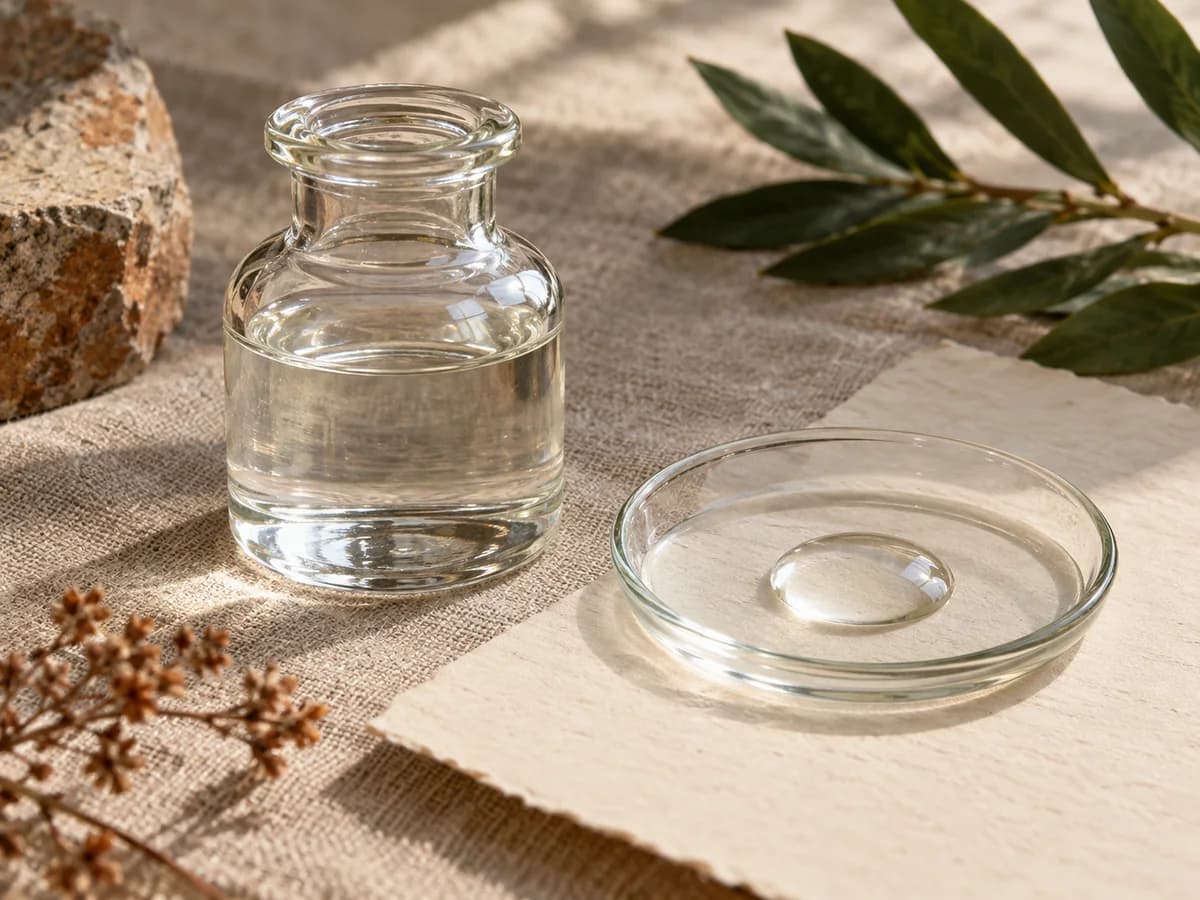
Cosmetic butylene glycol usually refers to 1,3-butanediol, a solvent and humectant. The published CIR assessment supported the cosmetic uses it evaluated, but contact allergy has subsequently been reported. Its presence on a label describes a formulation ingredient, not a proven anti-aging or disease-treatment active.1, 2, 3
- 1,3-Butanediol is the compound identified by PubChem CID 7896.1
- The 1985 CIR group report describes humectant and solvent roles.2
- A contact-allergy case report cannot establish the rate of allergy in all users.3
What is Butylene Glycol?
This guide concerns 1,3-butylene glycol, CAS 107-88-0. It is not the same molecule as propylene glycol, hexylene glycol or ethylene glycol. The shared word glycol is not enough to transfer a chemical's hazard or a clinical result to another compound.1, 2
Where it comes from
Natural sources
- A defined diol rather than a botanical extract; the ingredient name does not establish a plant source
How it's made
Commercial material is manufactured and purified; supplier records identify the production route.
What it does in products
Benefits
Humectancy and formulation performance
limited evidenceButylene glycol helps serve the formula's moisture and solvent functions. Those functions are not evidence of a standalone wrinkle or skin-disease treatment.2
The foundational CIR report combines toxicology and human patch-test data. It is a safety assessment, not a comparative trial of long-term consumer skin improvement.
Evidence scope and limitations
Topical cosmetic 1,3-butylene glycol; not other butanediol isomers, ingestion or medical-use dosing.
- PubChem supports identity only, not a clinical benefit.
- The foundational safety assessment is old and is not a finished-product efficacy trial.
- A case report identifies possible allergy but supplies no population risk estimate.
Evidence last checked: 2026-10-09
Side effects & safety
Safety considerations
- No universal compatibility claim for prescription-skincare combinations follows from these sources.
- Not for: Avoid butylene glycol if it is an established personal contact allergen.
- Not for: Persistent dermatitis warrants professional assessment of the whole product; avoid eye exposure and follow label directions.
Amounts studied & product use
These figures describe research or common product use, not a personal dose or treatment recommendation.
In skincare studies and products
No optimal consumer concentration or DIY dose is established here. CIR's assessment concerns the cosmetic uses described in its report; raw-material patch testing is not an instruction to apply undiluted glycol.
Regulatory status
- Cosmetics are generally not FDA-preapproved. A cosmetic ingredient listing does not authorize medical-treatment claims.
- INCI name on cosmetic labels: Butylene Glycol.
- The published 1985 final group assessment concluded safety for the cosmetic uses then evaluated. That historical conclusion is not a guarantee against individual allergy.
A negative patch test is not a lifetime allergy guarantee
CIR's earlier testing and a later contact-allergy report answer different questions: tolerability in tested participants versus a reaction in an individual. The case report does not invalidate every use, and the earlier study cannot erase the case.
Our reading: a history of dermatitis is a reason to investigate the actual formulation and allergen, not to label all glycols harmful or to dismiss a reaction because an ingredient has a safety assessment.
2, 3, 4Frequently asked questions
The bottom line
Read butylene glycol as a formula component. Compound identity, exposure and personal allergy history are more useful than a blanket glycol rule.
References
- 1,3-Butanediol: compound record. NCBI PubChem · ingredient monograph · CID 7896; CAS 107-88-0; identity only; accessed October 9, 2026
- Final Report on the Safety Assessment of Butylene Glycol, Hexylene Glycol, Ethoxydiglycol, and Dipropylene Glycol. Journal of the American College of Toxicology (1985) · safety assessment · DOI 10.3109/10915818509078692; volume 4, issue 5
- Blomberg M, Johansen JD. Allergic contact dermatitis due to butylene glycol in cosmetics. Contact Dermatitis (2020) · primary study · PMID 32342510; DOI 10.1111/cod.13581; case report
- Allergens in Cosmetics. U.S. Food and Drug Administration · government guidance · Undated resource; accessed October 9, 2026
- FDA Authority Over Cosmetics: How Cosmetics Are Not FDA-Approved, but Are FDA-Regulated. U.S. Food and Drug Administration (2013) · government guidance
Revision history
- Initial AI-assisted source checks and claim-level citation mapping under the site-authorized publishing workflow. No separate human or independent medical review is claimed.