Allulose
Also known as: D-Allulose, D-Psicose
A low-energy rare sugar with distinct U.S. labeling rules; acute glucose findings and short tolerance studies are not a diabetes treatment.
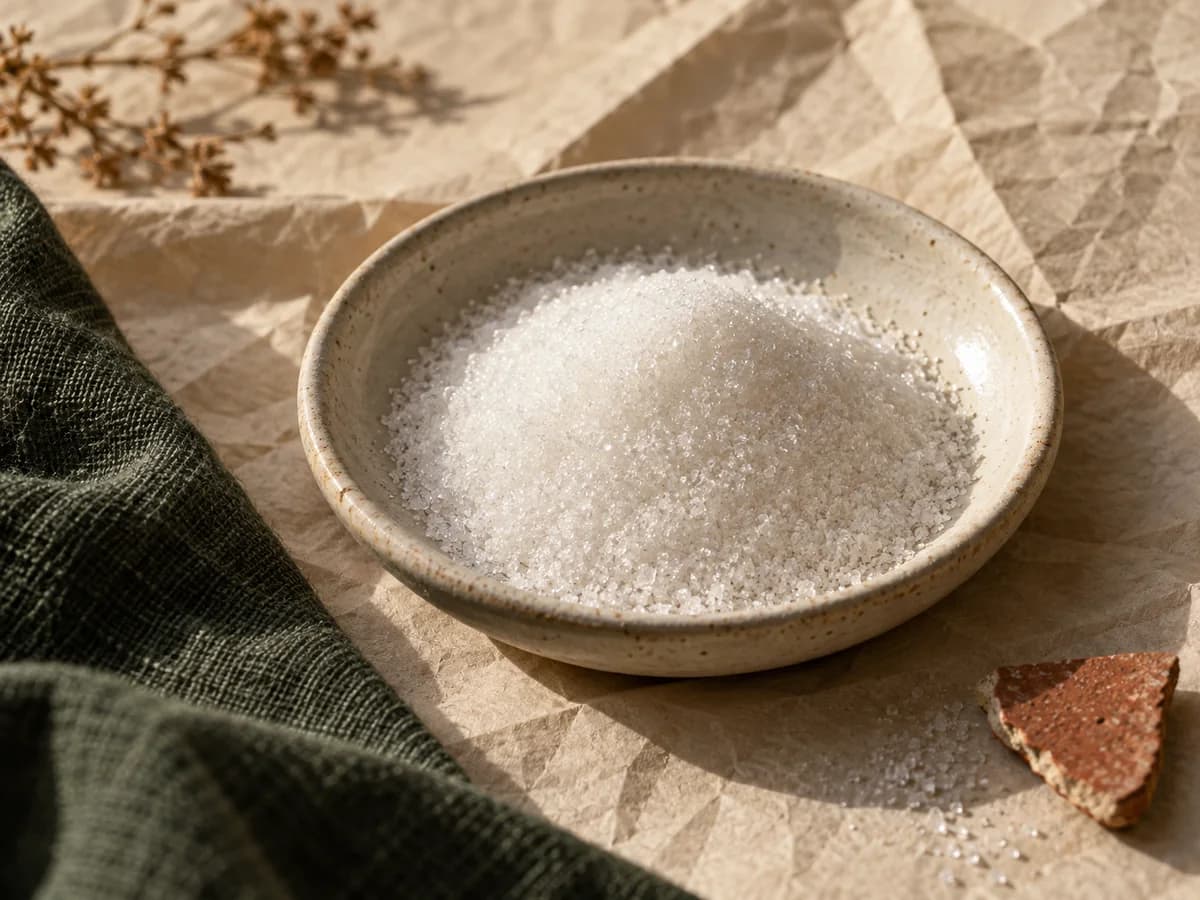
Allulose is a rare monosaccharide used as a low-energy sweetener. U.S. guidance treats it differently from conventional sugars on labels. Human evidence suggests smaller post-meal glucose responses, but has not established durable improvements in HbA1c or body composition. Digestive tolerance and the specific ingredient assessed still matter.1, 2, 3
- FDA's 2020 guidance uses 0.4 kcal/g and retains allulose in Total Carbohydrate.1
- The 2026 review included 12 allulose trials; its 1,033-person total also includes eight tagatose trials.2
- A 2026 tolerance study compared two active-dose groups for 30 days, without a zero-allulose placebo.4
What is Allulose?
D-allulose and D-psicose name the same sugar, not separate ingredients. It is chemically a carbohydrate even when its contribution to energy and labeled sugars differs from sucrose. Commercial production can involve enzymatic or fermentation processes followed by purification; origin alone does not establish a finished material's safety.1, 4
Where it comes from
Natural sources
- A rare sugar, also called D-psicose
How it's made
Commercial material is produced and purified; the 2026 tolerance trial used a specified fermentation-derived ingredient.
What it does in products
Benefits
A narrower post-meal glucose effect
moderate evidenceThe pooled finding concerns glucose responses after eating, not a demonstrated replacement for diabetes care.2
The 2026 review rated postprandial effects moderate certainty but found no significant pooled allulose effects on HbA1c, fasting measures or body composition. Allulose and tagatose results must remain separate; the primary abstract does not supply every trial's formulation details.
Evidence scope and limitations
D-allulose labeling, adult metabolic endpoints, two tolerance studies and one EFSA novel-food application; not every population or manufacturing process.
- The 2026 meta-analysis is used within its primary abstract; its combined population also includes tagatose.
- The 2018 open escalating-dose study and 2026 two-active-dose trial cannot provide a universal tolerance ceiling.
- The selected adult trial excluded pregnancy and major treated metabolic disease.
- An application with unresolved data gaps is neither worldwide authorization nor proof that every exposure causes harm.
Evidence last checked: 2026-10-12
Side effects & safety
Safety considerations
- The 2026 adult trial excluded pregnancy and breastfeeding; its findings do not establish safety in those circumstances.
- It also excluded people using glucose-lowering medicines for diabetes. Do not use its tolerability findings as a medication-interaction assessment or adjust treatment from a food-label calculation.
- Not for: The small adult studies cannot exclude rare harms or establish lifelong tolerance.
- Not for: Persistent digestive symptoms deserve assessment rather than progressively increasing sweetener intake.
Amounts studied & product use
These figures describe research or common product use, not a personal dose or treatment recommendation.
In supplement studies and products
These are study exposures, not a supplement regimen. The 2018 study escalated individual exposures in 0.1 g/kg steps; the 2026 study tested 24 or 36 g/day in two drinks for 30 days. Neither authors' proposed tolerance limit is a universal recommended intake or an authorization for every material.
Regulatory status
- FDA's final 2020 guidance describes enforcement discretion for excluding allulose from Total Sugars and Added Sugars and using 0.4 kcal/g; Total Carbohydrate still includes it. Guidance is not diabetes-treatment approval. EFSA's 2025 application assessment could not establish safety after identity, process, exposure, genotoxicity and human-data questions remained unanswered; that is not proof of harm at every exposure.
A short tolerance trial cannot settle a wider safety dossier
The new trial randomized 50 healthy adults between two allulose doses; 49 completed it. Without a no-allulose control, baseline changes cannot all be attributed to the sweetener. Thirty days also cannot answer a lifelong-use question.
Our reading: keep three decisions separate—how a label counts a sugar, whether a metabolic endpoint improves, and whether an ingredient dossier establishes safety. A later human study does not automatically change an agency's earlier decision; a different jurisdiction or manufacturing process needs its own assessment.
4, 5, 1, 2Frequently asked questions
Does exclusion from labeled sugars mean allulose is not a carbohydrate?
No. The U.S. guidance keeps it in Total Carbohydrate while treating the sugars and calorie declarations differently. That label distinction is not an individual diabetes-management formula.1
Do post-meal findings prove lasting weight loss or diabetes control?
No. The 2026 synthesis did not show significant pooled allulose improvements in body composition or HbA1c. A smaller immediate glucose response answers a different question.2
The bottom line
Read the whole food label and the exact study endpoint; a low-energy sugar is not a personal dose plan or a disease treatment.
References
- The Declaration of Allulose and Calories from Allulose on Nutrition and Supplement Facts Labels. U.S. Food and Drug Administration (2020) · government guidance · Final guidance, October 2020; FDA-2019-D-0725
- Osborn L, DuPuis K, Liu S, Della Corte D, Della Corte KA. Glycemic and cardiometabolic effects of rare sugars allulose and tagatose: a systematic review and meta-analysis of controlled human intervention trials. American Journal of Clinical Nutrition (2026) · meta analysis · PMID 41985675; DOI 10.1016/j.ajcnut.2026.101314; CRD42024567433; primary abstract checked
- Gastrointestinal Tolerance of D-Allulose in Healthy and Young Adults. A Non-Randomized Controlled Trial. Nutrients (2018) · primary study · PMCID PMC6315886; DOI 10.3390/nu10122010; KCT0002216; indexed primary text checked, live PMC retrieval challenged
- D-Allulose as a Low-Calorie Sweetener: A 30-Day Randomized, Double-Blind Study on Gastrointestinal Tolerance and Systemic Safety to Support Its Application in Healthy Diets. Food Science & Nutrition (2026) · randomized trial · PMID 42375569; DOI 10.1002/fsn3.72042; ChiCTR2500100349; two active-dose arms, no zero-allulose placebo
- EFSA Panel on Nutrition, Novel Foods and Food Allergens. Safety of D-allulose as a novel food pursuant to Regulation (EU) 2015/2283. EFSA Journal (2025) · safety assessment · DOI 10.2903/j.efsa.2025.9468; published June 5, 2025; safety not established for the application
Revision history
- Initial AI-assisted source checks and claim-level citation mapping under the site-authorized publishing workflow. No separate human or independent medical review is claimed.