Turkey Tail
Also known as: Trametes versicolor, Coriolus versicolor, Yun zhi, PSK mushroom
A bracket mushroom studied mainly through standardized extracts used alongside cancer treatment in Asia.
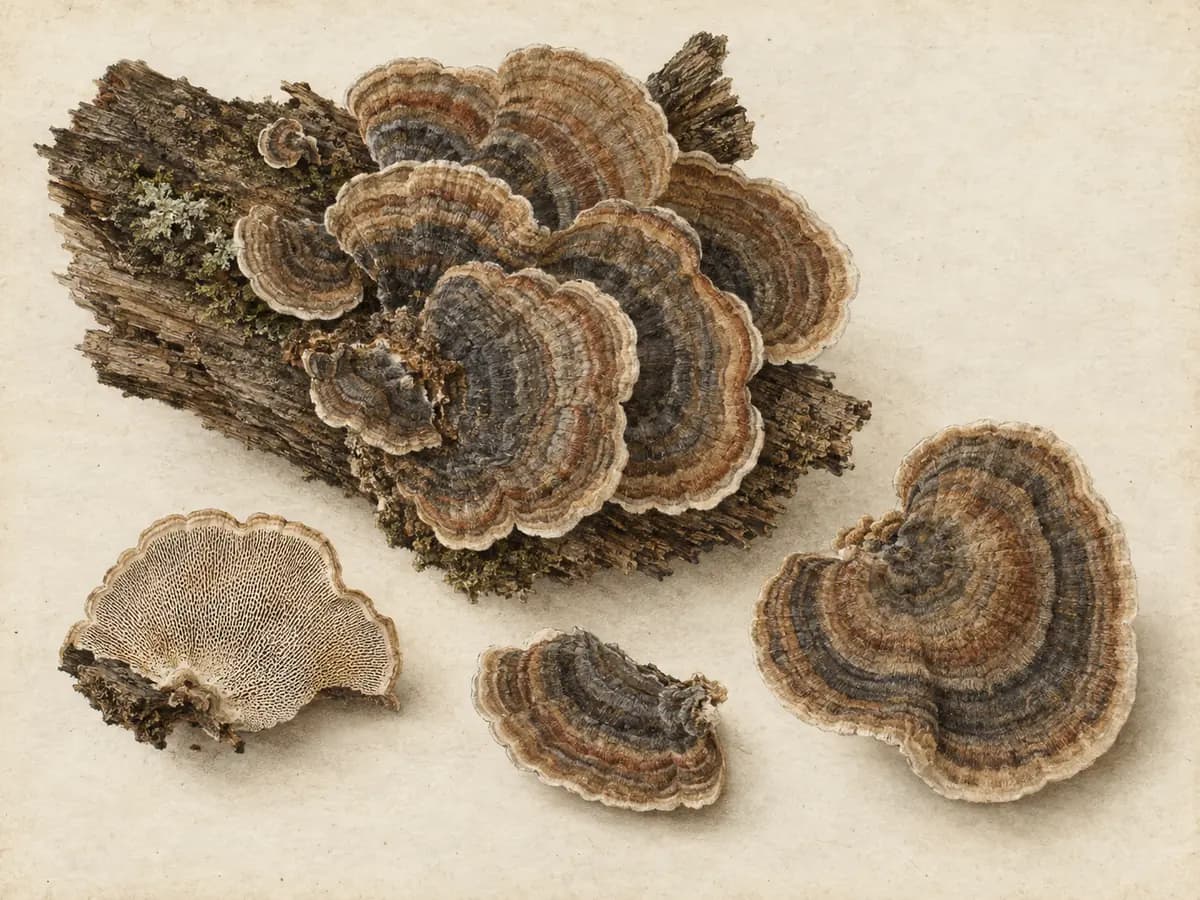
Turkey tail is a thin, banded bracket mushroom. Its best-known research concerns standardized polysaccharide extracts—especially PSK—used as adjuncts to conventional cancer treatment in some countries. That literature does not show that retail powders, teas, or gummies treat cancer or broadly strengthen immunity.1, 2, 3
- Research products are usually standardized extracts, not whole-mushroom powder3, 2
- Most clinical evidence is adjunctive oncology research from East Asia3, 2
- Evidence is not sufficient for routine cancer-care recommendations3, 2
- Product identity and polysaccharide content vary across supplements3, 2
What is Turkey Tail?
Turkey tail is Trametes versicolor, a wood-growing fungus named for its concentric bands. Clinical papers often concern isolated protein-bound polysaccharides such as PSK rather than the dried mushroom sold in U.S. supplements.3, 2
Where it comes from
Natural sources
- Trametes versicolor fruiting bodies on hardwood
- Cultivated fungal biomass
How it's made
Commercial products may mill fruiting bodies or mycelium, or concentrate water-soluble polysaccharides; these preparations are not compositionally interchangeable.
What it does in products
Benefits
Adjunctive cancer research
limited evidenceTreatment tolerability and immune markers
limited evidenceEvidence scope and limitations
Standardized Trametes versicolor extracts studied in humans are separated from whole-mushroom powders, mycelium products, and general wellness claims.
- Most trials are older, geographically concentrated, and conducted alongside cancer therapy.
- Commercial powders and gummies may not match the studied extracts.
Evidence last checked: 2026-09-28
Side effects & safety
Safety considerations
- Pregnancy and breastfeeding safety data are inadequate.
- Cancer medicines and immunotherapies require oncology review
- Other immune-active medicines
- Not for: Use as a substitute for cancer treatment
- Not for: Unverified mushroom species or contaminated products
Amounts studied & product use
These figures describe research or common product use, not a personal dose or treatment recommendation.
In supplement studies and products
Studies use named, standardized extracts under clinical protocols. The literature does not establish a universal dose for whole-mushroom powder, mycelium, tea, or gummies.
Regulatory status
- Sold in the United States as a dietary supplement; turkey tail is not FDA-approved to prevent or treat cancer or infection.
PSK is not every turkey tail product
PSK is a manufactured, protein-bound polysaccharide preparation with its own clinical history. A label that says fruiting body, mycelium, beta-glucan, or polysaccharide does not demonstrate equivalence to PSK. This distinction is the central limit when retail products borrow conclusions from oncology trials.
1, 3Frequently asked questions
The bottom line
Turkey tail evidence belongs to specific extracts and adjunctive settings. Retail mushroom products should not inherit cancer claims from PSK research.
References
- Coriolus (Trametes) versicolor mushroom to reduce adverse effects from chemotherapy or radiotherapy in people with colorectal cancer. Cochrane Database of Systematic Reviews (2022) · systematic review · PMID 36445793
- Medicinal mushroom supplements in cancer: a systematic review of clinical studies. Current Oncology Reports (2023) · systematic review · PMID 36995535
- Coriolus versicolor. Memorial Sloan Kettering Cancer Center (2026) · ingredient monograph
- Dietary Supplements. U.S. Food and Drug Administration (2025) · government guidance
Revision history
- Initial publication with claim-level citations, formulation limits, safety context, and editorial evidence review.