Senna
Also known as: Senna leaf, Sennae folium
A stimulant laxative, with a conditional constipation recommendation; leaf mass is not the same as sennoside content.
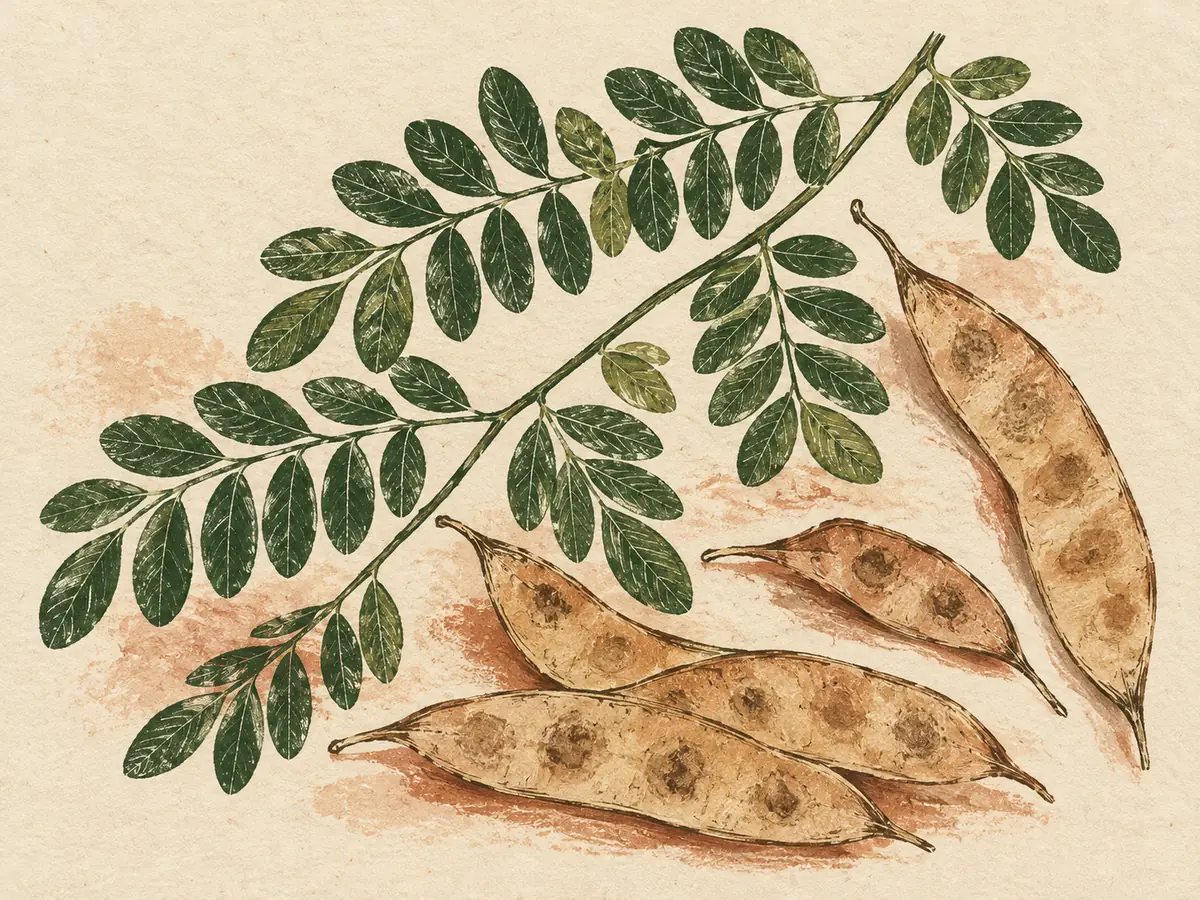
Senna is a plant-derived stimulant laxative used for constipation. The AGA–ACG guideline conditionally suggests it for adults with chronic idiopathic constipation, with low overall evidence certainty. That recommendation does not establish a detox or weight-loss benefit, and a gram of senna material is not a gram of active sennosides.1, 4, 5
- The guideline's senna recommendation is conditional, not a high-certainty endorsement of every preparation.1
- One placebo-controlled trial used 1 g/day of its senna preparation for 28 days.2
- MedlinePlus advises discussing use beyond one week with a clinician.3
What is Senna?
Senna preparations contain anthraquinone glycosides called sennosides. Gut bacteria convert these into active metabolites that affect colonic movement and fluid handling. Leaf material, an extract and a medicine labeled by sennoside content are different descriptions of exposure; the front-label plant weight cannot resolve all three.4, 5
Where it comes from
Natural sources
- Leaves and pods of medicinal senna plants
How it's made
Commercial preparations process plant material; standardized sennoside content is a different measure from raw herb mass.
What it does in products
Benefits
Constipation relief in a defined adult setting
limited evidenceSenna can increase bowel movements, but the small controlled evidence base limits certainty about longer-term outcomes and different preparations.2, 1
The 90-person, 28-day trial compared senna, magnesium oxide and placebo; participants were mostly women. The guideline's overall rating is low certainty, and its studied amount was higher than common clinical starting amounts.
Evidence scope and limitations
Oral medicinal senna for constipation, a defined adult trial and preparation-specific safety guidance; not a comprehensive review of every Senna species or bowel-preparation protocol.
- Low overall guideline certainty and short trials limit generalization.
- Plant weight, extract weight and sennoside content are not equivalent units.
- Chronic supervised care and short-term consumer labeling answer different questions.
- Liver injury case reports cannot estimate incidence; pregnancy and age guidance varies by formulation and jurisdiction.
Evidence last checked: 2026-10-10
Side effects & safety
Safety considerations
- Guidance differs by preparation and jurisdiction: MedlinePlus advises discussing pregnancy or breastfeeding with a clinician; EMA excludes its senna leaf medicines during pregnancy and breastfeeding. Do not transfer a leaf-medicine rule to every product without checking its label.
- Some senna products require separation from other oral medicines; MedlinePlus describes at least two hours for certain products. Ask a pharmacist about the actual formulation.
- Not for: Unexplained abdominal pain, suspected bowel blockage, severe dehydration or rectal bleeding are not situations for escalating a laxative without assessment.
- Not for: EMA's leaf-medicine overview excludes children under 12; U.S. product-specific age directions need separate checking.
Amounts studied & product use
These figures describe research or common product use, not a personal dose or treatment recommendation.
In supplement studies and products
The adult trial used 1 g/day of a specified senna preparation for 28 days. This is not 1 g of sennosides and cannot be converted to an arbitrary tea or tablet dose. MedlinePlus describes an onset often around 6–12 hours and advises no more than one week of unsupervised use; follow the actual medication label.
Regulatory status
- MedlinePlus treats senna as an oral laxative medication, not proof of a wellness-tea claim. EMA's senna leaf monograph informs national medicinal-product licensing in Europe; it is not U.S. approval of a detox or weight-loss product.
A trial duration is not permission for indefinite self-treatment
The constipation guideline discusses use beyond the four-week trials as potentially appropriate in clinical care, while acknowledging missing longer-term data. That is a different question from a consumer starting an unspecified tea without assessment.
Our reading: keep the preparation, active-content label and reason for treatment together. The cited sources support laxation, not fat loss. Recurrent symptoms deserve a cause-oriented assessment rather than repeatedly increasing the plant amount.
1, 5, 4Frequently asked questions
The bottom line
Read the active-content label and the constipation evidence together; do not turn a studied plant amount into a detox or indefinite-use recommendation.
References
- AGA–ACG Clinical Practice Guideline: Pharmacological Management of Chronic Idiopathic Constipation. American Journal of Gastroenterology / AGA and ACG (2023) · clinical guideline · PMID 37204227; DOI 10.14309/ajg.0000000000002227
- Morishita D, Tomita T, Mori S, Kimura T, Oshima T, Fukui H, Miwa H. Senna Versus Magnesium Oxide for the Treatment of Chronic Constipation: A Randomized, Placebo-Controlled Trial. American Journal of Gastroenterology (2021) · randomized trial · PMID 32969946; DOI 10.14309/ajg.0000000000000942
- Senna: Drug Information. MedlinePlus / AHFS Consumer Medication Information (2024) · ingredient monograph · Revised June 20, 2024
- Senna. LiverTox / National Institute of Diabetes and Digestive and Kidney Diseases (2020) · ingredient monograph · Updated April 1, 2020; Bookshelf NBK547922
- Sennae folium: herbal medicinal product. European Medicines Agency (2020) · government guidance · HMPC senna leaf overview; European medicinal-use scope
Revision history
- Initial AI-assisted source checks and claim-level citation mapping under the site-authorized publishing workflow. No separate human or independent medical review is claimed.