Saffron
Also known as: Crocus sativus, Saffron stigma
A stigma-derived spice with extract-specific mood research, inconsistent rating-scale results and incomplete long-term safety data.
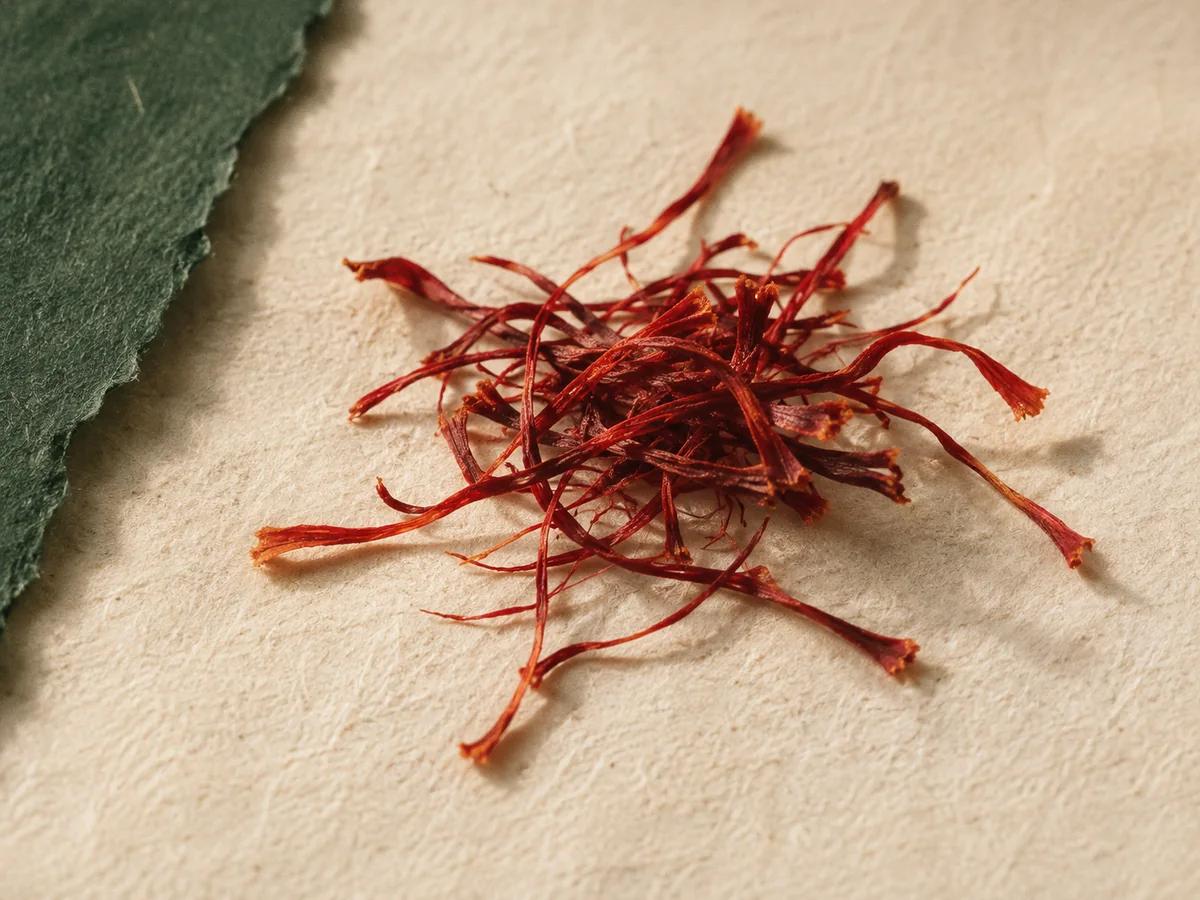
Saffron is the dried stigma of Crocus sativus. Some oral extracts have improved self-reported low-mood scores in trials. A 2026 meta-analysis found substantial variation across studies and inconsistent results across rating scales. The evidence supports a cautious, preparation-specific interpretation. Persistent depressive symptoms require clinical assessment.3, 1, 2, 4
- The 2026 mood meta-analysis included 34 randomized trials and 1,769 participants, with marked heterogeneity in several pooled outcomes.1
- A 2025 trial tested 28 mg/day of a specified extract for 12 weeks in 202 adults with subclinical depressive symptoms.2
- The safety review published in 2026 searched studies only through August 2024. Its publication year and evidence cutoff answer different questions.3
What is Saffron?
Culinary saffron threads, powdered stigmas and concentrated extracts differ in preparation. The best-described recent mood trial tested one proprietary extract, so its findings have a specific product and population context.3, 2
Where it comes from
Natural sources
- The spice consists of dried Crocus sativus flower stigmas.
How it's made
Research preparations include processed stigma extracts with specified manufacturing and constituent profiles.
What it does in products
Benefits
Possible improvement in self-reported low mood
limited evidenceThe signal depends on the preparation and rating instrument.1, 2
The 34-trial review found improvement on BDI and BAI scales, with heterogeneity above 90%, while HDRS, HARS and POMS findings were nonsignificant. The 2025 extract trial found a modest between-group depression-score effect and a substantial placebo response. Several secondary outcomes showed little between-group difference.
Evidence scope and limitations
Oral stigma preparations, recent adult mood research and human adverse-event reports. Culinary use has a separate exposure context.
- The efficacy meta-analysis and 2025 trial were checked through original abstracts and accessible disclosures. Full texts were unavailable.
- The 2026 safety review searched through August 2024. Its heterogeneous event reporting and differing totals across summaries limit incidence estimates.
- The manufacturer-funded 2025 trial assessed one extract for 12 weeks. Long-term outcomes and transferability across extracts remain uncertain.
Evidence last checked: 2026-11-15
Side effects & safety
Safety considerations
- Discuss medicinal extract use during pregnancy or breastfeeding with a health professional, following FDA's supplement-consultation guidance.
- The safety review identifies incomplete interaction data, including concerns around anticoagulant use. Review the exact extract and all medicines with the treating clinician.
Amounts studied & product use
These figures describe research or common product use, not a personal dose or treatment recommendation.
In the recent low-mood trial
The 2025 study used 28 mg/day of a particular extract for 12 weeks. That amount describes the tested preparation. Culinary threads, a differently standardized extract and isolated constituents have different compositions. Clinical suitability and any combination with depression treatment require assessment.
Regulatory status
- In the United States, a saffron supplement follows the dietary-supplement framework. FDA generally reviews neither its efficacy nor its safety before marketing. Manufacturers retain responsibility for lawful, safe products, and disease-treatment claims involve additional requirements.
Read the extract and the comparison together
The 2025 trial enrolled adults with low mood below a major-depression treatment context and tested a named extract against placebo. It was funded by the extract manufacturer, and two authors were company employees. These details matter when weighing independent replication and applicability.
NCCIH advises against replacing or postponing conventional depression care with an unproven complementary approach. The trial's short-term questionnaire improvement leaves maintenance treatment, severe depression and equivalence to prescribed antidepressants unresolved.
2, 4Frequently asked questions
The bottom line
Keep saffron's mood signal tied to the tested extract, outcome scale, comparator and clinical-care context.
References
- Mahmoudi R, Mohammadi-Sartang M, Servatyari K, Rafieipour N. Effect of saffron on depression, anxiety and mood disorder: a GRADE assessed systematic review and meta-analysis of 34 randomized controlled trials. Nutritional Neuroscience (2026) · meta analysis · PMID 41693488; DOI 10.1080/1028415X.2025.2602153; July 2026, 29(7):816–837, online February 16; indexed original abstract checked, full text unavailable
- Lopresti AL, Smith SJ, Marx W, Díez-Municio M, Morán-Valero MI. An Examination into the Effects of a Saffron Extract (Affron) on Mood and General Wellbeing in Adults Experiencing Low Mood: A Randomized, Double-Blind, Placebo-Controlled Trial. The Journal of Nutrition (2025) · randomized trial · PMID 40414301; DOI 10.1016/j.tjnut.2025.05.024; ACTRN12623001358639; July 2025, 155(7):2300–2311; original abstract and funding disclosure checked, full text unavailable
- Hasheminasab FS, Hajimonfarednejad M, Najibi SM, Hashempur MH. Adverse Events of Saffron (Crocus sativus L.): Systematic Review of Current Evidence. Health Science Reports (2026) · systematic review · PMID 42057871; DOI 10.1002/hsr2.72212; April 27, 2026, 9(5):e72212; methods, adverse-event tables and limitations checked; search cutoff August 2024
- Depression. National Center for Complementary and Integrative Health (2020) · government guidance · Agency resource last updated February 2020, checked November 15, 2026 for the conventional-care and consultation framework
- Questions and Answers on Dietary Supplements. U.S. Food and Drug Administration · government guidance · Undated current agency guidance checked November 15, 2026 for premarket review, pregnancy and medication-consultation framework
Revision history
- Initial AI-assisted source compilation with claim-level citations, formulation distinctions and explicit evidence limitations; not independent medical review.