Palmitoylethanolamide
Also known as: PEA, Palmidrol, N-palmitoylethanolamine
A fatty-acid amide with formulation-specific pain studies, substantial trial heterogeneity and a negative spinal-cord-injury trial.
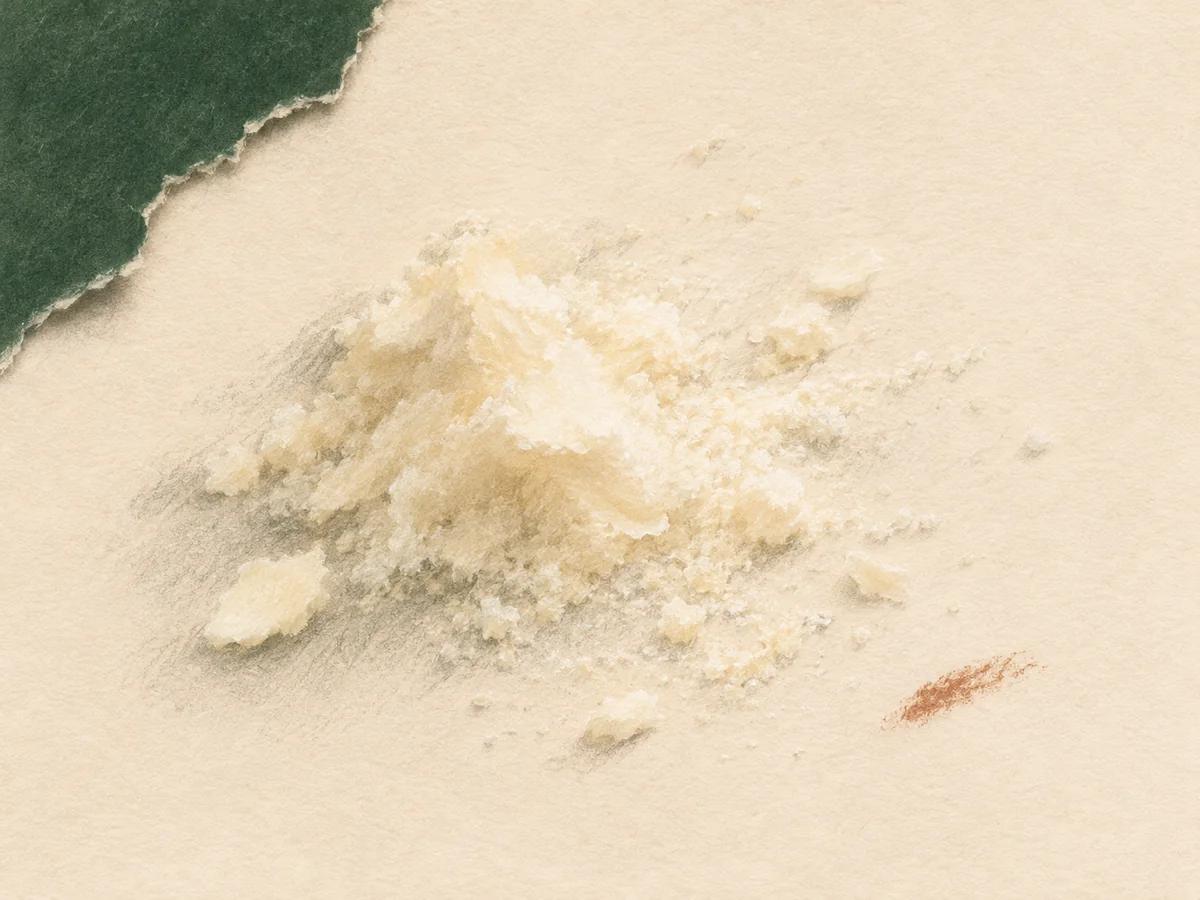
Palmitoylethanolamide, or PEA, is a fatty-acid amide produced in the body and studied in oral supplements. Trials report benefits in some pain conditions, including knee osteoarthritis, but an ultramicronized preparation failed to improve mean neuropathic pain after spinal cord injury. The diagnosis and formulation materially change how a result should be read.1, 2
- A single-site knee-osteoarthritis trial randomized 111 adults to 300 mg/day, 600 mg/day or placebo for eight weeks.1
- The spinal-cord-injury trial randomized 73 people and found no significant advantage for its primary pain-intensity outcome over 12 weeks.2
- A 2023 pooled analysis favored PEA for pain, with very high between-study heterogeneity of I² = 93%.3
What is Palmitoylethanolamide?
PEA belongs to the N-acylethanolamine family of lipid mediators. The clinical literature includes plain, micronized, ultramicronized and combination preparations. A recent systematic review catalogued substantial differences in routes, accompanying ingredients and patient groups, making the exact intervention important when comparing products.2, 4
Where it comes from
Natural sources
- An endogenous fatty-acid amide produced in many body cells.
How it's made
Supplement trials use specified isolated preparations, including different particle sizes and delivery systems.
What it does in products
Benefits
Some pain trials show a signal
limited evidenceThe evidence supports condition-specific interpretation and further confirmation.1, 3, 2
The eight-week knee trial reported improvements in WOMAC scores with the studied preparation. The pooled review combined varied diagnoses and regimens, while the spinal-cord-injury trial was negative for mean pain intensity. These differences limit a general promise of pain relief from any PEA product.
Evidence scope and limitations
A focused review of PEA pain trials, the 2023 pain meta-analysis and the broad 2025 RCT review, with U.S. supplement-regulation context.
- The two original trials were checked through publisher or indexed original abstracts. Their full texts were unavailable.
- Diagnosis, particle processing, route and combination ingredients vary. The pooled pain result has high heterogeneity.
- The source set does not establish long-term disease modification, pregnancy safety or a complete interaction profile. No separate human or medical review is claimed.
Evidence last checked: 2026-11-13
Side effects & safety
Safety considerations
- These cited clinical sources do not establish safety in pregnancy or breastfeeding.
- The trial literature does not provide a comprehensive interaction profile. Review the complete supplement formula and existing medicines with a qualified professional.
- Not for: Unexplained or worsening pain needs assessment of its cause. The cited symptom trials cannot establish a diagnosis or justify replacing prescribed treatment.
Amounts studied & product use
These figures describe research or common product use, not a personal dose or treatment recommendation.
In supplement studies and products
The knee trial tested 300 or 600 mg per day in divided doses for eight weeks. Across the wider review, dose, route and particle processing varied. These are research regimens in selected participants, rather than a personal dose or proof that higher amounts perform better.
Regulatory status
- FDA generally does not approve dietary supplements for safety and effectiveness before marketing. The availability of a PEA supplement does not establish an approved pain-treatment indication.
Particle size leaves an unanswered comparison
Micronization describes a preparation. It does not, by itself, show that the preparation gives better clinical results than another form. The pain meta-analysis identified formulation differences as an important source of uncertainty.
The broad 2025 review also included combination interventions and multiple routes. An improvement with PEA plus another ingredient cannot isolate PEA's contribution, and a topical study needs its own assessment before it can inform an oral-supplement claim.
3, 4Frequently asked questions
Does the knee study demonstrate cartilage preservation?
Its eight-week outcomes concerned symptoms and function. The reported results do not establish cartilage regrowth, structural disease modification or a lasting benefit after supplementation ends.1
The bottom line
Match a PEA claim to the studied diagnosis, preparation and endpoint before drawing a conclusion about a supplement.
References
- Steels E, Venkatesh R, Steels E, Vitetta G, Vitetta L. A double-blind randomized placebo controlled study assessing safety, tolerability and efficacy of palmitoylethanolamide for symptoms of knee osteoarthritis. Inflammopharmacology (2019) · randomized trial · PMID 30927159; DOI 10.1007/s10787-019-00582-9; publisher abstract checked, full text unavailable
- Andresen SR, Bing J, Hansen RM, et al.. Ultramicronized palmitoylethanolamide in spinal cord injury neuropathic pain: a randomized, double-blind, placebo-controlled trial. Pain (2016) · randomized trial · PMID 27227691; DOI 10.1097/j.pain.0000000000000623; NCT01851499; indexed original abstract checked, full text unavailable
- Lang-Illievich K, Klivinyi C, Lasser C, et al.. Palmitoylethanolamide in the Treatment of Chronic Pain: A Systematic Review and Meta-Analysis of Double-Blind Randomized Controlled Trials. Nutrients (2023) · meta analysis · DOI 10.3390/nu15061350; full text, heterogeneity and formulation table checked
- Bortoletto R, et al.. Palmitoylethanolamide supplementation for human health: A state-of-the-art systematic review of Randomized Controlled Trials in patient populations. Brain, Behavior, & Immunity - Health (2025) · systematic review · PMID 39839988; DOI 10.1016/j.bbih.2024.100927; February 2025 collection, online December 23, 2024; indexed original text checked where live access was restricted
- Questions and Answers on Dietary Supplements. U.S. Food and Drug Administration · government guidance · Undated current agency resource checked November 13, 2026 for premarket review and professional-consultation framework
Revision history
- Initial AI-assisted source compilation with claim-level citations, formulation distinctions and explicit evidence limitations; not independent medical review.