Magnolia Bark
Also known as: Magnolia officinalis, Hou po, Honokiol, Magnolol
A traditional bark extract marketed for stress and sleep, with most human evidence coming from combination products.
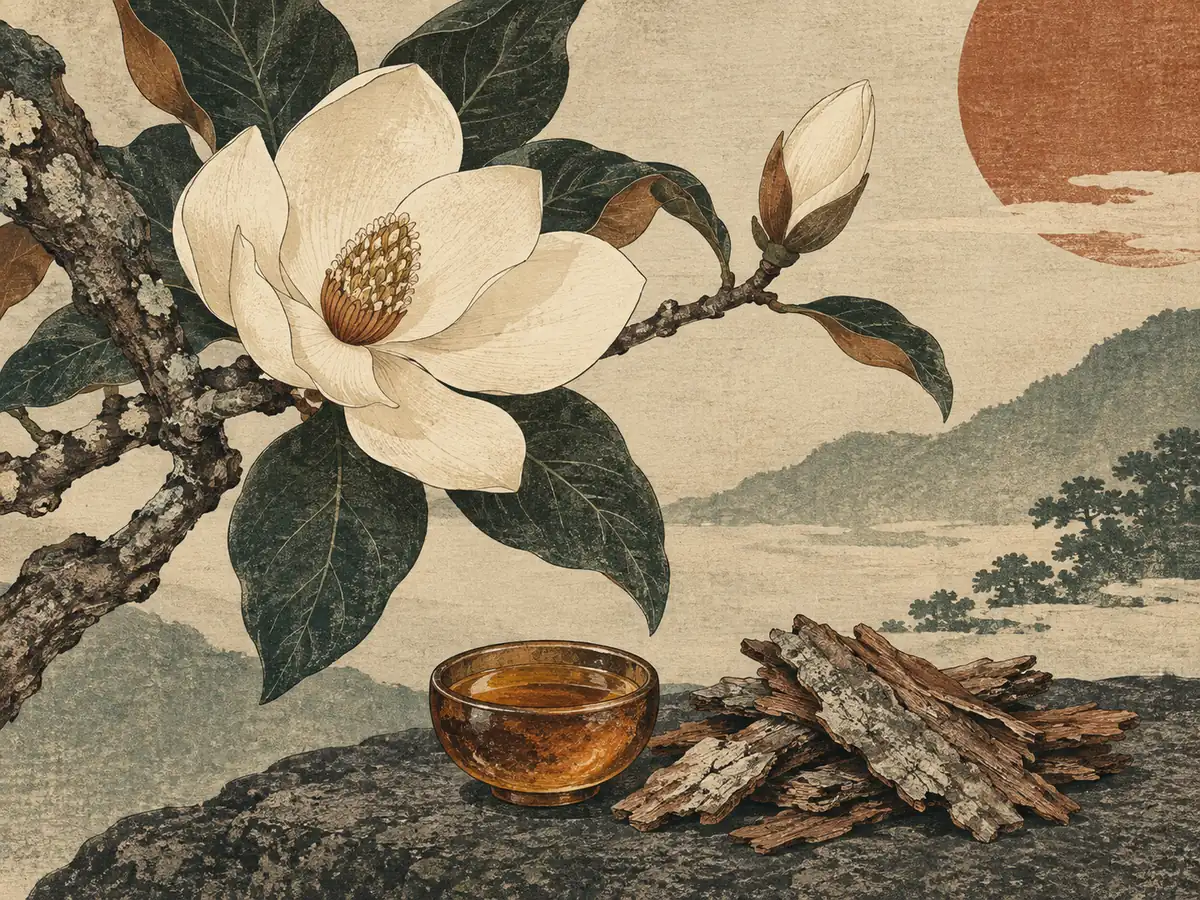
Magnolia bark extracts contain honokiol and magnolol and are marketed for stress, sleep, and digestive comfort. Human evidence is sparse. A small trial of a magnolia-plus-phellodendron combination cannot show what magnolia alone did, and laboratory calming mechanisms do not establish clinical anxiety or insomnia treatment.2, 1
- Honokiol and magnolol are major studied constituents1
- Most clinical evidence uses combination products1
- Sedation and medicine interactions are plausible1
- Not established as an anxiety or sleep treatment1
What is Magnolia Bark?
Magnolia officinalis bark has a history of use in East Asian herbal practice. Modern extracts may standardize selected biphenolic compounds, creating an exposure unlike traditional mixed preparations.1
Where it comes from
Natural sources
- Bark of Magnolia officinalis and related Magnolia species
How it's made
Commercial extracts are solvent-extracted and may be standardized for honokiol and magnolol.
What it does in products
Benefits
Stress-related symptoms
limited evidenceA small randomized pilot reported changes with a magnolia-and-phellodendron combination.2
Because two botanicals were administered together, the independent contribution of magnolia is unknown.
Evidence scope and limitations
Oral magnolia bark extracts in adult supplements are covered; traditional multi-herb medical practice is not evaluated as one intervention.
- Human trials are few and often use proprietary combinations.
- Constituent standardization varies widely.
Evidence last checked: 2026-09-28
Side effects & safety
Safety considerations
- Avoid during pregnancy and breastfeeding because concentrated-extract safety is not established.
- Sedatives and sleep medicines
- Alcohol
- Anticoagulant or antiplatelet medicines
- Not for: Driving after a sedating dose
- Not for: Using it instead of treatment for persistent anxiety or insomnia
Amounts studied & product use
These figures describe research or common product use, not a personal dose or treatment recommendation.
In supplement studies and products
The pilot combination trial used a proprietary product rather than a transferable magnolia-only dose; no evidence-based monotherapy range is established.
Regulatory status
- Sold as a dietary supplement; not FDA-approved to treat anxiety, insomnia, or depression.
A combination trial cannot validate the solo herb
Brand studies often combine magnolia with phellodendron or other calming ingredients. Even if the blend outperforms placebo, the result cannot be assigned to honokiol, magnolol, or magnolia bark by itself.
2Frequently asked questions
The bottom line
Magnolia bark has interesting pharmacology, but current human evidence is too sparse and combination-heavy for confident stress or sleep claims.
References
- Honokiol: compound summary. PubChem, National Library of Medicine (2026) · ingredient monograph · CID 72303
- Effect of a proprietary Magnolia and Phellodendron extract on stress levels in healthy women: a pilot, double-blind, placebo-controlled clinical trial. Nutrition Journal (2008) · randomized trial · PMID 18426577
- Dietary Supplements. U.S. Food and Drug Administration (2025) · government guidance
Revision history
- Initial publication with claim-level citations, formulation limits, safety context, and editorial evidence review.