Horny Goat Weed
Also known as: Epimedium, Yin yang huo, Herba Epimedii
An Epimedium botanical marketed for libido; laboratory enzyme activity is not proof of erectile-dysfunction treatment.
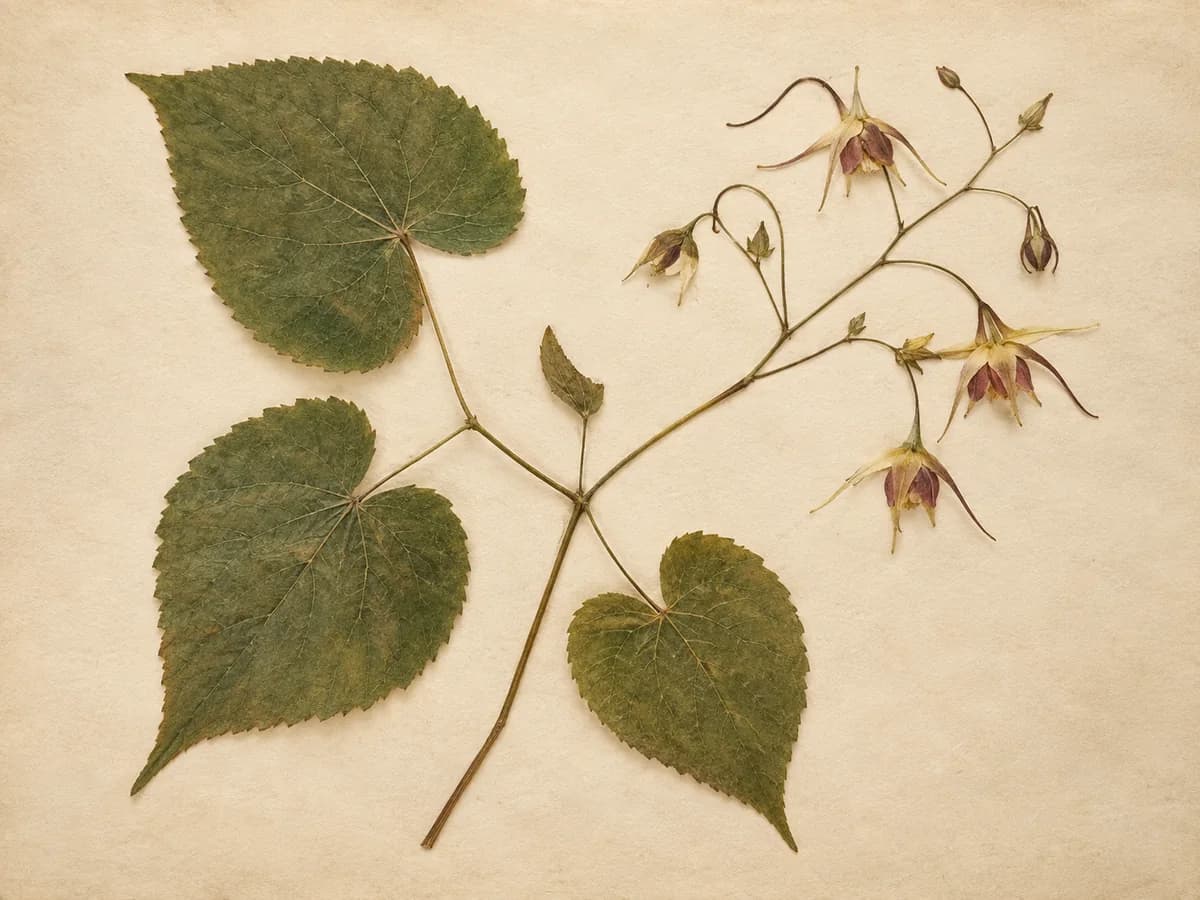
Horny goat weed refers to Epimedium botanicals, often marketed for sexual performance. Human evidence does not establish it as an effective erectile-dysfunction treatment. A small bone-density trial studied a mixed flavonoid preparation in postmenopausal women, not libido. Heart disease, hormone-sensitive illness and uncertain product composition change the safety context.1, 2
- Epimedium is a botanical group rather than one standardized supplement.1
- The 2007 bone study used icariin with daidzein and genistein, plus calcium.2
- That trial did not test erectile function or establish a libido dose.2
What is Horny Goat Weed?
Epimedium species, whole-leaf powders, extracts and isolated icariin are different materials. Mechanistic studies of an enzyme do not establish the dose, absorption, clinical effectiveness or safety of a retail supplement. This is particularly important when a marketing comparison makes a botanical sound equivalent to a regulated prescription medicine.1
Where it comes from
Natural sources
- Leaves and other botanical material from Epimedium species
How it's made
Extract and isolated-constituent products require their own composition specifications.
What it does in products
Benefits
Sexual-performance claims
insufficient evidenceThe reviewed institutional evidence does not establish a reliable human treatment effect for erectile dysfunction.1
Laboratory activity and traditional use do not determine a clinically effective or safe retail-product dose; mixed botanical studies cannot isolate Epimedium's contribution.
Bone-density research in a narrow population
limited evidenceA 24-month trial found differences in bone-density change in late postmenopausal women receiving a mixed flavonoid preparation.2
One hundred women were randomized; 85 completed. The mixture contained icariin, daidzein and genistein, and everyone received calcium. This does not prove fracture prevention or an effect of arbitrary horny-goat-weed products.
Evidence scope and limitations
Epimedium botanical supplement claims, institutional safety context and a specific mixed-flavonoid bone-density trial; no drug-equivalence claim.
- Bone-density findings do not establish fracture prevention or sexual-function benefit.
- The studied mixture is not a standalone whole-herb intervention.
- Reported adverse events and product notifications cannot estimate the risk of all retail products.
Evidence last checked: 2026-10-01
Side effects & safety
Safety considerations
- Concentrated botanical safety is not established in pregnancy or breastfeeding by these sources.
- Potential hormone-related and metabolism-related interactions have uncertain clinical relevance; medication review is warranted rather than a universal compatibility claim.
- Not for: People with heart disease or hormone-sensitive cancer should not self-prescribe this botanical.
- Not for: Avoid after a confirmed reaction to Epimedium.
Amounts studied & product use
These figures describe research or common product use, not a personal dose or treatment recommendation.
In supplement studies and products
The bone trial used 60 mg icariin, 15 mg daidzein and 3 mg genistein daily, with 300 mg elemental calcium supplied to both groups. This mixed intervention is not an established libido dose or a recommendation to recreate the regimen.
Regulatory status
- Marketed as a dietary supplement, not an FDA-approved erectile-dysfunction treatment. FDA's sexual-enhancement notifications concern identified products and do not prove that every Epimedium product is adulterated.
A mechanism is not prescription-drug equivalence
An enzyme effect observed in a laboratory does not establish the concentration reached in human tissue, clinical response or the safety of a multi-ingredient capsule. Claims that a botanical is natural prescription medicine omit those steps.
FDA also maintains notifications about sexual-enhancement products with hidden ingredients. This is a product-quality caution, not an accusation that the botanical itself contains a drug. A plain botanical label cannot certify an unknown product's composition.
1, 3Frequently asked questions
Does the bone study show a libido benefit?
No. It evaluated a mixed flavonoid intervention and bone-related measures in postmenopausal women, not sexual function.2
Are all horny-goat-weed products tainted?
No such claim is supported here. FDA notifications identify particular problematic products; they are a reason for caution about product quality, not proof about every herb or brand.3
The bottom line
Do not convert laboratory activity or a mixed bone study into erectile-dysfunction claims. Product composition and clinical safety questions remain unresolved.
References
- Epimedium: evidence, adverse reactions and interactions. Memorial Sloan Kettering Cancer Center (2023) · ingredient monograph · Page updated April 5, 2023; accessed October 1, 2026
- Zhang G, Qin L, Shi Y. Epimedium-derived phytoestrogen flavonoids exert beneficial effect on preventing bone loss in late postmenopausal women: a 24-month randomized, double-blind and placebo-controlled trial. Journal of Bone and Mineral Research (2007) · randomized trial · PMID 17419678; DOI 10.1359/jbmr.070405
- Sexual Enhancement and Energy Product Notifications. U.S. Food and Drug Administration · government guidance · Undated live resource; accessed October 1, 2026
- Dietary Supplements. U.S. Food and Drug Administration · government guidance · Undated live resource; accessed October 1, 2026
Revision history
- Initial AI-assisted evidence compilation with source-linked claims, formulation distinctions and explicit research limitations; not independent medical review.