Hops
Also known as: Humulus lupulus, Hop extract
A brewing botanical with limited supplement research; sleep blends and standardized phytoestrogen extracts answer different questions.
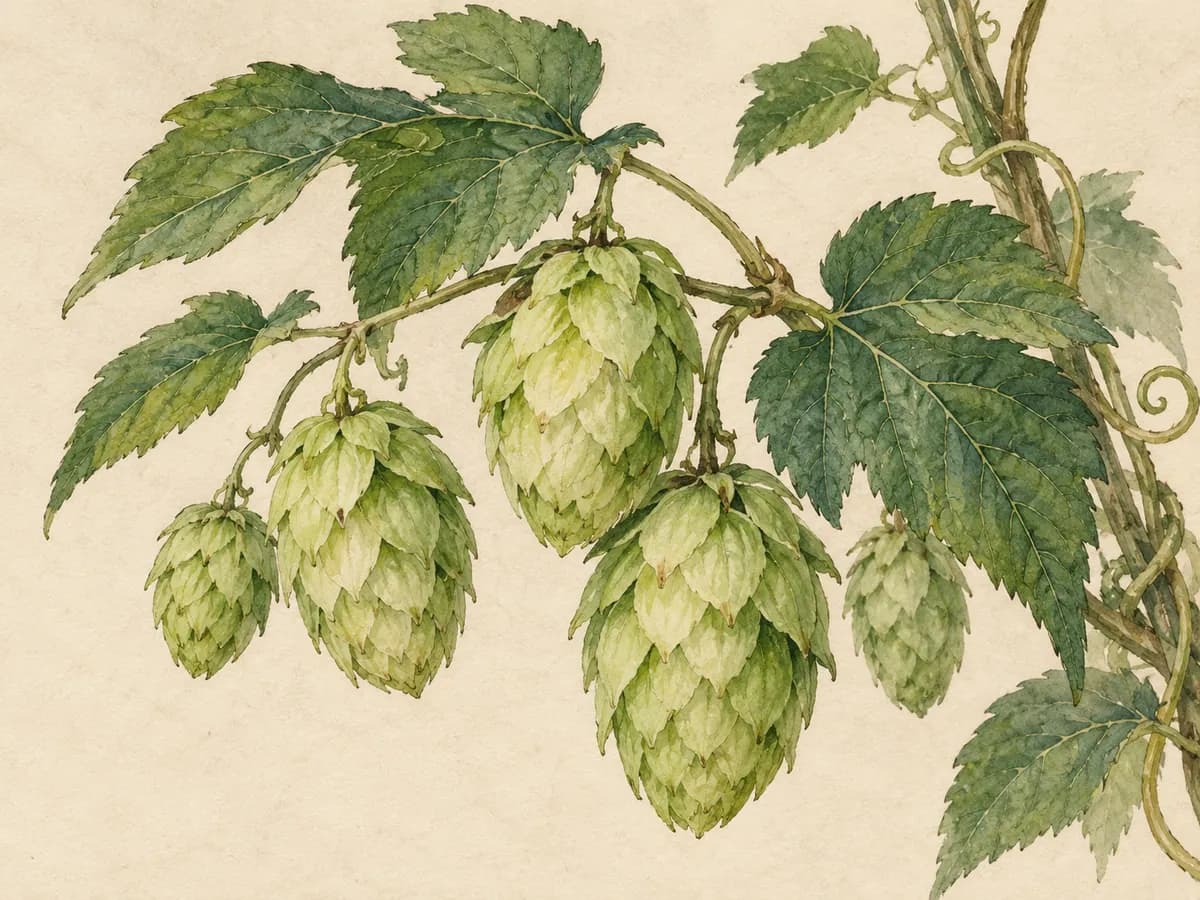
Hops are the female flower cones of Humulus lupulus, widely used in brewing. Supplement evidence for sleep is limited and often comes from mixtures. A small menopausal-symptom trial of a standardized phytoestrogen extract showed an early signal that was not consistently sustained; the evidence does not support treating any hop product as proven hormone or sleep therapy.1, 2, 3
- Botanical identity: Humulus lupulus flower cones.1
- The 2006 menopause trial enrolled 67 women for 12 weeks.3
- The trial standardized doses by 8-prenylnaringenin, not total hop weight.3
What is Hops?
Brewing bitterness, botanical sleep blends and standardized menopausal-symptom extracts are different uses of the same plant. Their constituents and exposures can differ considerably. The weight of a hop powder is therefore not a reliable proxy for the amount of a specific prenylated flavonoid in a trial preparation.1
Where it comes from
Natural sources
- Female flower cones of Humulus lupulus
How it's made
Extract processing and standardization determine the concentration of constituents such as 8-prenylnaringenin.
What it does in products
Benefits
Sleep-support claims
insufficient evidenceMenopausal symptom research
limited evidenceA small controlled study found an early improvement with one standardized hop extract, without a clear sustained or dose-dependent effect.3
The 67-person trial used 100 or 250 micrograms of 8-prenylnaringenin daily. The lower-dose global result differed from placebo at six weeks but not at 12 weeks, and the higher dose was not better.
Evidence scope and limitations
Oral hop botanicals, limited sleep evidence and a standardized 8-prenylnaringenin menopausal-symptom trial.
- Combination products confound attribution.
- The small menopause trial had inconsistent persistence and no clear dose-response.
- A liver-specific monograph is not comprehensive safety clearance.
Evidence last checked: 2026-10-01
Side effects & safety
Safety considerations
- Concentrated extract safety is not established for pregnancy or breastfeeding by these sources.
- Potential sedation is relevant when combined with sedating medicines or alcohol.
- The phytoestrogen content warrants review alongside hormone-related therapy.
- Not for: People with hormone-sensitive cancers should discuss hop extracts with their treating clinician.
Amounts studied & product use
These figures describe research or common product use, not a personal dose or treatment recommendation.
In supplement studies and products
The menopausal-symptom trial standardized extracts to 100 or 250 micrograms of 8-prenylnaringenin daily for 12 weeks. These are research exposures, not a generic hop-powder dose or a recommendation for self-treatment.
Regulatory status
- An oral botanical supplement is not FDA-approved for insomnia or menopausal symptoms merely because it contains hops.
Beer is not the trial intervention
The trial specified a standardized extract, constituent amounts and a study population. A beer, loose flower tea or multi-herb tablet does not inherit that study's findings.
The inconsistent dose-response is also worth retaining: more of the phytoestrogen did not reliably improve the result. A standardized label permits better comparison with research, but does not remove the study's uncertainty.
3, 1Frequently asked questions
Does a valerian-hops study prove hops works alone?
No. A multi-ingredient intervention cannot isolate the effect of hops without an appropriate comparison arm.2
The bottom line
Keep sleep mixtures, standardized phytoestrogen extracts and brewing use separate. Hops is not established as a universal sedative or menopause treatment.
References
- Hops — LiverTox. National Institute of Diabetes and Digestive and Kidney Diseases (2018) · ingredient monograph
- Hops: evidence, adverse reactions and interactions. Memorial Sloan Kettering Cancer Center (2021) · ingredient monograph · Page updated February 11, 2021; accessed October 1, 2026
- Heyerick A, Vervarcke S, Depypere H et al.. A first prospective, randomized, double-blind, placebo-controlled study on the use of a standardized hop extract to alleviate menopausal discomforts. Maturitas (2006) · randomized trial · PMID 16321485; DOI 10.1016/j.maturitas.2005.10.005
- Dietary Supplements. U.S. Food and Drug Administration · government guidance · Undated live resource; accessed October 1, 2026
Revision history
- Initial AI-assisted evidence compilation with source-linked claims, formulation distinctions and explicit research limitations; not independent medical review.