Guggul
Also known as: Guggulu, Commiphora wightii, Commiphora mukul, Guggulipid, Guggulsterones
An Ayurvedic resin extract with conflicting cholesterol evidence and meaningful interaction concerns.
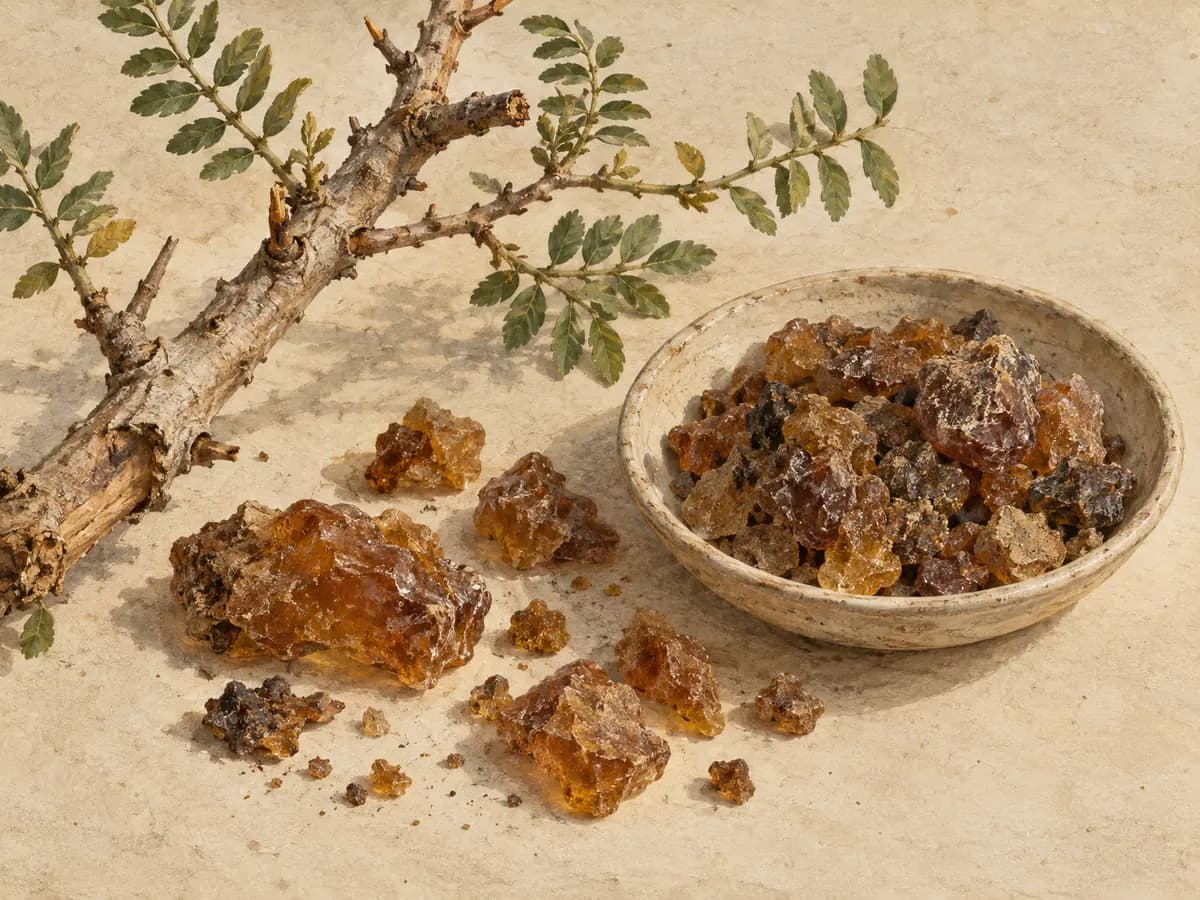
Guggul is resin from Commiphora species, often standardized to guggulsterones. Cholesterol findings are inconsistent: a well-controlled U.S. trial found no benefit and an increase in LDL, while other reviews pool smaller studies with more favorable results. It should not replace proven lipid-lowering care.2, 3
- Guggul resin and guggulipid extracts are not identical1, 3
- A major U.S. randomized trial found LDL increased rather than decreased1, 3
- Rash and gastrointestinal effects occur1, 3
- Thyroid, hormone, and drug-metabolism interactions are plausible1, 3
What is Guggul?
Guggul is an aromatic gum resin collected from Commiphora trees. Supplements usually use a processed lipid fraction and may state a guggulsterone percentage, which does not guarantee the same composition as a research extract.1, 3
Where it comes from
Natural sources
- Resin of Commiphora wightii or related Commiphora species
How it's made
Guggulipid is produced by solvent extraction and standardization of the resin; marker percentages do not capture every constituent.
What it does in products
Benefits
Cholesterol reduction
insufficient evidenceWeight or metabolic support
insufficient evidenceReliable evidence does not establish guggul as a weight-loss or metabolic treatment.3
Mechanistic guggulsterone research and multi-ingredient products cannot isolate a clinical effect of guggul.
Anti-inflammatory claims
insufficient evidenceLaboratory findings have not translated into dependable human outcomes for arthritis or systemic inflammation.3
Clinical studies are too sparse and formulation-specific for a treatment conclusion.
Evidence scope and limitations
Processed guggul resin and guggulipid products are assessed separately from isolated guggulsterones and multi-ingredient formulas.
- Extract chemistry and guggulsterone standardization differ substantially.
- The human evidence is small, old, and internally inconsistent.
Evidence last checked: 2026-09-28
Side effects & safety
Safety considerations
- Avoid during pregnancy and breastfeeding because safety is not established and hormonal effects are plausible.
- Thyroid medicines
- Anticoagulants or antiplatelet medicines
- Medicines affected by hepatic drug metabolism
- Not for: Using guggul in place of prescribed cholesterol treatment
- Not for: Known Commiphora allergy
Amounts studied & product use
These figures describe research or common product use, not a personal dose or treatment recommendation.
In supplement studies and products
Trials use named guggulipid extracts with specified guggulsterone content. Their gram amounts should not be transferred to raw resin or another extraction process.
Regulatory status
- Sold as a dietary supplement in the United States; no guggul product is FDA-approved to treat high cholesterol.
Why the cholesterol story is unusually conflicted
Early small studies created a strong lipid-lowering reputation. A later randomized U.S. trial using a typical Western diet found no benefit and a net LDL increase. Product pages that mention only the early studies omit the most decision-relevant contradiction.
2, 3Frequently asked questions
The bottom line
Guggul is a useful example of why a plausible mechanism and older positive trials do not outweigh a conflicting controlled study.
References
- Guggulsterone: compound summary. PubChem, National Library of Medicine (2026) · ingredient monograph · CID 6450278
- Guggulipid for the treatment of hypercholesterolemia: a randomized controlled trial. JAMA (2003) · randomized trial · PMID 12915429
- Guggul for hyperlipidemia: a review by the Natural Standard Research Collaboration. Complementary Therapies in Medicine (2005) · systematic review · PMID 16338199
- Dietary Supplements. U.S. Food and Drug Administration (2025) · government guidance
Revision history
- Initial publication with claim-level citations, formulation limits, safety context, and editorial evidence review.