Fisetin
Also known as: 3,3′,4′,7-Tetrahydroxyflavone, Fisetin flavonoid, Senolytic fisetin
A food flavonoid promoted as a senolytic even though human longevity benefits remain unproven.
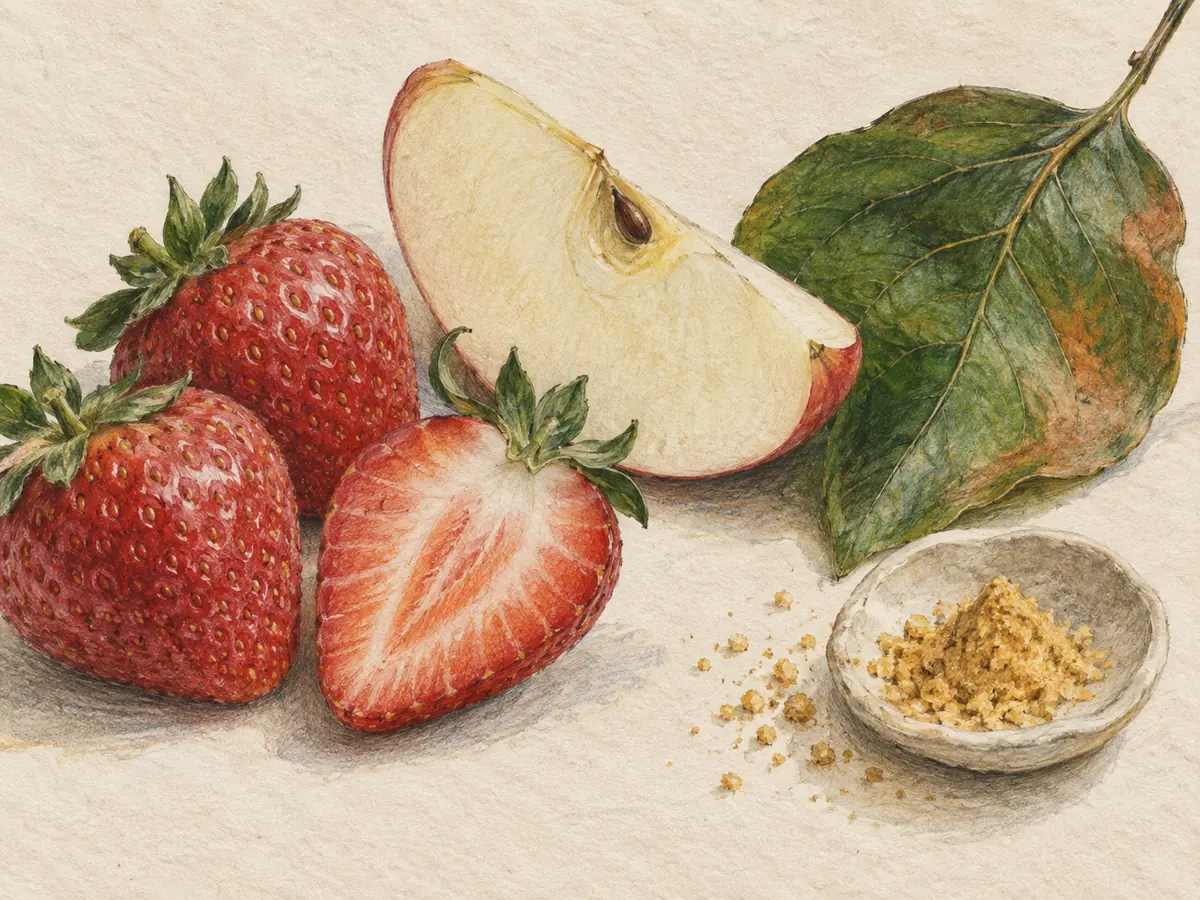
Fisetin is a flavonoid found in small amounts in strawberries and other plants. It can affect senescence-related pathways in laboratory models, which has led to high-dose 'senolytic' supplements. Human trials have not yet established that fisetin extends life, treats age-related disease, or is safe in intermittent high-dose protocols.2, 3
- Naturally present at low levels in some fruits and vegetables1, 2
- Senolytic claims come mainly from preclinical research1, 2
- Supplement doses greatly exceed ordinary food exposure1, 2
- No established anti-aging regimen exists1, 2
What is Fisetin?
Fisetin is one of many polyphenolic flavonoids in plants. Its laboratory activity is scientifically interesting, but a cell's response to a concentrated compound does not establish a benefit from consumer dosing.1, 2
Where it comes from
Natural sources
- Strawberries
- Apples
- Persimmons
- Onions and cucumbers in smaller amounts
How it's made
Supplement-grade fisetin is extracted and purified or manufactured to achieve concentrations far above food exposure.
What it does in products
Benefits
Senolytic or longevity effect
insufficient evidenceHuman evidence does not yet show that fisetin clears enough senescent cells to extend healthspan or lifespan.2
Mechanistic and animal findings remain the foundation of the claim; clinical translation is still experimental.
Cancer prevention or treatment
insufficient evidenceLaboratory anticancer signals do not establish prevention or treatment in people.3
The systematic review literature is dominated by preclinical models rather than clinical outcome trials.
Evidence scope and limitations
Isolated oral fisetin supplements and senolytic claims are separated from normal dietary flavonoid exposure.
- Human efficacy evidence is extremely limited.
- Long-term and intermittent high-dose safety are not established.
Evidence last checked: 2026-09-28
Side effects & safety
Safety considerations
- Avoid high-dose fisetin supplements during pregnancy and breastfeeding because safety is unknown.
- Cancer therapies
- Anticoagulants or antiplatelet medicines
- Other experimental senolytics
- Not for: Using fisetin instead of established treatment
- Not for: Enrollment in a clinical trial without disclosing supplement use
Amounts studied & product use
These figures describe research or common product use, not a personal dose or treatment recommendation.
In supplement studies and products
No evidence-based anti-aging dose exists. Experimental trials may use intermittent, weight-based schedules that should not be copied from online protocols.
Regulatory status
- Sold as a dietary supplement in the United States; fisetin is not FDA-approved as a senolytic or anti-aging treatment.
The gap between a senolytic screen and a human outcome
A compound can kill selected senescent cells in a model and still fail to reach the same tissue, concentration, selectivity, or safety profile in people. Fisetin pages should label that translation gap rather than present a pathway diagram as clinical proof.
2Frequently asked questions
The bottom line
Fisetin is a promising research compound whose consumer anti-aging story is ahead of the human evidence.
References
- Fisetin: compound summary. PubChem, National Library of Medicine (2026) · ingredient monograph · CID 5281614
- Clinical translation of fisetin for age-related diseases: current evidence and future opportunities. Nutrients (2026) · other · PMID 42796982
- Kaempferol, myricetin and fisetin in prostate and bladder cancer: a systematic review. Nutrients (2021) · systematic review · PMID 34836005
- Dietary Supplements. U.S. Food and Drug Administration (2025) · government guidance
Revision history
- Initial publication with claim-level citations, formulation limits, safety context, and editorial evidence review.