Ergothioneine
Also known as: L-ergothioneine, Ergothionein
A dietary amino-thione with limited cognitive evidence; higher blood levels and novel-food safety do not prove longevity.
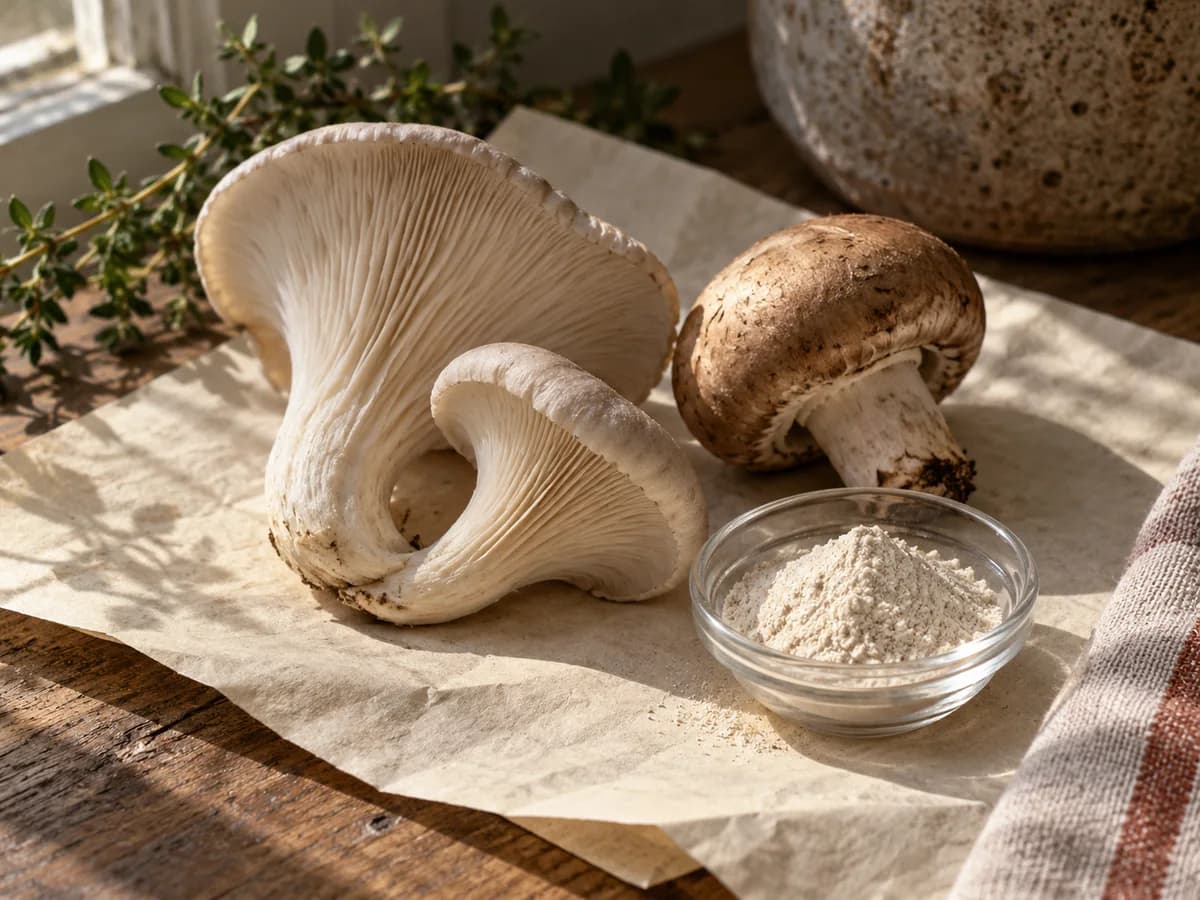
Ergothioneine is a dietary amino-thione found in foods including mushrooms. Oral supplementation raises blood levels, but cognitive evidence is limited: a 2025 trial did not establish a sustained placebo-separated benefit on its primary composite-memory measure. Small pilot signals and novel-food safety assessments do not prove dementia prevention or human lifespan extension.1, 2, 3
- The 2025 trial enrolled 147 adults aged 55–79 with subjective memory complaints.1
- A separate 2024 pilot enrolled only 19 people with mild cognitive impairment.2
- EFSA's safety conclusion concerns a specified material and conditions of use, not proof of a cognition claim.3
What is Ergothioneine?
L-ergothioneine is a defined compound, not a synonym for a mushroom extract. EFSA assessed a specified synthetic material and its proposed exposures. A whole food, an extract containing many compounds and a high-purity supplement cannot be compared by label weight alone.3
Where it comes from
Natural sources
- Present in foods such as mushrooms, beans, offal and cereals
How it's made
High-purity L-ergothioneine may be manufactured; EFSA's 2016 opinion evaluated one specified synthetic ingredient, not every source or extract.
What it does in products
Benefits
Cognitive outcomes in selected older adults
limited evidenceThe evidence contains small signals, not a consistent general memory benefit or established dementia-prevention effect.1, 2
The 16-week trial tested 10 or 25 mg/day: an early within-group memory improvement was not sustained or different from placebo. The 19-person, one-year MCI pilot reported learning and biomarker signals in its abstract. Different populations and endpoints prevent treating these as replications.
Evidence scope and limitations
Oral L-ergothioneine in two selected cognitive trials and EFSA's specified-material safety opinions; not a systematic review of every biomarker, skincare or mushroom study.
- The primary 2025 memory result was not a sustained placebo-separated benefit; several reported changes were within-group or secondary.
- The 2024 pilot is assessed at abstract level and is too small to establish dementia prevention.
- A supplement-supplier-affiliated author participated in the 2025 study; independent replication matters.
- EFSA's population-specific food exposure calculations are not individual supplement guidance, and neither cognitive study measures lifespan.
Evidence last checked: 2026-10-10
Side effects & safety
Safety considerations
- EFSA's 2017 assessment covered anticipated food exposure in pregnancy, breastfeeding and young children. It explicitly excluded supplements from those groups' combined intake calculation; this is not a personalized supplement-dose clearance.
- The reviewed cognitive studies do not supply a comprehensive medication-interaction assessment.
- Not for: Memory symptoms should not be assumed to reflect an ergothioneine deficiency or be managed as a supplement-only problem.
- Not for: A toxicological safety margin applies to its assessed material and exposures, not arbitrary high-dose combinations.
Amounts studied & product use
These figures describe research or common product use, not a personal dose or treatment recommendation.
In supplement studies and products
The 2025 trial used 10 or 25 mg/day for 16 weeks. The small 2024 pilot used a 25 mg capsule three times weekly for one year, not 25 mg every day. EFSA's 2016 opinion evaluated proposed adult supplement use up to 30 mg/day of its specified material. These are separate research and assessment amounts, not individual recommendations.
Regulatory status
- EFSA's European novel-food opinions address safety under defined uses, not U.S. drug approval or a cognition claim. FDA does not generally approve dietary supplements for safety and effectiveness before sale; manufacturers remain responsible for lawful products and labeling.
An increase from baseline is not a placebo comparison
In the 2025 trial, circulating ergothioneine increased with supplementation. That establishes exposure, not that memory improved because of it. The primary memory finding must be read against placebo and the full follow-up rather than selecting an early within-group change.
The pilot involved people with mild cognitive impairment, whereas the larger trial excluded diagnosed MCI. Our reading: retain the exploratory findings without collapsing distinct populations into a prevention claim. Neither trial measured longer human life.
1, 2Frequently asked questions
Does a higher ergothioneine blood level prove better memory?
No. Exposure and a clinical outcome are different measures. The larger trial raised blood levels without establishing a sustained placebo-separated primary memory benefit.1
Did EFSA recommend supplementation during pregnancy?
No. Its supplementary assessment evaluated anticipated novel-food exposure and did not include supplements in those groups' combined intake estimates. A safety assessment is not an individualized recommendation.4
The bottom line
Keep absorption, early cognitive signals and defined-material safety separate; none establishes a universal memory or longevity supplement.
References
- Zajac IT, Kakoschke N, Kuhn-Sherlock B, May-Zhang LS. The Effect of Ergothioneine Supplementation on Cognitive Function, Memory, and Sleep in Older Adults with Subjective Memory Complaints: A Randomized Placebo-Controlled Trial. Nutraceuticals (2025) · randomized trial · DOI 10.3390/nutraceuticals5030015; ACTRN12621001607864; published June 27, 2025
- Yau YF, Cheah IK, Mahendran R, Tang RMY, Chua RY, Goh RES, Feng L, Li J, Kua EH, Chen C, Halliwell B. Investigating the efficacy of ergothioneine to delay cognitive decline in mild cognitively impaired subjects: A pilot study. Journal of Alzheimer's Disease (2024) · randomized trial · PMID 39544014; DOI 10.1177/13872877241291253; NCT03641404; abstract-level assessment
- EFSA Panel on Dietetic Products, Nutrition and Allergies. Safety of synthetic L-ergothioneine (Ergoneine) as a novel food pursuant to Regulation (EC) No 258/97. EFSA Journal (2016) · safety assessment · DOI 10.2903/j.efsa.2016.4629
- EFSA Panel on Dietetic Products, Nutrition and Allergies. Statement on the safety of synthetic L-ergothioneine as a novel food: supplementary dietary exposure and safety assessment. EFSA Journal (2017) · safety assessment · DOI 10.2903/j.efsa.2017.5060; infants, young children, pregnant and breastfeeding women
- Dietary Supplements. U.S. Food and Drug Administration · government guidance · Undated resource; accessed October 10, 2026
Revision history
- Initial AI-assisted source checks and claim-level citation mapping under the site-authorized publishing workflow. No separate human or independent medical review is claimed.