Clove
Also known as: Cloves, Clove oil, Syzygium aromaticum
A culinary flower bud whose concentrated oil and dental preparations need different evidence and safety judgments.
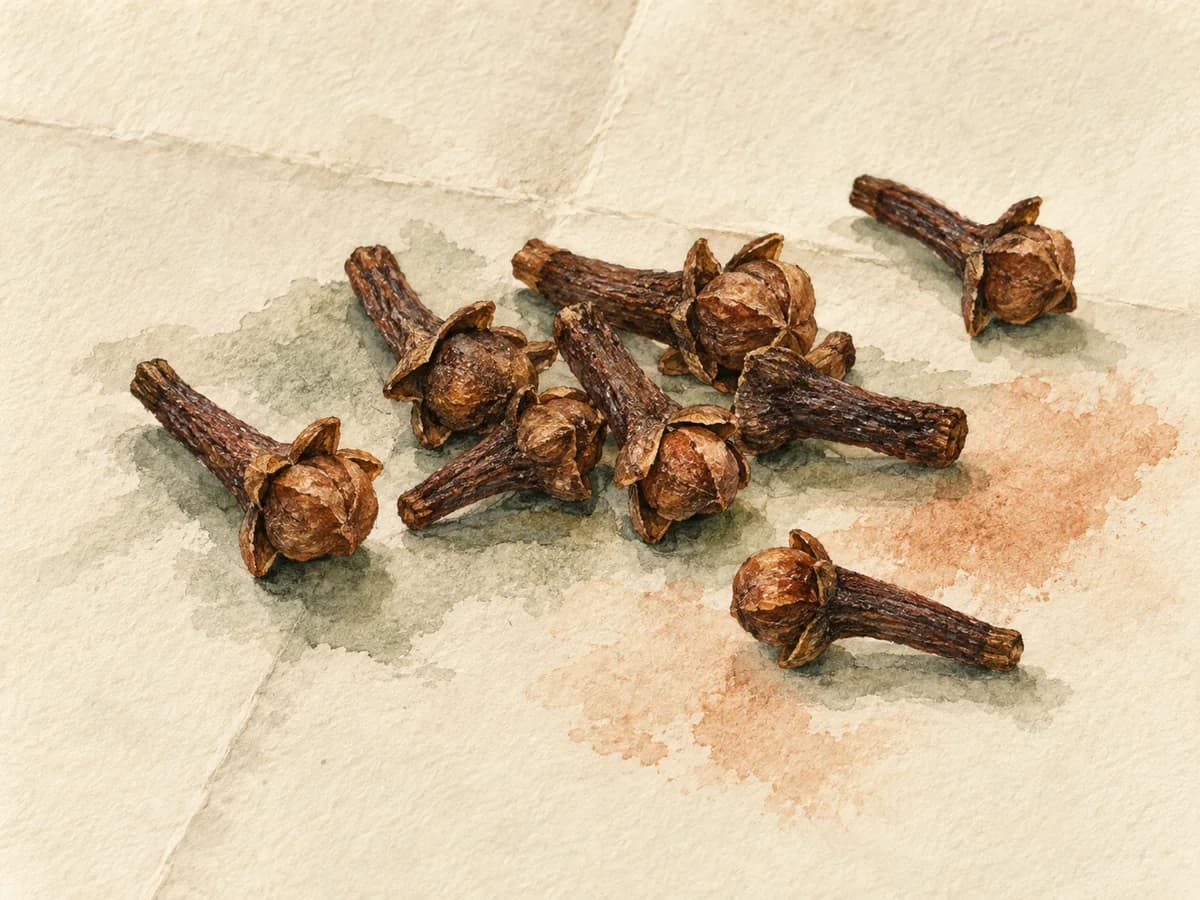
Cloves are dried unopened flower buds; clove essential oil is a concentrated derivative, not an equivalent serving of spice. A small adult study found less needle-insertion pain with a particular gel. It did not establish cavity treatment, and concentrated-oil ingestion can cause serious toxicity.1, 3, 4
- The 2006 study enrolled 73 adult volunteers and measured needle-stick pain after five minutes of topical exposure.3
- EMA's final oil monograph uses a traditional-use basis, not a well-established clinical-efficacy designation.2
- Food-flavoring conditions do not establish a safe amount of essential oil to swallow.1, 4
What is Clove?
The U.S. food rule distinguishes clove buds, oils from different plant parts, oleoresins and other extracts. Eugenol is a constituent or specified derivative, not a guarantee that every clove preparation has identical composition. Read the preparation and intended route before transferring a finding.1, 2
Where it comes from
Natural sources
- Dried unopened flower buds of the clove tree
- Oils and extracts can come from buds, leaves or stems
How it's made
An isolated constituent and a whole essential oil are different materials; this guide does not combine their concentrations.
What it does in products
Benefits
A narrow topical numbing signal
limited evidenceA randomized, subject-blinded experiment found lower pain scores than the matching placebos.3
The study compared a particular clove gel, 20% benzocaine and two placebos before needle sticks. No significant difference between active gels is not a formal equivalence finding, and healthy-volunteer needle pain is not a tooth-infection outcome.
Evidence scope and limitations
Clove identity and food use, the final traditional-use oil monograph, one adult topical gel experiment and agency toxicology guidance; not systemic treatment or pediatric dosing.
- The gel abstract does not provide a reproducible full formulation, so no DIY concentration is inferred.
- The final EMA monograph was checked through indexed original text after live PDF retrieval returned 429; no draft report is cited.
- Overdose case evidence establishes a hazard signal, not the frequency of injury at ordinary food exposure.
- Needle pain, toothache, cavity repair and infection outcomes are different questions.
Evidence last checked: 2026-10-15
Side effects & safety
Safety considerations
- The small dental experiment is not a medicine-interaction assessment or evidence for swallowing oil with other remedies.
- Not for: Keep concentrated oil away from children; suspected swallowing or poisoning needs immediate poison-control or medical advice.
- Not for: Do not treat the ordinary use of a food spice as clearance for concentrated medicinal exposure.
- Not for: Temporary toothache relief must not delay dental assessment; EMA describes it as a provisional measure.
Amounts studied & product use
These figures describe research or common product use, not a personal dose or treatment recommendation.
In skincare studies and products
The adult experiment used five-minute contact with a specific gel; its abstract does not provide enough formulation detail for replication. EMA describes separate adult medicinal preparations and does not recommend use under 18. Neither source is a DIY mixing guide, an oral supplement dose or an endorsement of a household bottle.
Regulatory status
- 21 CFR 184.1257 sets identity, specifications and good-manufacturing-practice conditions for food flavoring uses. It is not dental-drug approval. The EMA final traditional-use monograph is a separate European medicinal framework, not U.S. authorization for disease claims.
A kitchen ingredient and a concentrated exposure are different decisions
A food-use rule answers how the specified material can flavor food; the gel experiment asks about an immediate pain response. Neither resolves the consequences of drinking an essential oil. The safety signal in overdose also must not be rewritten as proof that normal culinary exposure causes liver injury.
For toothache, the important distinction is relief versus diagnosis: a temporary sensory effect cannot identify or repair a dental cavity. We therefore retain the narrow gel finding without turning traditional use into evidence of infection control.
1, 4, 3, 2Frequently asked questions
Is a whole clove the same material as clove oil or pure eugenol?
No. The food rule identifies different plant materials and derivatives. A percentage, exposure or safety finding for one cannot be silently assigned to all the others.1
The bottom line
Identify the preparation first: flavoring, short topical relief and concentrated-oil ingestion are not interchangeable uses.
References
- 21 CFR 184.1257: Clove and its derivatives. Electronic Code of Federal Regulations · government guidance · Current identity, specifications and food-use conditions checked October 15, 2026; continuously maintained rule
- Community herbal monograph on Syzygium aromaticum, floris aetheroleum. European Medicines Agency / HMPC (2011) · ingredient monograph · EMA/HMPC/534924/2010; final adopted September 13, 2011; indexed final monograph and agency record checked; live PDF returned 429
- Alqareer A, Alyahya A, Andersson L. The effect of clove and benzocaine versus placebo as topical anesthetics. Journal of Dentistry (2006) · randomized trial · PMID 16530911; DOI 10.1016/j.jdent.2006.01.009; indexed primary abstract checked, not full formulation text
- Eugenol (Clove Oil). LiverTox / National Institute of Diabetes and Digestive and Kidney Diseases (2019) · government guidance · Bookshelf NBK551727; updated October 28, 2019; indexed agency text checked; live Bookshelf retrieval challenged
Revision history
- Initial AI-assisted source checks and claim-level citation mapping under the site-authorized publishing workflow. No separate human or independent medical review is claimed.