Black Pepper (Piperine)
Also known as: Piper nigrum, Piperine, Black pepper extract, Bioperine-type extracts
A spice and concentrated alkaloid extract best known for changing the absorption and metabolism of other compounds.
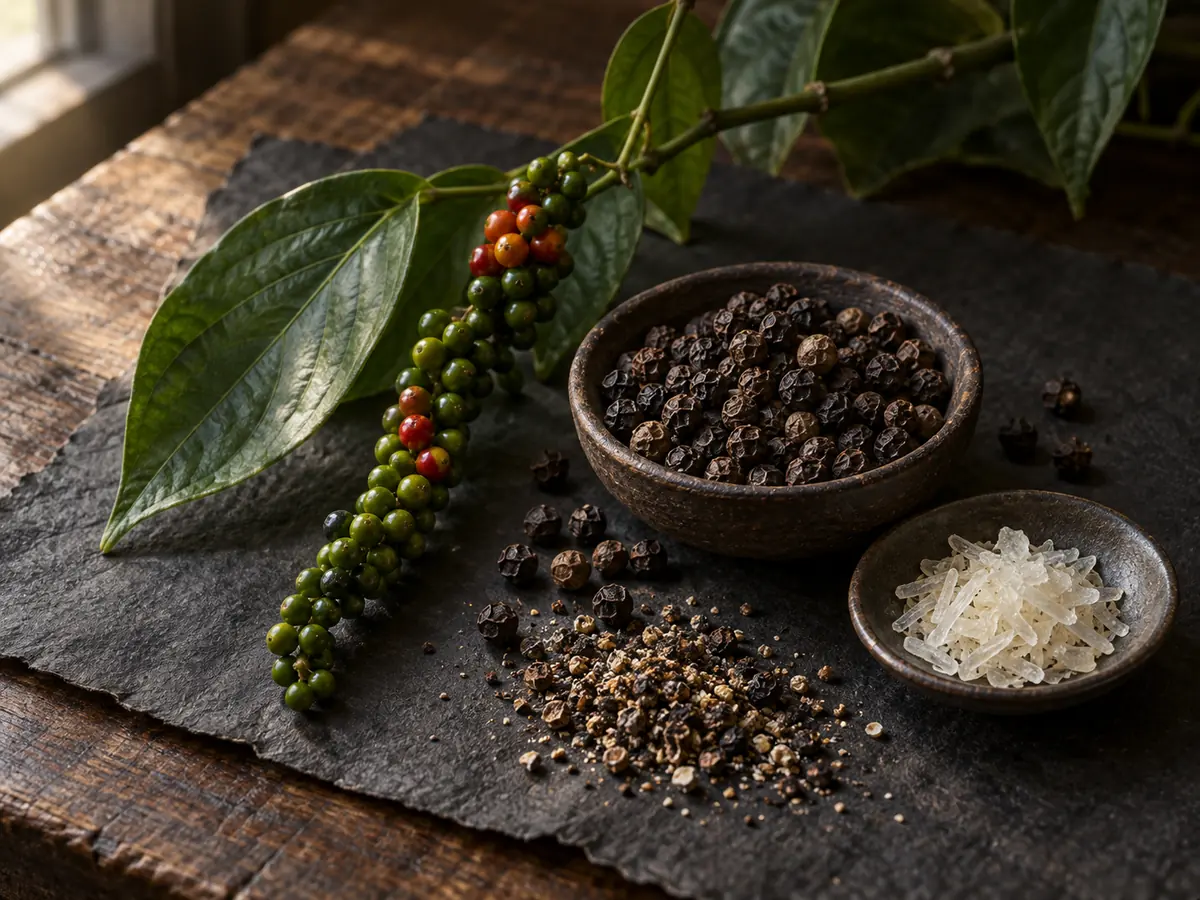
Black pepper is a culinary spice; piperine is its pungent alkaloid and the usual target of concentrated extracts. Piperine can alter intestinal transport and drug-metabolizing pathways, which may increase exposure to some co-administered compounds. That bioavailability effect is not a general health benefit and can also create interaction risk.2, 3
- Whole pepper and concentrated piperine are different exposures1, 2
- Often added to curcumin products as a bioenhancer1, 2
- Can alter drug transport and metabolism1, 2
- Disease-treatment evidence remains limited1, 2
What is Black Pepper (Piperine)?
Piper nigrum fruits contain many aromatic and pungent compounds. Standardized supplements isolate or concentrate piperine far beyond the incidental amount in seasoning.1, 2
Where it comes from
Natural sources
- Dried fruits of Piper nigrum
- Piper longum and related Piper species
How it's made
Supplemental piperine is usually extracted and standardized from pepper; purified material may also be manufactured for research.
What it does in products
Benefits
Enhanced absorption of selected compounds
moderate evidenceCurcumin-combination outcomes
limited evidenceSome trials use curcumin plus piperine, but their results cannot show the independent benefit of piperine.2
Combination trials confound the contribution of the two ingredients and use varied formulations.
Metabolic or anti-inflammatory treatment
insufficient evidenceCurrent human evidence is too heterogeneous to treat piperine as therapy for diabetes, inflammation, or weight loss.2
Much of the broad benefit language comes from cell and animal work.
Evidence scope and limitations
Culinary black pepper is separated from standardized piperine extracts and from multi-ingredient curcumin products.
- Pharmacokinetic effects are compound-specific.
- Many disease claims rest on preclinical evidence or combination trials.
Evidence last checked: 2026-09-28
Side effects & safety
Safety considerations
- Avoid concentrated piperine supplements during pregnancy unless a clinician specifically approves them.
- Medicines with narrow therapeutic ranges
- Anticoagulants, seizure medicines, and drugs affected by CYP enzymes or P-glycoprotein
- Not for: Using piperine specifically to boost a prescription drug without pharmacist review
Amounts studied & product use
These figures describe research or common product use, not a personal dose or treatment recommendation.
In supplement studies and products
Human combination studies often use single-digit to low-tens-of-milligram piperine amounts, but the interaction depends on the paired compound. There is no universal bioenhancer dose.
Regulatory status
- Black pepper is a food spice; concentrated piperine products are sold as dietary supplements and are not FDA-approved to treat disease.
- GRAS (generally recognized as safe) for food use.
Bioavailability is not a synonym for better
If an ingredient raises blood exposure, it can raise both desired and undesired effects. The scientifically useful question is which compound, at what dose, by how much, and with what safety margin—not whether a label contains a generic absorption booster.
2, 3Frequently asked questions
The bottom line
Piperine's clearest action is pharmacokinetic. That makes it a formulation tool and a potential interaction, not a universal wellness upgrade.
References
- Piperine: compound summary. PubChem, National Library of Medicine (2026) · ingredient monograph · CID 638024
- Molecular and pharmacological aspects of piperine as a potential molecule for disease prevention and management: evidence from clinical trials. Beni-Suef University Journal of Basic and Applied Sciences (2022) · other · PMID 35127957
- Piperine-pro-nanolipospheres as a novel oral delivery system of cannabinoids: pharmacokinetic evaluation in healthy volunteers in comparison to buccal spray administration. Journal of Controlled Release (2017) · randomized trial · PMID 28890215
- Dietary Supplements. U.S. Food and Drug Administration (2025) · government guidance
Revision history
- Initial publication with claim-level citations, formulation limits, safety context, and editorial evidence review.